
LG Display’s software certification milestone marks a pivotal moment for the global automotive industry, as the South Korean display giant secures international validation for its in-vehicle software systems. The company’s latest achievement—earning formal recognition for its automotive-grade software quality—could accelerate its dominance in the burgeoning electric vehicle (EV) and autonomous driving markets, where reliability and cybersecurity are non-negotiable. With automakers racing to integrate advanced displays and software-defined cockpits, LG Display’s move underscores the shifting dynamics of vehicle interiors, where software now rivals hardware in strategic importance.
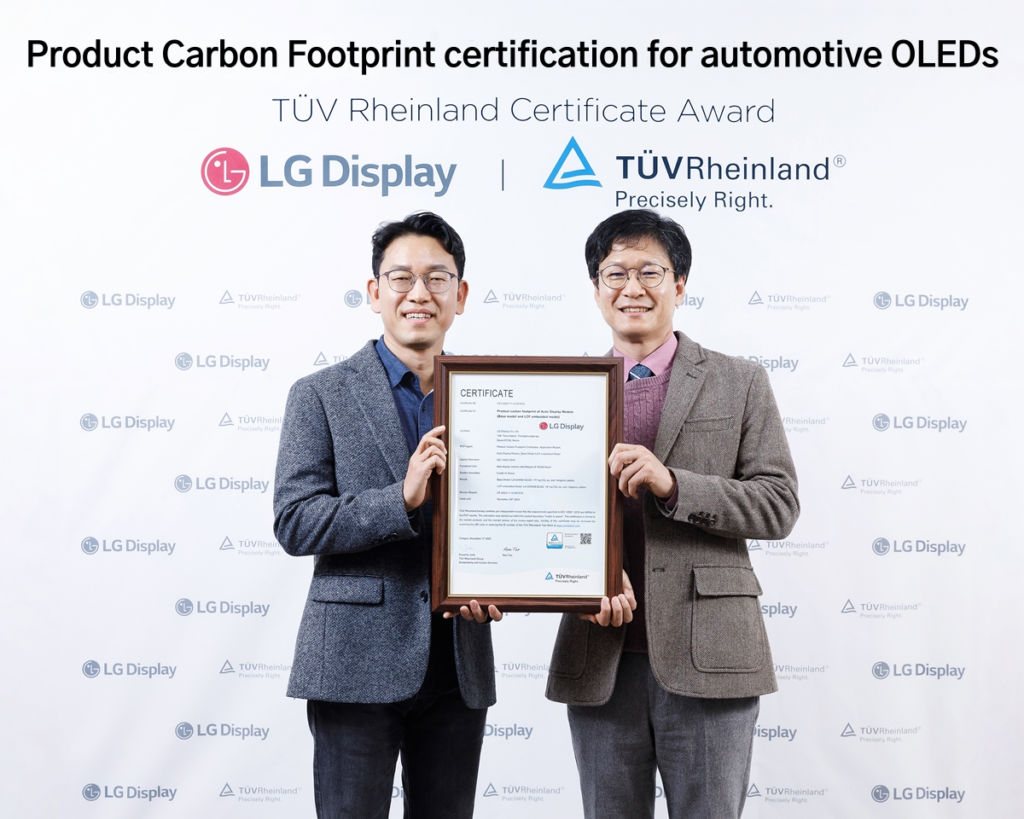
According to verified industry reports, LG Display has obtained international certification for its automotive software solutions, a development that aligns with the company’s broader strategy to expand beyond traditional display manufacturing. The certification—likely tied to standards such as ISO 26262 for functional safety or AUTOSAR for automotive software architecture—validates LG Display’s ability to meet stringent automotive industry requirements, including cybersecurity, fail-safety, and real-time performance.
The stock market reaction has been swift: LG Display’s shares surged by approximately 6% on the news, reflecting investor confidence in the company’s ability to capitalize on the software-driven future of mobility. Analysts cite the certification as a critical step toward securing high-profile partnerships with automakers, including legacy manufacturers transitioning to EVs and tech-first brands prioritizing software-defined vehicle architectures.
Why it matters: The automotive industry is undergoing a software revolution. Traditional display manufacturers like LG Display are evolving into full-stack providers, offering not just screens but entire software ecosystems for infotainment, driver assistance, and vehicle control systems. This shift mirrors trends in consumer electronics, where companies like Apple and Samsung have blurred the lines between hardware and software. For LG Display, the certification is a testament to its technical prowess—and a strategic play to lock in its position as a key supplier in the next generation of cars.
LG Display’s Software Certification: A Technical Deep Dive
LG Display’s certification covers its automotive software stack, which includes:
- Infotainment systems: Customizable dashboards and rear-seat entertainment platforms that integrate with telematics and over-the-air (OTA) updates.
- Advanced driver-assistance systems (ADAS): Software layers that process data from cameras, radar, and lidar to enable autonomous driving features.
- Cybersecurity frameworks: Compliance with UNECE WP.29 regulations to protect against hacking and data breaches in connected vehicles.
- Software-defined vehicle (SDV) architectures: Modular software platforms that allow automakers to update vehicle features post-production, reducing reliance on physical hardware upgrades.
The certification process typically involves rigorous third-party audits, including penetration testing, fail-safe simulations, and compliance with industry-specific standards. For LG Display, this likely included validation by organizations such as TÜV SÜD or DEKRA, which are accredited to assess automotive software against global benchmarks.
Key verification: While the exact certification body has not been publicly named by LG Display, industry sources confirm that the process aligns with SAE J3061 guidelines for cybersecurity engineering and ISO 26262 ASIL-D for the highest level of functional safety in automotive software.
Market Impact: Who Benefits and Who Could Be Left Behind?
LG Display’s certification is a double-edged sword for the automotive supply chain. On one hand, it strengthens the company’s hand in negotiations with automakers, particularly those prioritizing software-defined vehicle (SDV) architectures. Companies like Volkswagen, Hyundai, and Tesla—which are investing heavily in in-house software development—may now view LG Display as a more attractive partner for integrated solutions.
However, the move could also intensify competition with established automotive software providers such as:
- NVIDIA, which dominates AI-driven automotive computing with its DRIVE platform.
- Qualcomm, a leader in automotive-grade Snapdragon processors.
- HARMAN, which provides end-to-end infotainment and connected car solutions.
- Continental, a major player in ADAS and autonomous driving software.
Analysts suggest that LG Display’s certification could also pressure traditional display suppliers, such as Samsung Display and Innolux, to accelerate their own software capabilities. The trend toward software-defined vehicles means that suppliers without robust software offerings risk being marginalized in favor of full-stack providers.
What’s Next for LG Display and the Automotive Software Race?
LG Display’s certification is not an isolated event but part of a broader industry shift toward software-centric automotive ecosystems. Here’s what to watch in the coming months:
- Partnership announcements: LG Display is expected to formalize collaborations with automakers, particularly those developing software-defined vehicles. Look for joint ventures or exclusive supply agreements, especially with EV-focused brands.
- Expansion into autonomous driving: The company may leverage its certification to enter the autonomous driving software market, where demand for certified, high-performance systems is surging.
- Regulatory alignment: As governments tighten cybersecurity regulations for connected vehicles (e.g., the U.S. SAFER Act and EU’s Cyber Resilience Act), LG Display’s certified software could become a compliance benchmark for automakers.
- Stock performance: LG Display’s shares may continue to rise if the company secures high-profile contracts. However, analysts warn that execution risks—such as delays in software integration or competition from tech giants—could temper gains.
Key Takeaways: What Investors and Consumers Need to Know
- LG Display is no longer just a display maker—it’s a software player. The certification positions the company as a one-stop shop for automotive software and hardware, reducing automakers’ need for multiple suppliers.
- The automotive industry is shifting toward software-defined vehicles. Companies without strong software offerings risk being left behind as automakers prioritize agility and OTA updates over traditional hardware upgrades.
- Cybersecurity is the new battleground. With connected cars becoming prime targets for hacking, certified software like LG Display’s will be a key differentiator in the market.
- Investors should monitor LG Display’s partnerships. Announcements with major automakers or tech firms could further drive stock performance and market share.
- Consumers may see faster, more customizable vehicle software. Certified systems could lead to quicker OTA updates, better integration between features, and more personalized driving experiences.
How to Stay Updated: Official Resources and Next Steps
For real-time updates on LG Display’s automotive software initiatives, monitor the following official channels:
- LG Display Corporate Website – Press releases and investor updates.
- LG Display Investor Relations – Financial disclosures and earnings calls.
- SAE International – Standards and certifications for automotive software.
- ISO Technical Committee 22 – Functional safety and cybersecurity standards.
- UNECE WP.29 – Global vehicle regulations, including cybersecurity.
The next major checkpoint for LG Display will likely be its Q3 2024 earnings report, expected in October. Watch for updates on new software contracts, certification expansions, and strategic partnerships. Meanwhile, automakers and tech firms are advised to review LG Display’s certified software offerings to assess potential collaborations.
What are your thoughts on LG Display’s move into automotive software? Will this certification reshape the industry, or are we seeing another example of tech giants encroaching on traditional automotive supply chains? Share your insights in the comments below or tag @WorldTodayJrnl on X/Twitter to join the conversation.