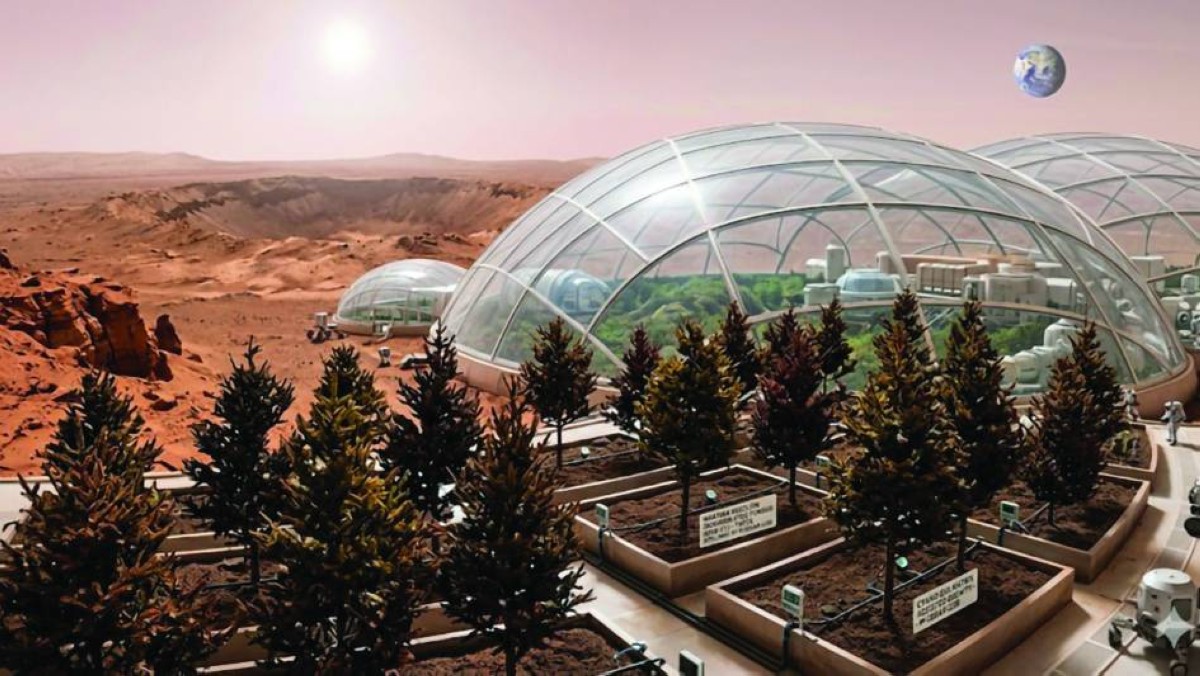
The dream of establishing a human presence on Mars has long been tethered to a significant biological bottleneck: the Red Planet’s soil. Unlike the nutrient-rich, microbe-laden earth we rely on here on Earth, Martian regolith is toxic, barren, and chemically hostile to most terrestrial life. However, recent advancements in space agriculture suggest that the solution might not be found in high-tech chemical scrubbers, but in the humble, resilient world of fungi.
As we look toward the future of long-term space exploration, the concept of using fungi to make Martian soil fertile has emerged as a groundbreaking strategy for bioremediation. By leveraging mycorrhizal fungi and other microbial partners, researchers are exploring how we might transform the harsh, perchlorate-laden surface of Mars into a substrate capable of supporting sustainable food production for future astronauts. This shift toward biological engineering represents a critical evolution in our approach to off-world colonization.
My work in software engineering and technology journalism often brings me to the intersection of biology and digital innovation. When we talk about terraforming or in-situ resource utilization (ISRU), we are essentially discussing the ultimate software update for a planet. Just as we use code to optimize hardware performance, scientists are now looking to use biological “code”—the genetic instructions found in fungi—to optimize the performance of extraterrestrial soil.
The Challenge of Martian Regolith
To understand why fungi are being considered for this task, we must first recognize the formidable nature of the Martian environment. The surface of Mars is covered in regolith, a layer of loose, rocky material that lacks the organic matter necessary for plant growth. More concerning is the presence of perchlorates, a group of chlorine-containing compounds that are toxic to humans and inhibit the growth of many plant species. According to NASA’s research into Martian soil toxicity, these salts are pervasive across the planet’s surface, necessitating significant chemical treatment before any agriculture could be attempted.

Traditional methods for cleaning this soil—such as washing it with water or using chemical catalysts—are resource-intensive. On a mission where every liter of water and every kilogram of cargo is accounted for, we cannot afford to waste precious resources on energy-heavy decontamination processes. This is where the biological approach offers a distinct advantage. Fungi, particularly those that form symbiotic relationships with plants, have evolved over millions of years to thrive in nutrient-poor, stressed environments on Earth.
Mycoremediation: A Biological Solution
Mycoremediation is the process of using fungi to degrade, sequester, or remove contaminants from the environment. In the context of Mars, the goal is twofold: detoxify the regolith and improve its structure. Research published in journals such as Applied and Environmental Microbiology has highlighted the potential for specific microbial strains to break down perchlorates and stabilize heavy metals in soil. By introducing these organisms, we could effectively “prime” the soil for cultivation.

the physical structure of fungal mycelium—the root-like network of a fungus—can help bind loose Martian dust into a more cohesive, soil-like structure. This helps with water retention and aeration, two critical factors for plant root health. As detailed by the European Space Agency’s (ESA) research on space agriculture, creating a sustainable loop where biological waste and microbial life work together is the cornerstone of life support systems for long-duration missions.
Bridging the Gap to Sustainable Farming
The transition from a sterile laboratory environment to a functioning Martian greenhouse will require rigorous testing. Current efforts focus on using “Mars simulant” soil—a material engineered on Earth to mimic the mineral composition and chemical properties of the actual Martian surface. By conducting experiments in controlled environments, scientists can observe how fungal inoculation affects the growth rates of crops like potatoes, lettuce, and legumes.
What makes this research particularly exciting is its dual-purpose utility. The techniques developed for Mars are directly applicable to sustainable farming here on Earth, particularly in areas affected by desertification or soil degradation. By mastering the art of building soil from scratch, we are not just preparing for a mission to the fourth planet; we are gaining the tools to restore our own ecosystem. This is the essence of space technology—the challenges we face in the vacuum of space often lead to the most meaningful innovations for our life back home.
What Happens Next
As of late 2024, the focus remains on small-scale, ground-based laboratory simulations. The next significant checkpoint for this technology involves the development of fully integrated, closed-loop bioreactors designed to be tested on the International Space Station (ISS). NASA and its international partners continue to update their Artemis program documentation, which outlines the long-term roadmap for sustainable lunar and Martian exploration. These documents serve as the primary source for understanding how biological life support systems will be prioritized in future mission architecture.

As we continue to monitor the progress of these studies, I invite you to share your thoughts on the ethics and mechanics of terraforming. Is this the right path for human expansion, or should we focus our efforts entirely on preserving our home planet? Let’s keep the conversation going in the comments section below.