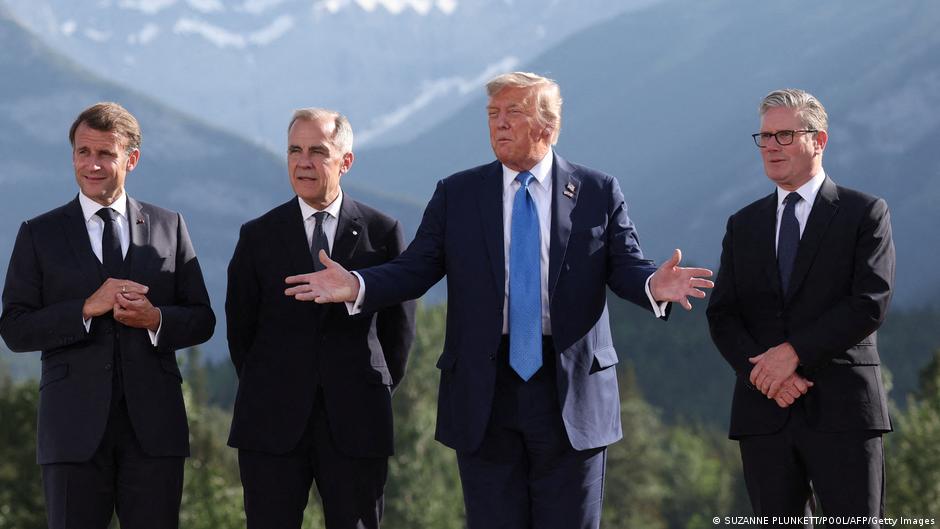
Four years after Russia launched its full-scale invasion of Ukraine, the world’s leading industrialized nations reaffirmed their unwavering support for Kyiv, even as the conflict enters a complex new phase. Leaders of the Group of Seven (G7) – the United States, France, the United Kingdom, Germany, Italy, Canada, and Japan – issued a joint statement on Tuesday, February 24, 2026, pledging continued assistance to Ukraine in defending its territorial integrity and right to exist. This unified message of support is particularly significant given the return of Donald Trump to the White House in 2025, and signals a continued commitment to Ukraine despite shifting geopolitical dynamics.
The G7 statement, released as Ukraine marked the somber anniversary of the invasion, also highlighted support for President Trump’s efforts to facilitate a peaceful resolution to the conflict. According to the declaration, G7 leaders “express our continued support for the efforts made by President Trump to achieve these objectives by launching a peace process and bringing the parties to direct negotiations.” This endorsement of Trump’s diplomatic initiatives suggests a willingness to explore all avenues for de-escalation, even as military aid continues to flow to Ukraine. The French presidency of the G7 emphasized that this is the first joint statement on Ukraine at the leaders’ level since Trump’s return to office.
G7 Backs Trump’s Peace Efforts Amidst Ongoing Conflict
The G7’s renewed commitment to Ukraine comes as the conflict enters its fifth year, with no clear end in sight. The war has resulted in a devastating humanitarian crisis, with millions of Ukrainians displaced and thousands killed. While Russia has made limited territorial gains, it has faced significant resistance from Ukrainian forces, bolstered by substantial military aid from Western countries. The Institute for the Study of War, a US-based believe tank, has consistently documented the challenges faced by Russian forces and the effectiveness of Ukrainian counteroffensives. Understanding War provides ongoing analysis of the conflict.
The timing of the G7 statement is crucial. It demonstrates a united front against Russian aggression, despite concerns that Trump’s administration might adopt a more isolationist approach to foreign policy. During his first term, Trump frequently questioned the value of US involvement in international alliances and expressed skepticism about the need to support Ukraine. However, the current statement suggests a pragmatic shift, acknowledging the importance of maintaining transatlantic unity in the face of Russian expansionism. The commitment to supporting Trump’s peace efforts also indicates a willingness to engage with Russia, albeit from a position of strength.
A Call for Russia to Accept a Ceasefire
Alongside the G7’s statement, a coalition of over thirty countries allied with Ukraine issued a separate call for Russia to accept an “immediate and unconditional ceasefire.” This demand underscores the growing international pressure on Moscow to end the hostilities and engage in meaningful negotiations. The coalition, which includes France, Germany, and the United Kingdom, also highlighted the significant costs Russia has incurred during the war, estimating nearly half a million casualties within the last year alone. This figure, while alarming, has not been independently verified by international organizations.
The leaders of the “coalition of volunteers” reportedly convened a video conference with Ukrainian President Volodymyr Zelenskyy to discuss the latest developments and coordinate their response. According to a German government statement, the discussion focused on the need to ensure Ukraine’s security and sovereignty, as well as the importance of holding Russia accountable for its actions. Zelenskyy has consistently called for increased military aid and tougher sanctions against Russia, arguing that these measures are essential to deter further aggression and compel Moscow to negotiate in good faith.
The Human Cost of Four Years of War
The fourth anniversary of the invasion was marked by somber commemorations across Ukraine, as families of fallen soldiers visited the graves of their loved ones. Irina Farion, a 40-year-vintage widow, shared her grief and hope with the Associated Press, stating, “Despite the pain and great sadness that each of us feels today, in my heart there is much love and gratitude, and faith that everything will be alright.” These personal stories underscore the profound human cost of the conflict, which has left an indelible mark on Ukrainian society.
The war has also had a devastating impact on Ukraine’s economy, infrastructure, and social fabric. Millions of Ukrainians have been forced to flee their homes, seeking refuge in neighboring countries or internally displaced within Ukraine. The World Bank estimates that Ukraine’s economy has contracted by over 30% since the start of the war, and that the country will require massive international assistance to rebuild. The World Bank’s Ukraine page provides detailed economic assessments, and reports.
Looking Ahead: Prospects for Peace and Stability
The G7’s support for Trump’s peace efforts raises questions about the potential for a negotiated settlement to the conflict. While Trump has repeatedly expressed his desire to end the war, his approach to achieving this goal remains unclear. Some analysts believe that he may be willing to build concessions to Russia in exchange for a ceasefire, while others suggest that he will prioritize maintaining a strong US military presence in Europe. The outcome of the US presidential election in 2024 will likely play a significant role in shaping the future course of the conflict.
The European Union has also been actively involved in efforts to mediate a peaceful resolution to the war. The EU has imposed a series of sanctions against Russia, aimed at crippling its economy and limiting its ability to finance the conflict. The EU has also provided substantial financial and military aid to Ukraine, and has pledged to support the country’s reconstruction efforts. According to the European Council, the EU has mobilized over €88 billion in support of Ukraine since the start of the war. The European Council’s page on EU support for Ukraine details the various assistance programs.
The situation remains fluid and unpredictable. While the G7’s statement and the call for a ceasefire represent positive steps, significant challenges remain. Russia has shown little willingness to compromise, and continues to pursue its military objectives in Ukraine. The risk of escalation remains high, and the potential for a wider conflict cannot be ruled out. The international community must remain vigilant and committed to supporting Ukraine’s sovereignty and territorial integrity.
The next key development to watch will be the outcome of ongoing diplomatic efforts led by President Trump, and the response from Moscow. Further announcements regarding aid packages to Ukraine from the G7 nations are also expected in the coming weeks. We encourage readers to share their thoughts and perspectives on this critical issue in the comments below.
Keep reading