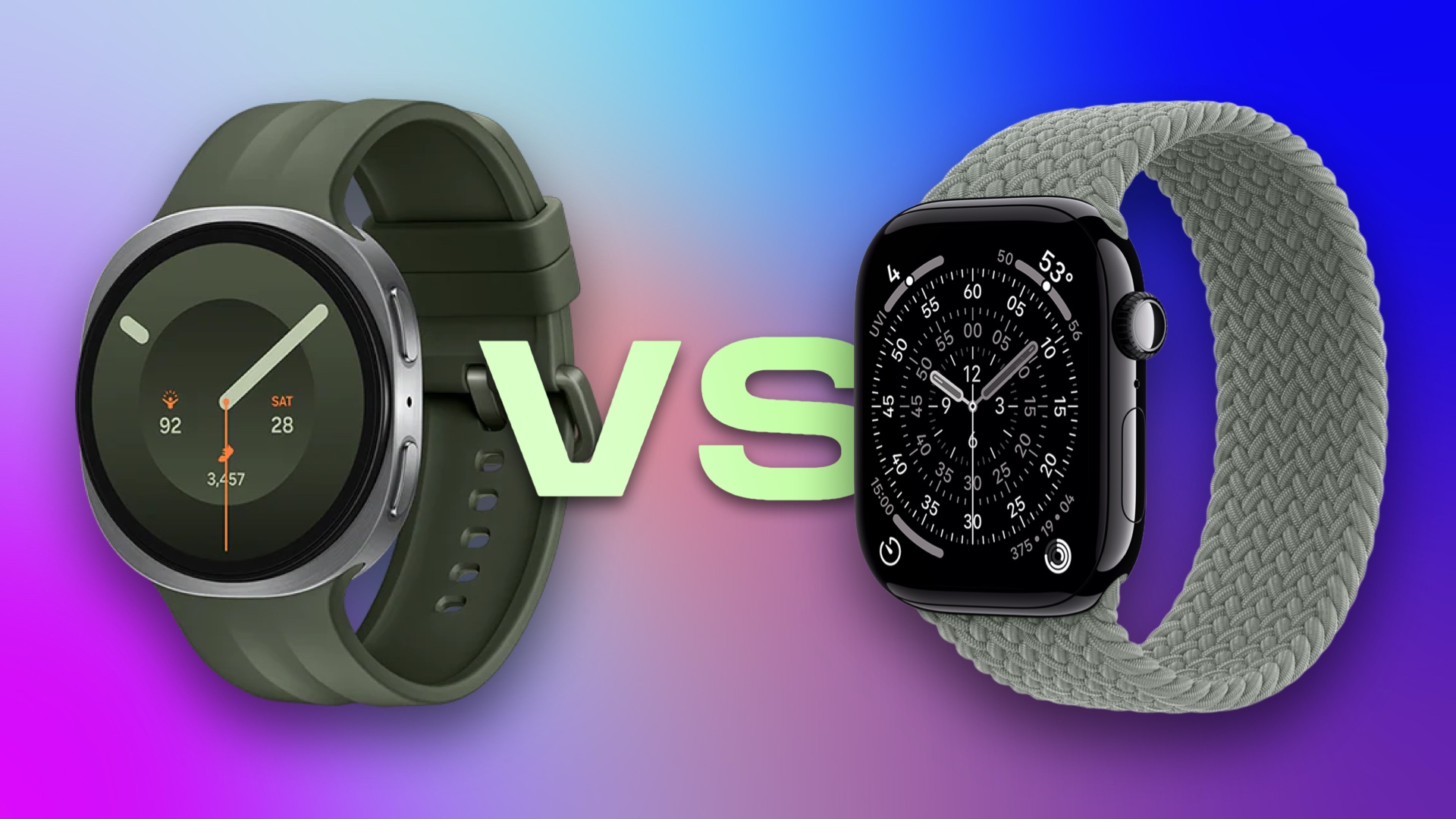
The Samsung Galaxy Watch 9 and the Apple Watch Series 11 both serve as standard, non-premium options in their respective wearable families, with pricing depending on case size and cellular connectivity. According to CNET, the Galaxy Watch 9 smaller 40-millimeter size starts at $380 for the Bluetooth model and rises to $430 for the LTE cellular model, while the larger 44mm model costs $410 for Bluetooth and $460 for LTE. PCMag Australia lists the starting price at $379.99, noting an increase from previous generations that positions the watch higher than competing options like Google’s Pixel Watch 4.
Price, Sizes, and Configurations Compared
For Apple’s lineup, aluminum configurations provide a direct comparison. The 42mm aluminum model costs $399 for GPS and $499 for cellular, while stepping up to the 46mm size adds $30 to each configuration, bringing prices to $429 for GPS and $529 for cellular, as detailed by CNET. Specifications outlined by digitaltrends.com show the Galaxy Watch 9 was announced on July 22, 2026, and released on August 7, 2026, following the Apple Watch Series 11 rollout on September 19, 2025.
Design, Hardware, and Durability
Watch models are measured by the longest diagonal distance of the case, leading to 40mm and 44mm options for Samsung and 42mm and 46mm options for Apple. Both wearables maintain slim profiles, though physical dimensions differ: both Galaxy Watch 9 models measure 8.6mm thick, whereas both Series 11 models measure 9.7mm thick. Weight is comparable between the standard sizes, with the Watch 9 weighing 31.5 grams for the 40mm version and 34 grams for the 44mm model, compared to the aluminum Series 11 weights of 30.3 grams for the 42mm GPS model and 37.8 grams for the 46mm GPS model.
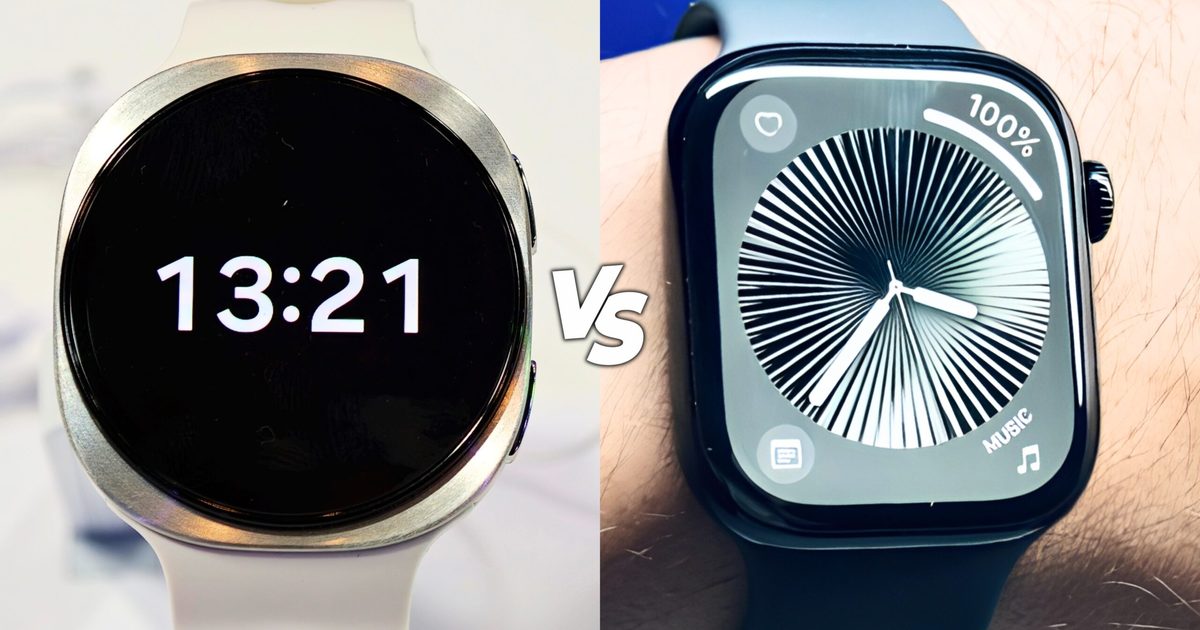

Externally, the Galaxy Watch 9 retains the cushion design and squircle shape of its predecessor. Samsung introduced redesigned bands that feature air pockets, making them more flexible and 25% lighter than Watch 8 straps. Durability metrics include an IP68 dust and water resistance rating, 5ATM water resistance up to 164 feet, and a MIL-STD-810H military durability rating against extreme temperatures, sand, vibration, and shock.
Display Technology and Internal Processing
Samsung equips the Watch 9 with a Super AMOLED full-color display reaching up to 3,000 nits of brightness. The 40mm screen measures 1.34 inches with a 438-by-438-pixel resolution, while the 44mm screen measures 1.47 inches with a 480-by-480-pixel resolution. Apple utilizes an LTPO3 OLED Retina display featuring wide-angle visibility, an Always-On capability, and a refresh rate that scales down to 1 Hz to preserve energy.
Under the hood, the Galaxy Watch 9 replaces older Exynos silicon with a Qualcomm Snapdragon Wear Elite processor to enhance CPU, GPU, and on-device artificial intelligence performance. Additionally, Samsung includes L1 plus L5 dual-frequency GPS to minimize location drift in urban environments, alongside Bluetooth v6.0 connectivity.
Health Suites and Fitness Tracking Capabilities
Both flagships target preventive wellness tracking and personal training metrics. Samsung’s health suite incorporates a BioActive Sensor measuring optical and electrical heart signals along with bioelectrical impedance, alongside temperature, accelerometer, barometer, gyro, geomagnetic, and light sensors.
Key software features introduced by Samsung include:
- Heart Health Score: A consolidated cardiovascular wellness metric providing personalized recommendations.
- Daily Cardio Load: Measures training volume and exertion relative to previous workouts.
- Fitness Index: Evaluates aerobic capacity to translate complex biometric information into actionable figures.
Related reading