
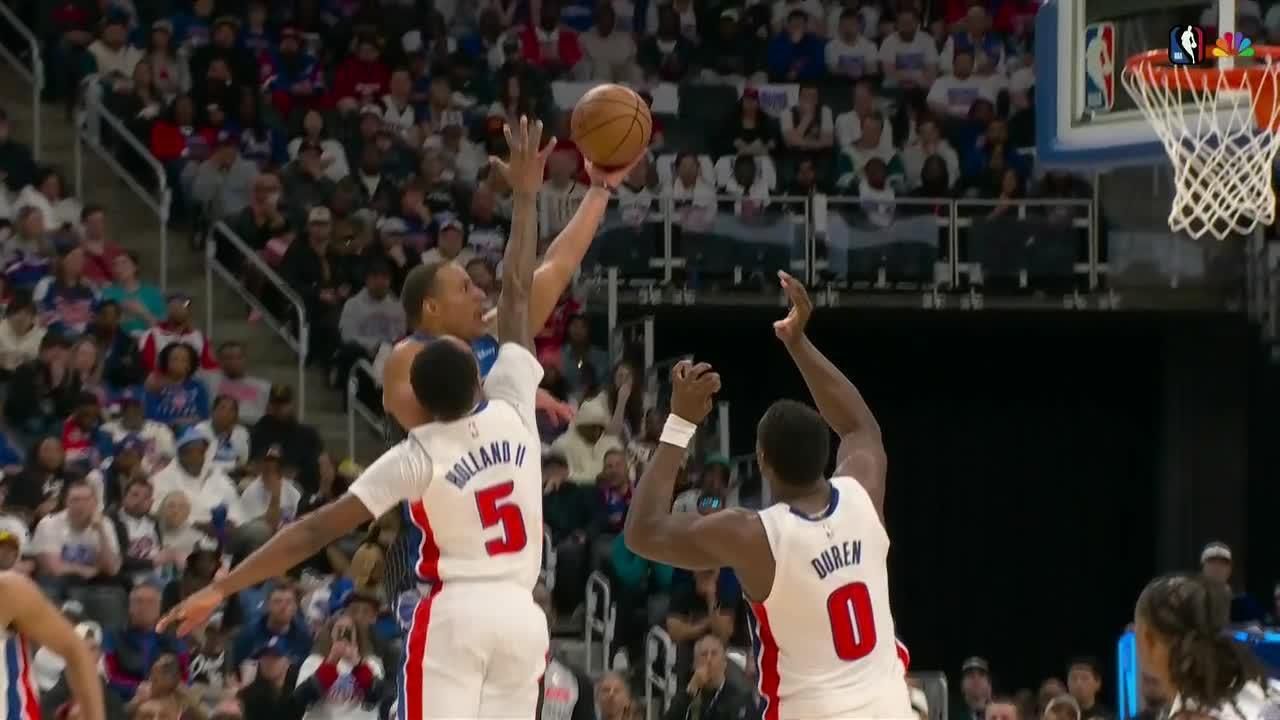
Following a disappointing Game 1 performance against the Orlando Magic, the Detroit Pistons uncover themselves facing an early 1-0 deficit in their first-round playoff series. The loss at Little Caesars Arena snapped their momentum heading into the postseason, but despite the setback, there remain compelling reasons for Pistons fans to maintain confidence in their team’s ability to bounce back and compete throughout this best-of-seven matchup.
The Pistons entered the playoffs as the Eastern Conference’s top seed with a 60-win season, marking their best record since the 2008-09 campaign. Their regular-season success was built on a foundation of defensive discipline, improved three-point shooting, and the continued development of their young core led by All-Star guard Cade Cunningham. While Orlando’s Game 1 victory exposed some vulnerabilities, particularly in perimeter defense and transition vulnerability, Detroit’s underlying strengths suggest they are far from out of contention.
One of the most significant factors working in Detroit’s favor is their experience in high-pressure situations. Even though many of their key players are young, the Pistons roster includes veterans who have navigated playoff adversity before. Forward Tobias Harris, a 13-year NBA veteran, has appeared in multiple postseason series throughout his career and brings valuable composure to high-leverage moments. His ability to score efficiently from mid-range and space the floor could prove vital if the Pistons adjust their offensive approach to counter Orlando’s defensive schemes.
Another reason for optimism lies in the Pistons’ defensive identity, which carried them to the league’s third-best defensive rating during the regular season. Anchored by the rim protection of Isaiah Stewart and the versatile perimeter defense of Ausar Thompson, Detroit has the personnel to disrupt Orlando’s offensive rhythm. Thompson, in particular, emerged as one of the league’s most improved defenders, using his length and athleticism to guard multiple positions. If the Pistons can reestablish their defensive intensity and force the Magic into inefficient shot selections, they can regain control of the series’ tempo.
The performance of Cade Cunningham will be pivotal moving forward. After averaging nearly 26 points, 6 rebounds, and 6 assists during the regular season, Cunningham has proven capable of elevating his game when needed. In Game 1, he struggled with efficiency, shooting just 8-for-22 from the field, but his playmaking and ability to draw double teams create opportunities for teammates. Adjustments in ball movement and off-ball screening could help unlock better shot quality for Detroit’s supporting cast, especially if Orlando continues to prioritize containing him.
the Pistons demonstrated resilience throughout the regular season, winning 12 games by five points or fewer and maintaining composure in close contests. This history of winning tight games suggests they possess the mental toughness required to respond to adversity. A single loss, especially on the road, does not erase the body of work that earned them home-court advantage throughout the playoffs. With Games 2 and 3 returning to Little Caesars Arena, Detroit will have the opportunity to leverage their home-court advantage and the energy of their fan base to reset the series.
Coaching adjustments will also play a critical role. Head Coach Monty Williams, a veteran of multiple playoff runs as both an assistant and head coach, has shown a capacity to adapt strategies mid-series. His experience managing rotations, adjusting defensive schemes, and motivating young talent could be instrumental in identifying the specific adjustments needed to counter Orlando’s strengths. Whether it involves increasing defensive pressure on Paolo Banchero, improving closeout techniques against Orlando’s three-point shooters, or simplifying offensive sets to reduce turnovers, Williams has the tools to guide his team through an adaptive process.
Finally, the Pistons’ depth remains an underappreciated asset. Beyond their starting five, contributions from players like Malik Beasley, who provided consistent scoring off the bench during the regular season, and rookie Ron Holland II, who has shown flashes of two-way potential, could grow more significant if the series extends. The ability to rely on reliable rotation players to maintain intensity and productivity when starters rest will be crucial in a grueling seven-game series.
While Orlando’s Game 1 victory was impressive and signals they are a legitimate threat, it does not negate the Pistons’ qualifications as a legitimate contender. The Eastern Conference playoffs have historically featured momentum shifts, tactical adjustments, and comebacks after early losses. Detroit’s combination of defensive capability, veteran leadership, star talent, and coaching acumen provides a legitimate pathway to adjust, respond, and reclaim control of this series.
The next opportunity for the Pistons to respond comes in Game 2, scheduled for April 21, 2026, at Little Caesars Arena in Detroit. A strong performance there could shift the narrative and reestablish Detroit’s position as the favored team in this matchup.
As the series progresses, fans and analysts alike will be watching closely to see how Detroit adapts to the challenges posed by Orlando’s versatile and energetic squad. For now, the message remains clear: there is no reason to panic. The Pistons have the tools, the experience, and the resolve to turn this series around.
Share your thoughts on how the Pistons can adjust for Game 2 in the comments below, and don’t forget to follow us for continued coverage of the 2026 NBA Playoffs.