The Australian enterprise landscape is currently navigating a pivotal shift in how technology is integrated into core business operations. As organizations move beyond the initial excitement of generative AI, a more sophisticated set of “bleeding-edge” technologies is emerging to define the next era of productivity and governance across the Asia-Pacific (APAC) region.
This transition is backed by significant financial commitment. According to a recent report from Gartner, Australian organizations are projected to spend more than A$33.6 billion on public cloud services in 2026, representing a 17.9% increase from 2025. This surge in cloud investment provides the necessary infrastructure for IT leaders to deploy complex, emerging tools that promise to move the needle from simple automation to true operational autonomy.
For enterprise leaders in APAC, the challenge is no longer just about adoption, but about strategic orchestration. The goal is to align these high-frontier technologies with tangible business outcomes while managing the inherent risks of early-stage innovation. By focusing on a specific cluster of emerging trends, Australian firms are attempting to leapfrog traditional digital transformation hurdles to achieve a more resilient, AI-driven architecture.
The Shift to Agentic AI: From Assistance to Autonomy
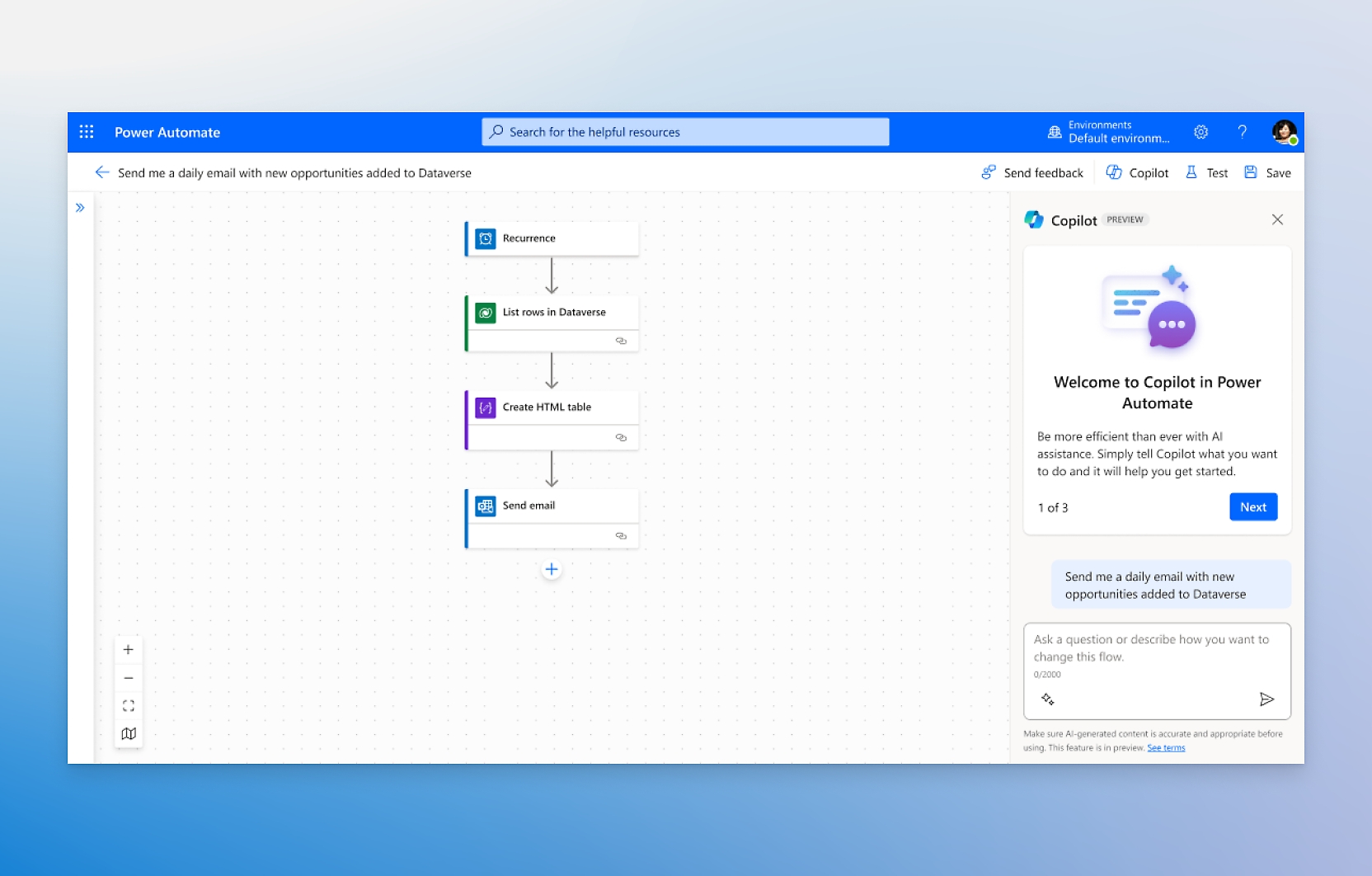
One of the most significant leaps in the current tech cycle is the evolution of Artificial Intelligence from “generative” to “agentic.” While the previous wave of AI focused on content creation and conversational interfaces—essentially acting as a sophisticated copilot—Agentic AI introduces autonomous agents capable of planning, executing, and iterating on complex tasks with minimal human intervention.
In a practical enterprise context, So moving away from a user prompting a chatbot to summarize a meeting, and toward an AI agent that can identify a project delay, coordinate with stakeholders via email, update the project management software, and propose a revised timeline for approval. These autonomous agents are designed to operate across different software environments, making them a cornerstone of modern digital transformation in Australia.
The value proposition here is the drastic reduction of “cognitive load” for employees. By delegating multi-step workflows to agentic systems, organizations can refocus human talent on high-level strategy and creative problem-solving. However, this shift requires a robust underlying data layer; for agentic AI to function without causing operational chaos, it needs access to clean, real-time data and clear boundaries of authority.
AI-TRiSM: Building the Guardrails for Innovation
As AI agents gain more autonomy, the risk profile for enterprises increases. This has led to the rise of AI-TRiSM—an acronym for Trust, Risk, and Security Management. Gartner identifies this as a critical framework for any organization looking to scale AI without compromising its security posture or ethical standing.
AI-TRiSM is not a single piece of software but a holistic approach to AI governance. It encompasses several key pillars: explainability (understanding why an AI made a specific decision), model monitoring (detecting “drift” or degradation in AI performance), and adversarial resistance (protecting AI models from being manipulated by malicious actors). For Australian firms, particularly those in highly regulated sectors like finance and healthcare, AI-TRiSM is the difference between a successful pilot program and a catastrophic compliance failure.
Implementing AI-TRiSM allows IT leaders to move AI from a “black box” operation to a transparent business process. By integrating these guardrails, companies can ensure that their AI deployments are fair, unbiased, and secure, thereby maintaining the trust of both customers, and regulators. This framework is essential for mitigating the risks of “hallucinations” and ensuring that autonomous agents operate within the legal and ethical mandates of the jurisdiction.
Sustainable Technology: The Intersection of ESG and IT
Sustainability is no longer just a corporate social responsibility (CSR) checkbox; it has become a technical requirement. Sustainable technology refers to the framework of digital solutions that enable an organization to achieve its Environmental, Social, and Governance (ESG) targets while simultaneously improving its own operational efficiency.
The irony of the AI boom is its immense energy appetite. The computational power required to train and run large language models (LLMs) puts significant pressure on power grids and water cooling systems. In response, Australian enterprise leaders are increasingly adopting “green IT” strategies. This includes migrating workloads to carbon-neutral data centers, optimizing code to reduce CPU cycles, and employing circular economy principles for hardware procurement and disposal.
Beyond just reducing harm, sustainable tech is being used as a tool for broader business optimization. For example, AI-driven energy management systems can optimize heating, cooling, and lighting in large commercial facilities in real-time, reducing costs while slashing carbon footprints. By treating sustainability as a technical challenge rather than a PR exercise, firms are finding that “green” often aligns with “lean,” leading to lower overheads and higher efficiency.
Platform Engineering: Streamlining the Developer Experience
As the complexity of the modern tech stack grows, many organizations are suffering from “tooling sprawl.” Developers are often forced to navigate a fragmented landscape of cloud providers, security tools, and deployment pipelines, which slows down the speed of delivery. Platform engineering emerges as the solution to this friction by creating Internal Developer Platforms (IDPs).
Essentially, platform engineering is the practice of building a “golden path”—a curated, self-service set of tools and workflows that allow developers to deploy code into production without needing to be experts in the underlying infrastructure. Instead of a developer manually configuring a Kubernetes cluster or a cloud database, they use a standardized platform that handles these complexities automatically behind the scenes.
This approach significantly improves the developer experience and accelerates the software development lifecycle (SDLC). By reducing the cognitive burden on engineers, companies can deploy features faster and with fewer errors. In the competitive Australian tech market, where talent acquisition is challenging, providing a streamlined, modern developer experience is a key strategy for both attracting and retaining top-tier engineering talent.
The Path Forward for APAC IT Leaders
The convergence of these four technologies—Agentic AI, AI-TRiSM, Sustainable Tech, and Platform Engineering—creates a powerful synergy. Platform engineering provides the stable foundation; AI-TRiSM provides the safety; Sustainable Tech ensures longevity; and Agentic AI provides the transformative power to automate the enterprise.

For leaders navigating this landscape, the immediate priority is integration. The goal is to avoid creating “innovation silos” where the AI team is disconnected from the sustainability team or the infrastructure team. A unified strategy ensures that the A$33.6 billion invested in cloud services is not just spent on storage and compute, but on creating a cohesive, intelligent ecosystem.
As these technologies move from the “bleeding edge” toward the mainstream, the competitive advantage will go to those who can balance speed with stability. The transition toward autonomous, sustainable, and governed systems is no longer optional for those wishing to remain relevant in the global digital economy.
The next major milestone for the region will be the upcoming quarterly reviews of cloud adoption and AI governance frameworks across the APAC sector, where the actual impact of these 2026 investments will begin to surface in corporate earnings and operational reports.
Do you believe autonomous AI agents will replace traditional workflow software in the next three years, or will they remain “assistants”? Share your thoughts in the comments below.
Related reading