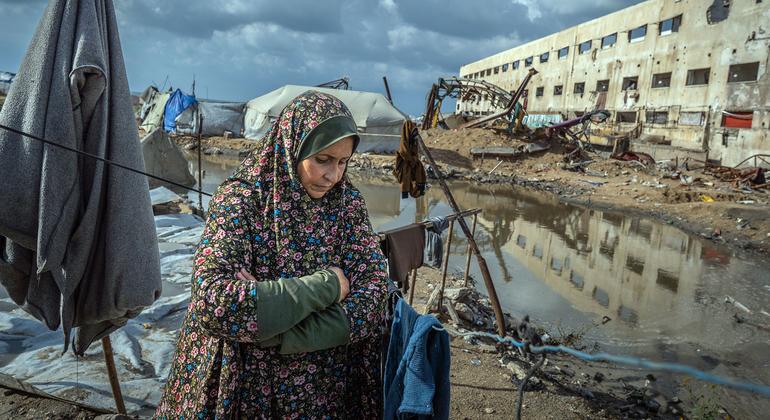
Gaza Humanitarian Crisis: Latest Updates, Challenges, and How the UN is Responding (November 2025)
The situation in gaza remains dire as of late November 2025, with ongoing hostilities severely impacting civilian populations and crippling essential services. This article provides a thorough update on the humanitarian crisis, detailing the challenges faced by aid organizations, the UN’s response, and the urgent needs of those affected.We’ll cover the latest developments, explore the obstacles to aid delivery, and outline what’s being done to support the people of Gaza.
The Current Reality: A System Under Collapse
recent briefings from the United Nations paint a stark picture. While humanitarian organizations are striving to deliver aid, access remains severely restricted, hindering their ability to meet the overwhelming needs of the population. as UN Spokesperson stéphane Dujarric reported on November 26th, 2025, hostilities continue to cause casualties and disrupt vital humanitarian operations. The core issue isn’t a lack of willingness to help, but a systemic blockage of access and supplies.
Aid Delivery: A Constant Struggle
On November 25th, 2025, the UN and its partners attempted to coordinate eight humanitarian movements within Gaza, receiving approval for only one. Seven crucial deliveries were impeded,denied,or outright cancelled. This illustrates a pattern of notable obstruction, severely limiting the flow of life-saving assistance.
Despite these obstacles, UN teams managed to retrieve over 200 pallets of essential medicine and five tankers of fuel through the Kerem Shalom/Kerem Abu Salem crossing.Additional tents were also secured from the Kissufim crossing. Every successful delivery, though small, represents a critical lifeline, but the scale of need far outweighs current capacity. As Dujarric emphasized,”Every delivery into Gaza makes a significant difference,” but it’s a drop in the ocean compared to what’s required.
The Devastating Impact on healthcare
Gaza’s healthcare system is on the brink of total collapse. The situation is catastrophic,with not a single hospital fully functional. Currently, only 18 out of the Strip’s 36 hospitals are operating, and even those are functioning at a severely limited capacity. This means limited access to surgery, critical care, and even basic medical attention.
the World Health Organization (WHO) is working tirelessly to facilitate medical evacuations for the most critical cases.On November 25th, 2025, WHO teams successfully evacuated 33 Palestinians needing urgent medical care, accompanied by over 100 family members. However, a staggering 16,500+ patients require medical attention outside of Gaza. WHO continues to advocate for safe and expedited passage through all evacuation routes, especially to the West Bank and East Jerusalem. Learn more about WHO’s work in health emergencies.
Protecting Future Generations: Education in Crisis
Beyond immediate medical needs, the long-term impact on children is a major concern. Despite the chaos, the UN Relief and Works Agency for Palestine Refugees in the Near East (UNRWA) is striving to maintain educational opportunities for displaced children. As of November 24th, 2025, UNRWA is operating nearly 350 temporary learning spaces within 64 shelters, providing in-person education to over 47,000 boys and girls. This is a vital effort to provide a sense of normalcy and hope amidst the devastation. Explore UNRWA’s education programs.
The Urgent Need for Unimpeded Access
The United Nations is clear: the current level of humanitarian access is insufficient. The ability to scale up operations is directly dependent on easing restrictions on both the movement of aid and the access of humanitarian workers. the UN and its partners are prepared to do more, but they need the necessary permissions and safe passage to reach those in need. The call for unimpeded humanitarian access is not merely a request; it’s a critical requirement for preventing further suffering and loss of life.
Evergreen Section: Understanding the Complexities of Humanitarian Aid in conflict Zones
Delivering aid in active conflict zones is inherently complex. Beyond logistical challenges, aid organizations must navigate political sensitivities, security risks, and the imperative to maintain neutrality. Ensuring aid reaches those who need it most, without diversion or manipulation, requires meticulous planning, robust monitoring mechanisms, and strong relationships with all parties involved. The situation in Gaza highlights the critical importance
Related reading