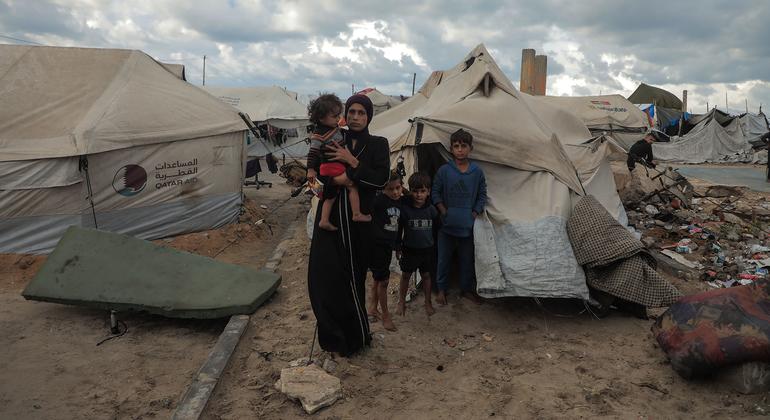
Global Humanitarian crisis Deepens: Urgent Needs in Gaza, and a Looming Threat to Children Worldwide
Teh world is facing a confluence of humanitarian crises, demanding immediate and sustained attention. From the ongoing struggles in Gaza to a projected surge in children needing aid globally,the need for resources and access is critical. This report details recent developments, funding shortfalls, and the urgent calls for increased support from international organizations.
Gaza: Limited progress Amidst Ongoing Challenges
Recent efforts have focused on restoring essential services in Gaza. Schools have been cleaned and prepared for reopening, offering a glimmer of hope for children impacted by the conflict.
However, significant obstacles remain. Humanitarian organizations report continued blockages preventing the entry of vital education materials, hindering the resumption of studies.
* Food Assistance: Approximately 260,000 individuals have received food aid this month, consisting of food parcels and flour, distributed through 60 sites.
* veterinary Support: A crucial delivery of 3,500 veterinary kits and animal fodder reached over 100 herders and donkey owners – a vital step in safeguarding food security.
* Security Concerns: Despite these efforts, security incidents persist. A UNRWA health center in Deir Al-balah was struck by bullets, highlighting the risks faced by both civilians and humanitarian workers operating near the border.
These incidents underscore the precarious environment and the urgent need for safe and unimpeded access for aid delivery.
UNICEF Warns of a Deepening Global Crisis for Children
The situation for children globally is reaching a breaking point.UNICEF has issued a stark warning about unprecedented dangers facing children caught in conflict, disasters, and economic hardship.
The agency is appealing for over $7 billion to support 73 million vulnerable boys and girls in the coming year. Rising attacks on essential infrastructure like schools and hospitals, coupled with record displacement, are straining humanitarian resources to their limit.
UNICEF Chief Catherine Russell emphasized the unfeasible choices frontline teams are facing:
* Prioritizing limited resources, leaving some children without aid.
* Reducing the frequency of essential services.
* Scaling back critical interventions necessary for survival.
Projections indicate that over 200 million children will require humanitarian assistance by 2026. UNICEF is urging governments, donors, and the private sector to increase investment in children, strengthen national systems, and ensure aid access is protected.
Funding Gap: A Critical Threat to Humanitarian Response
The ability to respond effectively to these crises is severely hampered by a growing funding gap. Donors recently pledged just over $300 million to the Central Emergency Response Fund (CERF), a vital first responder in humanitarian emergencies.
While this support is appreciated, it represents a significant decrease from the $351 million pledged last year. This drop reflects the broader financial pressures facing the humanitarian sector, with the steepest funding cuts ever experienced.
Why CERF Matters:
* Rapid Response: CERF provides immediate funding during crises, often before other aid arrives.
* Proven Impact: Over the past 20 years, CERF has delivered nearly $10 billion in assistance to over 100 countries and territories, helping hundreds of millions of people.
* Current Allocations: $435 million has been allocated this year alone, supporting millions across 30 countries.
UN Emergency relief Coordinator Tom Fletcher stressed that a fully funded CERF – at $1 billion annually – is not merely symbolic, but a critical lifeline needed now.
The Path Forward:
Addressing these interconnected crises requires a concerted global effort. Increased financial support, coupled with a commitment to safe and unimpeded humanitarian access, is essential.Failure to act decisively will have devastating consequences for vulnerable populations,particularly children,around the world.
Resources:
* OCHA (United nations Office for the Coordination of Humanitarian Affairs): https://www.unocha.org/
* UNRWA (United Nations Relief and Works Agency for Palestine Refugees): https://www.unrwa.org/
* UNICEF (United Nations Children’s Fund): https://www.unicef.org/
* CERF (Central Emergency Response Fund): [https://cerf.un.org/](https://cer
Keep reading