
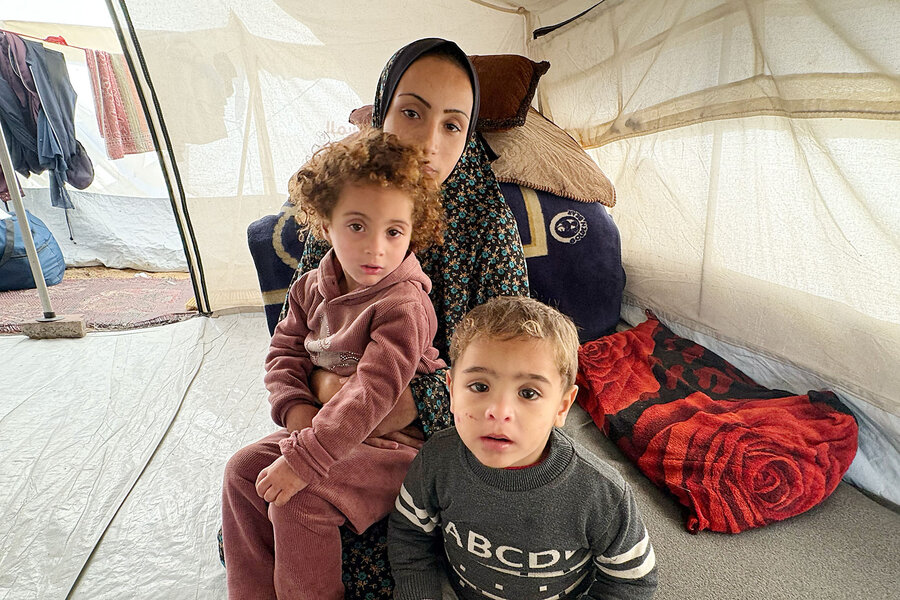
Doha Abu Riyala, a young mother of four, cradles her 3-month-old as she speaks about winter’s hardships, Jan. 19, 2026. She says mold settles into their clothing and mattresses in their damp tent.
Rafah, Gaza Strip – As winter storms batter the Gaza Strip, conditions for the over 1.9 million displaced palestinians are deteriorating rapidly. Living in makeshift shelters, tents, and damaged buildings, families face freezing temperatures, flooding, and the spread of disease. The situation is notably dire for those who lost their homes during the ongoing conflict.
Doha Abu Riyala, a mother of four, sought refuge with relatives in the Shati refugee camp after her home was destroyed. Though, even these partially standing structures offer little protection from the elements. Recent heavy rains and winds have caused further collapses of damaged buildings, resulting in over two dozen fatalities, according to the United Nations Office for the Coordination of Humanitarian Affairs (OCHA).
Ms. Abu Riyala’s husband, Atef, has shifted from fishing – limited to a few hundred meters offshore by Israeli restrictions – to reinforcing their tent. He spends his days tightening ropes, draining rainwater, and securing the structure against gale-force winds. The restrictions on fishing have been in place for years, impacting the livelihoods of Gazan fishermen, as reported by Human Rights Watch.
The dampness inside the tent fosters the growth of mold on clothing, mattresses, and even in the air. The family also battles pests, insects, and rodents. Their son recently suffered a rat bite. Lack of ventilation exacerbates the problem, as sunlight rarely penetrates the tent.
“When it rains, we flood,” says Noor al-Attal, who is caring for two daughters, including a malnourished infant. She and her husband share a single mattress and a few blankets. The constant cycle of drying bedding, caring for a cold baby, and attending to an older child’s needs is exhausting.
Preparing food and warming water are arduous and hazardous. Lighting a fire inside a tent poses a meaningful fire risk, but families frequently enough have limited fuel and few safe alternatives. The lack of adequate heating and sanitation increases the risk of respiratory infections and other illnesses, overwhelming the already strained healthcare system.Doctors Without Borders has repeatedly warned about the dire medical situation in Gaza.
Ms. Attal, desperate for materials to repair her tent, asks local fishermen for spare netting to use as thread. The prospect of another cold front brings her to tears. “I just need to manage.Where do we go? Where do we live?” she asks.
The situation in Gaza is a complex humanitarian crisis, exacerbated by the ongoing conflict and the harsh winter weather. International aid organizations are struggling to provide sufficient assistance to meet the growing needs of the displaced population.The United Nations Relief and Works Agency for Palestine Refugees in the Near East (UNRWA) is appealing for increased funding to provide shelter, food, and medical care.
Keep reading