
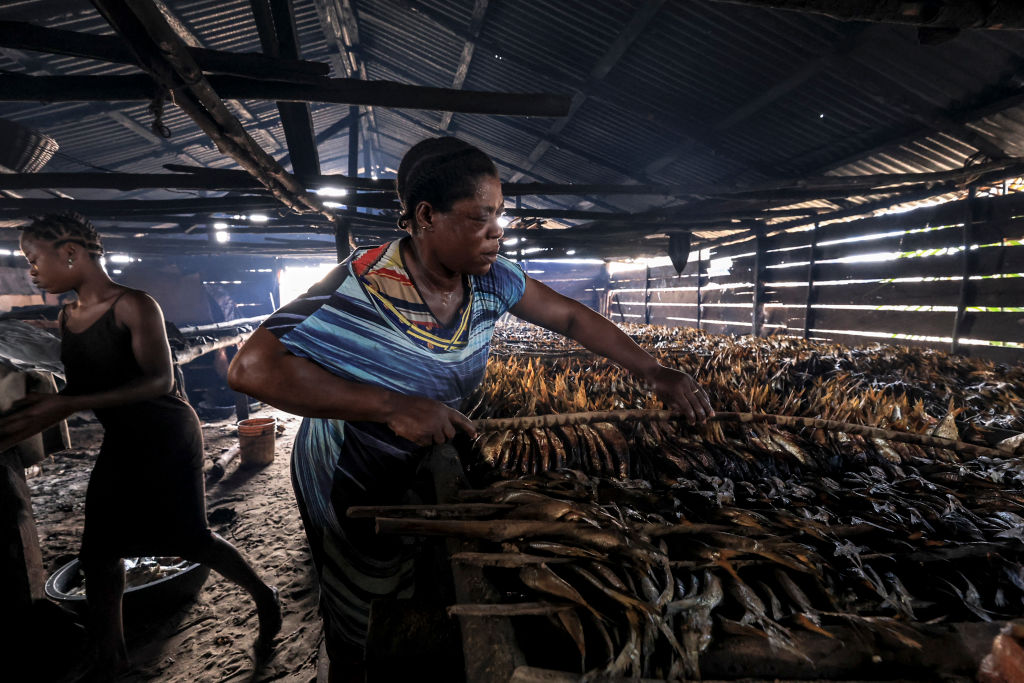
In coastal communities across Cameroon, a quiet revolution is unfolding where young women are redefining sustainability through traditional practices. Gen Z women in Manoka and Douala have transformed hazardous fish-smoking methods into environmentally sound enterprises, demonstrating how local knowledge combined with targeted support can drive measurable change. This movement, rooted in women-led organizations, shows how empowering female leadership in natural resource management creates ripple effects for both ecosystems and economies.
The initiative centers on a partnership between two Africa-based networks: the African Women’s Network for Community Management of Forests (REFACOF) and Women Organizing for Change in Agriculture and Natural Resource Management (WOCAN). Together, they introduced the W+ Standard—a certification framework designed to direct financial resources toward women’s groups implementing verified sustainability projects. Through this system, women receive training, equipment upgrades, and income opportunities even as reducing environmental degradation in fragile mangrove ecosystems.
Dr. Jeannette Gurung, founder and executive director of WOCAN, emphasized the urgency of directing climate finance to women’s organizations during a 2024 interview with EBONY. “Right now, less than 1% of climate financing reaches women’s organizations at all levels. Yet, It’s women who are at the forefront of climate solutions,” she stated, noting that women disproportionately bear the impacts of environmental change as primary farmers, fish harvesters, and natural resource managers in their communities.
The collaboration began after REFACOF emerged from a 2009 international conference on forest tenure in Yaoundé, Cameroon, co-organized by the International Tropical Timber Organization and Cameroon’s Ministry of Forests and Wildlife. REFACOF was founded by 45 women from West and Central African nations seeking greater influence in land and forestry reform processes. WOCAN, established as an international women-led nonprofit, focuses on creating sustainable environments while amplifying female leadership in agriculture and natural resource sectors.
Through the W+ Standard framework, 60 women in Cameroon received direct training in improved fish-smoking techniques, with an additional 80 gaining knowledge through peer transfer. Participants shifted from using mangrove wood—which contributes to deforestation and poses health risks—to metallic and clay smoking models. According to Dr. Gurung, this transition reduced wood consumption by 36% and decreased smoking time by 18%, while increasing participants’ revenue by 125% through improved product quality and market access.
These changes addressed multiple challenges inherent in traditional fish smoking. Open-flame systems using mangrove wood previously caused burns, eye irritation, and respiratory issues due to uncontrolled temperatures and smoke exposure. The new technologies eliminated these hazards while preserving the cultural significance of fish processing in coastal livelihoods. Women involved in the program now report recognition as community leaders, challenging gender norms in environmental stewardship.
Beyond Cameroon, WOCAN reports that W+ Credits—purchased by individuals, companies, or investors seeking to support verified women’s sustainability projects—have funded initiatives in India, Kenya, Cambodia, Indonesia, Nepal, and Mexico. Each credit represents a measurable contribution to women’s empowerment across domains including leadership, income, health, and environmental impact, creating a transparent pipeline for global supporters to fund grassroots change.
Cecile B. Ndjebet, president and founder of REFACOF, described the W+ project as a turning point for communities in Manoka, Mbenguè Dikoumè, Lonji, and Campo beach. “We developed two other initiatives based on lessons from Manoka women fish dryers,” she explained, highlighting how the original training inspired broader applications of sustainable practices in forest and mangrove conservation.
The program’s success lies in its integration of economic incentives with ecological preservation. By linking women’s income growth to reduced mangrove wood use, the initiative aligns personal prosperity with environmental protection. Participants’ increased earnings from higher-quality fish products have enabled reinvestment in their businesses and communities, creating a self-sustaining cycle of empowerment.
As global climate finance mechanisms struggle to reach local women’s groups, models like the W+ Standard offer a replicable approach. Dr. Gurung advises those wishing to support environmental gender equality to “take a closer look at who is truly taking care of the planet—women.” She emphasizes that learning about initiatives measuring and rewarding women’s environmental labor can assist shift aid models from charity to genuine empowerment.
The women of Manoka and Douala continue to refine their techniques, now sharing knowledge with neighboring communities. Their perform demonstrates how investing in women’s leadership in natural resource management yields dividends for biodiversity, climate resilience, and social equity—proving that sustainability is strongest when it centers those most connected to the land and water.