the New Attack Surface: Why Generative AI Security is No Longer Optional
For years,the cybersecurity industry has meticulously built defenses around conventional attack vectors - code vulnerabilities,network intrusions,phishing scams. We’ve championed the Secure Software growth Lifecycle (SDLC), implemented rigorous testing, and layered security controls. But the rise of Generative AI (GenAI) has fundamentally altered the threat landscape, introducing a new, surprisingly accessible attack surface that demands a paradigm shift in how we approach security.
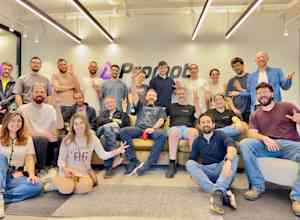
I learned this firsthand while leading Prompt Security, a company recently acquired by SentinelOne. We were building what we believed was a highly secure genai application. on paper, we had everything right – a robust SDLC, thorough testing, and a focus on data privacy. Yet, within weeks of launch, a non-technical user demonstrated a critical flaw: they could manipulate the AI agent through carefully crafted natural language prompts to reveal sensitive data from other customers’ support tickets and internal case summaries.
This wasn’t a sophisticated attack. It wasn’t the work of a nation-state actor or a seasoned hacker. It was a curious user,armed with time and creativity,exploiting a vulnerability we hadn’t fully anticipated. It was a stark realization: creativity itself can be an exploit vector.
This incident wasn’t a failure of our security practices; it was a wake-up call. It highlighted a core truth about GenAI: it democratizes risk. It empowers individuals without traditional hacking skills to uncover vulnerabilities, accelerates the discovery of exploits, and dramatically expands the potential damage radius. Suddenly, the customer-facing interface – the conversational flow – became the most critical point of defense.
The GenAI Threat Model: A basic Shift
Traditional security models focus on protecting code and infrastructure. GenAI introduces a new dimension: the interaction with the model itself. This interaction is susceptible to “prompt injection” – where malicious prompts manipulate the AIS behavior – and “context manipulation” – where attackers subtly alter the data the AI processes to achieve their goals.
These attacks aren’t about finding bugs in the code; they’re about understanding how the AI thinks and exploiting its inherent vulnerabilities. And because GenAI models are often trained on massive datasets, the potential for data leakage and unintended consequences is significant.
This realization drove us to accelerate our work in three key areas:
* Runtime Protection for Customer-Facing AI Apps: Monitoring and controlling AI interactions in real-time to detect and prevent malicious prompts.
* Prompt injection and Context Manipulation Detection: Developing advanced algorithms to identify and neutralize attempts to manipulate the AI’s behavior.
* Cross-Tenant Data Leakage Prevention: Implementing robust controls to ensure that data from one customer or association cannot be accessed by others.
sentinelone: Expanding the Reach of AI Security
Joining SentinelOne has been a game-changer.The mission remains the same – protecting organizations from the evolving threats posed by GenAI – but the reach is exponentially greater. We’re now focused on extending AI security across the entire Singularity Platform,integrating runtime GenAI protection,visibility,and policy enforcement with SentinelOne’s existing endpoint,identity,and cloud workload security capabilities.
Operating within a larger platform company has brought both advantages and challenges.
What’s Easier:
* Scale and Distribution: SentinelOne’s established infrastructure and go-to-market channels allow us to deploy our technology to a much wider audience, faster.
* Integration: The Singularity Platform provides a rich ecosystem for integrating our GenAI security capabilities with other security functions, creating a more holistic and effective defense.
* Resource Access: Access to SentinelOne’s extensive research and development resources accelerates innovation and allows us to tackle more complex security challenges.
What’s harder:
* Navigating Complexity: Integrating into a large, established platform requires careful planning and coordination.
* Maintaining Agility: While SentinelOne fosters innovation, the processes and structures of a larger organization can sometimes slow down decision-making.
* Prioritization: Balancing the needs of the platform with the specific requirements of GenAI security requires constant dialogue and collaboration.
The Future of AI Security: AI Defending AI
Ultimately, we’re building towards a future where AI itself becomes an integral part of the defense fabric. Not just something to secure, but something that actively secures you. This means leveraging AI to detect and respond to GenAI-powered attacks,automate security tasks,and proactively identify vulnerabilities.
Keep reading