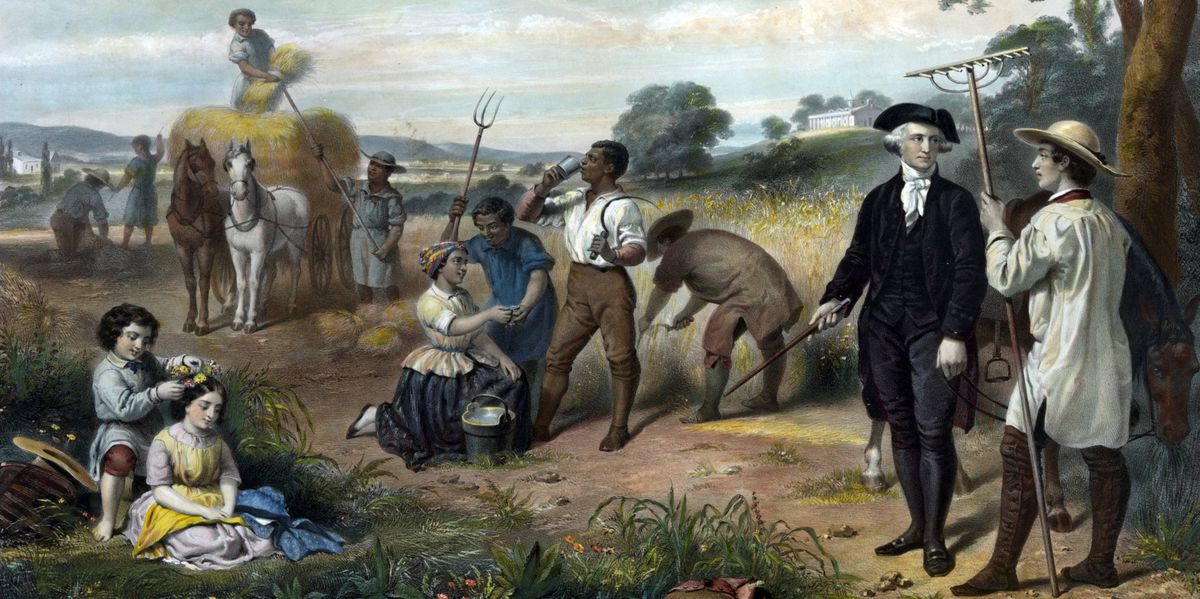
The Contradictions of a Founding Father: George Washington and the Legacy of Slavery
George Washington, revered as the father of the United States, remains a figure of immense historical significance. Yet, his legacy is inextricably linked to the institution of slavery, a stark contradiction at the heart of the nation’s founding ideals. While championing liberty and independence, Washington was a lifelong slaveholder, a practice that shaped his life, his wealth, and the very fabric of early America. This complex relationship, and the stories of those he enslaved, continue to fuel debate and re-evaluation of his place in history. The story of Ona Judge, a woman who escaped his ownership, exemplifies the human cost of this contradiction and highlights the enduring struggle for freedom.
Washington’s involvement with slavery began early in his life. Inheriting enslaved people as a child, he gradually amassed a significant enslaved workforce at Mount Vernon and elsewhere. By the time of his death in 1799, he held over 577 enslaved individuals, according to records from Mount Vernon. His economic prosperity was directly tied to their forced labor, a reality that complicates any assessment of his character. The inherent hypocrisy of fighting for freedom while simultaneously denying it to others has long been a subject of scrutiny, and recent scholarship continues to shed light on the experiences of those enslaved by the first president. The question of Washington’s personal views on slavery is nuanced; while he expressed some reservations about the institution privately, particularly later in life, he rarely took concrete steps to dismantle it.
Billy Lee: A Veteran Enslaved
Among the hundreds Washington enslaved, William “Billy” Lee occupies a particularly poignant position in the historical record. Lee served as Washington’s personal valet, accompanying him throughout the Revolutionary War. A painting by John Trumbull, created around 1780, depicts Lee standing behind Washington, a visual representation of his constant presence. Lee’s service extended beyond mere personal assistance; he reportedly reconnoitered visitors at Mount Vernon after the war, engaging in conversations with fellow veterans, a testament to his own experiences and standing. According to accounts from Washington’s step-grandson, George Washington Parke Custis, Lee would request interviews with soldiers, proudly acknowledging their shared military service.
Doppelmoral eines grossen Amerikaners: George Washington (1732–1799) und sein Sklave und Leibdiener Billy Lee in einem Gemälde von John Trumbull aus dem Jahr 1780.
Foto: Imago (Vernon Lewis Gallery)
Lee’s story, as documented by Mount Vernon, highlights the complex role enslaved individuals played in the American Revolution. He traveled with Washington throughout the war, enduring battles at Monmouth and Yorktown, and the harsh winter at Valley Forge. His presence underscores the often-overlooked contributions of African Americans to the fight for independence, even as they were denied the very freedoms for which they fought. While Washington’s will stipulated the eventual manumission of the enslaved people he directly owned, Lee was among those slated to be freed after the death of Martha Washington, a provision that meant his freedom was delayed.
Ona Judge and the Pursuit of Liberty
The story of Ona Judge offers a contrasting perspective – one of resistance and the unwavering pursuit of freedom. Unlike Lee, Judge did not wait for a delayed promise of manumission. She was a dower slave belonging to Martha Washington, meaning she was considered the personal property of Washington’s wife. First appearing in a slave list drawn up in 1799, Judge served as Martha Washington’s personal attendant. In 1796, while the Washingtons were residing in Philadelphia, then serving as the nation’s capital, Judge escaped to New Hampshire, seeking a life of liberty.
George Washington actively pursued Judge’s recapture, demonstrating his determination to maintain his claim to enslaved people. He utilized his network and resources, including advertisements offering a reward for her return, but his efforts proved unsuccessful. Judge found refuge and support within the free Black community in Portsmouth, New Hampshire, marrying Richard Spotswood and raising three children. Her story, as recounted in historical accounts, is a powerful testament to the courage and resilience of those who defied the bonds of slavery. She understood the risks involved, yet chose freedom over the relative comfort and security of remaining in Washington’s service.
The Complicated Legacy and Ongoing Debate
The lives of Billy Lee and Ona Judge, though vastly different in their responses to enslavement, both illuminate the profound moral contradictions inherent in Washington’s life and the founding of the United States. Washington’s evolving views on slavery remain a subject of scholarly debate. While he expressed concerns about the institution’s impact on the nation, his actions often fell short of advocating for its abolition. He profited from enslaved labor throughout his life, and his attempts to recapture Ona Judge demonstrate a clear unwillingness to relinquish his ownership of enslaved people.
The ongoing re-evaluation of historical figures like Washington is essential for a more complete and honest understanding of the past. Acknowledging the complexities of their lives, including their complicity in unjust systems, does not diminish their accomplishments but rather provides a more nuanced and accurate portrayal. The stories of those enslaved, like Billy Lee and Ona Judge, are crucial to this process, offering a vital counter-narrative to the traditional heroic accounts. Their experiences remind us that the ideals of liberty and equality were not universally applied at the nation’s founding and that the struggle for true freedom continues to this day.
Recent scholarship, including work by historians at Mount Vernon, has focused on amplifying the voices of the enslaved community and providing a more comprehensive understanding of their lives. This includes detailed research into the daily routines, family structures, and acts of resistance undertaken by enslaved individuals at Mount Vernon and beyond. The ongoing efforts to document and interpret these stories are vital for confronting the difficult truths of American history and fostering a more inclusive and equitable future.
Key Takeaways
- George Washington was a lifelong slaveholder whose economic prosperity depended on the forced labor of hundreds of enslaved people.
- Billy Lee, Washington’s personal valet, served alongside him throughout the Revolutionary War, highlighting the contributions of African Americans to the fight for independence.
- Ona Judge escaped enslavement from Martha Washington and successfully established a free life in New Hampshire, demonstrating the agency and resilience of those seeking liberation.
- The stories of Lee and Judge reveal the inherent contradictions in Washington’s life and the founding of the United States.
- Ongoing historical research continues to shed light on the experiences of enslaved individuals and challenge traditional narratives.
As we approach the 250th anniversary of the United States in 2026, a continued reckoning with the nation’s past, including its legacy of slavery, is paramount. Further research into the lives of those enslaved by Washington and other founding fathers will undoubtedly reveal even more complex and challenging truths. We invite readers to share their thoughts and perspectives on this significant topic in the comments below.
Related reading