
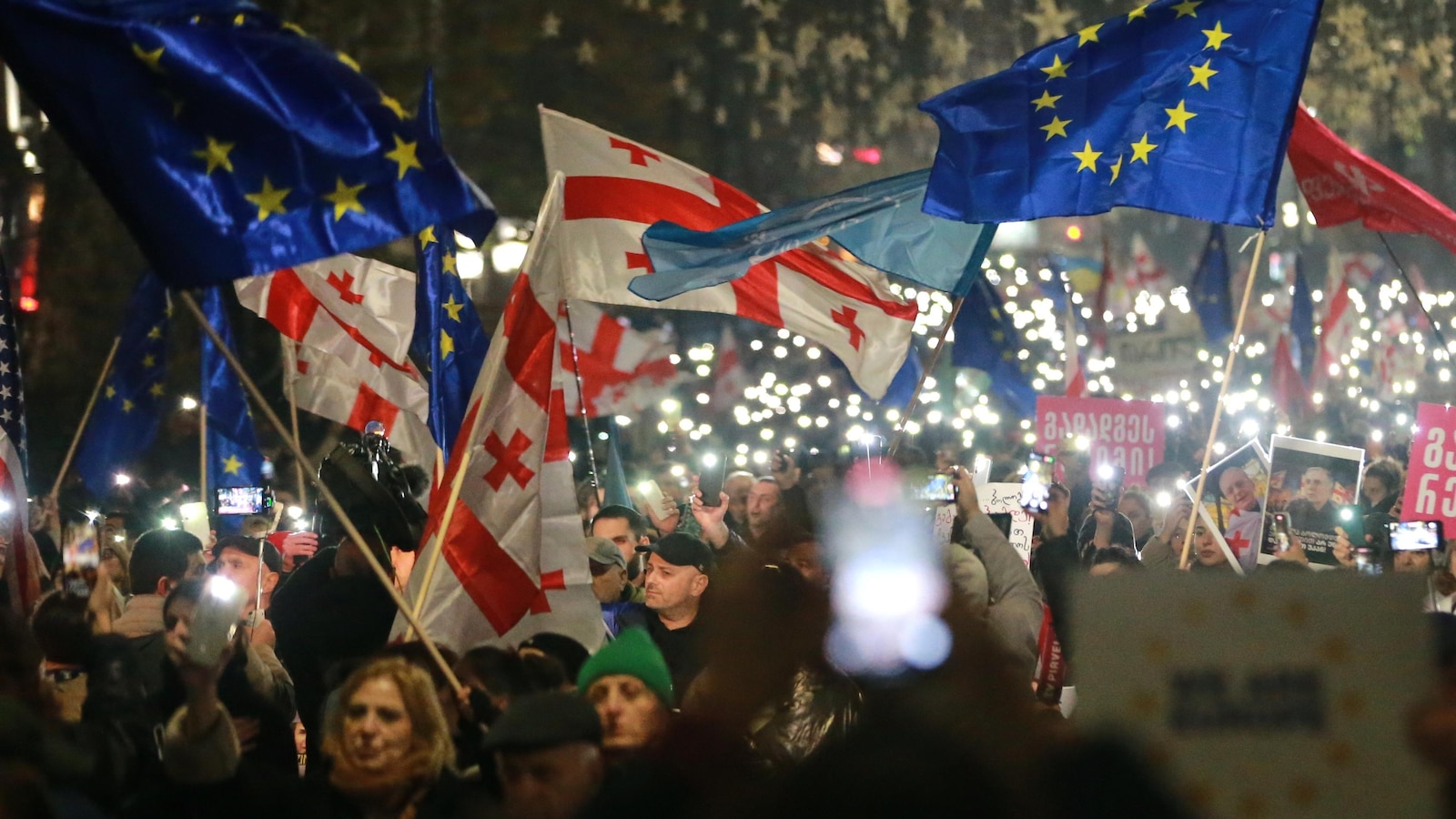
GeorgiaS Democratic Backslide: A Nation at a Crossroads
Georgia is facing a deepening political crisis, marked by increasingly restrictive laws and a crackdown on dissent that has jeopardized it’s path toward European Union membership. Recent actions by teh ruling Georgian Dream party have sparked widespread concern both domestically and internationally, raising questions about the future of democracy in the nation.
A New Wave of Restrictions
The government recently enacted legislation that considerably tightens restrictions on protests and freedom of assembly. Critics argue these laws, reminiscent of those used in russia to suppress opposition, represent a risky erosion of democratic principles.
Here’s a breakdown of the key changes:
* Wearing face masks, blocking roads, or erecting temporary structures during protests now carries penalties of up to 15 days of administrative detention for participants and 20 days for organizers.
* Fines for first-time offenders have increased tenfold, jumping from 500 lari (approximately $185) to 5,000 lari (around $1,850).
* Repeat offenses now trigger criminal charges, escalating the potential consequences for those who choose to voice their opposition.
The Human Cost of Repression
These new laws are already having a chilling effect,leading to hundreds of detentions.Among those arrested is Rusiko Kobakhidze, a mother of nine and a researcher who has been bravely protesting outside Parliament daily. She has already faced multiple short jail sentences for peacefully blocking streets.
“For my children and grandchildren, I don’t want a country where they cannot speak openly, where they will be treated unjustly and won’t find justice,” Kobakhidze stated. Her story exemplifies the personal sacrifices being made by those defending democratic values in Georgia.
Pressure on the Opposition
The crackdown extends beyond protest laws. Georgian Dream has petitioned the Constitutional Court to ban three major opposition groups: the United National Movement, Akhali/Coalition for Change, and Lelo. Several opposition leaders are currently imprisoned, in exile, or facing politically motivated criminal charges.
Tina Bokuchava, chairperson of the United National Movement, believes the ruling party is deliberately pursuing goals aligned with Russian interests. She points to the party’s founder, bidzina Ivanishvili, a billionaire who amassed his fortune in Russia, as evidence of this alignment.
EU Membership in Jeopardy
These developments have had notable repercussions for Georgia’s aspirations to join the European Union. In December 2023,the EU suspended accession talks with Georgia,citing “democratic backsliding” by the authorities.
Despite this setback, Georgian Dream officials maintain their commitment to European integration and NATO membership. They argue that international pressure shouldn’t dictate domestic policy. However, the EU enlargement report issued in November clearly stated that the government’s “repressive” actions are “fundamentally incompatible with EU values of democracy.”
What Does This Mean for You?
If you are following the political landscape of eastern Europe, understanding the situation in georgia is crucial. The country’s struggle highlights the fragility of democratic gains and the ongoing challenges to establishing stable, free societies in the region.
The current trajectory raises serious concerns about the future of civil liberties, political pluralism, and Georgia’s long-term prospects for integration with the West. It’s a situation that demands continued attention and a firm commitment to supporting those who are fighting for a more democratic future.
This is a pivotal moment for Georgia, and the choices made now will determine whether it continues on the path toward a brighter, more democratic future or succumbs to authoritarian tendencies.


