## The Cutting Edge of Aquarium Science: How Technology is Revolutionizing Animal Care adn Conservation
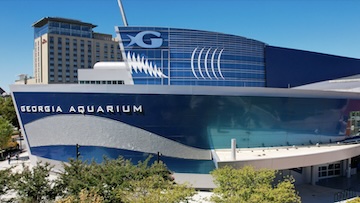
Have you ever wondered how aquariums ensure the wellbeing of their unbelievable inhabitants, and contribute to the survival of endangered species in the wild? The answer increasingly lies in the powerful intersection of technology and marine biology. A groundbreaking collaboration between Georgia Tech and Georgia Aquarium is pioneering new approaches to aquarium science, leveraging innovations in artificial intelligence, machine learning, and animal-computer interaction to enhance animal care, gather crucial data, and ultimately, bolster global conservation efforts. This isn’t just about bigger tanks; it’s about smarter, more informed approaches to understanding and protecting our ocean’s biodiversity.
More than 15 research projects have already been completed through this partnership, each demonstrating the potential of technology to address critical challenges in both aquarium settings and the natural world. From optimizing habitat design to monitoring animal behavior, the impact is far-reaching. But what does this collaboration *really* mean for the future of marine life? Let’s dive in.
Advancing Marine Conservation through technological Innovation
the synergy between Georgia Tech and Georgia Aquarium isn’t accidental. Both institutions share a core mission: to deepen our understanding of marine ecosystems and the species within them. As Perry, a key figure in the partnership, explains, “We’re all trying to learn more about the ecosystems in which these animals live, more about the species and how we can protect them.” This shared goal has fueled a remarkable period of innovation, pushing the boundaries of what’s possible in marine research.
Before the opening of the Aquarium’s Sharks! Predators of the Deep exhibit in 2020, Perry’s research focused on the delicate transition between fresh and saltwater environments within the habitat. this data wasn’t just for show; it informed crucial decisions about water-quality management, population density, and overall habitat design – insights now being applied to aquariums worldwide. This proactive approach highlights the commitment to evidence-based practices and continuous improvement within the field.
Did you Know?
Recent studies show that over 40% of marine species are facing threats due to habitat loss and climate change. Technological advancements are becoming increasingly vital in monitoring these threats and developing effective conservation strategies. (IUCN Red List)
pro Tip
When visiting aquariums, look for signage detailing enrichment programs and research initiatives. This demonstrates a commitment to animal welfare and scientific advancement.
Machine Learning: A New Lens on Animal Behavior
Georgia Tech is at the forefront of exploring the applications of artificial intelligence (AI) and machine learning in animal care. Emily Keaton, a Ph.D. student in biology, exemplifies this dedication.Having transitioned from a dive master role at the Aquarium to a researcher in Patrick McGrath’s lab, Keaton is now using AI to revolutionize behavioral monitoring within the massive Ocean Voyager exhibit – home to over 50 species.
The team’s approach involves installing strategically placed cameras throughout the exhibit. These cameras capture vast amounts of footage, which is then analyzed using machine learning algorithms.The goal? To create thorough datasets and establish baseline behavioral profiles for each species. This allows researchers to quantify changes in behavior, identify patterns, and understand how environmental factors influence animal activity. Think of it as a constant, non-invasive observation system providing unprecedented insights into the lives of these creatures. What specific behaviors are they hoping to track, and how will this data inform conservation strategies?
This technology isn’t limited to observing *what* animals do, but *why*. By analyzing subtle changes in behavior,researchers can detect early signs of stress,illness,or environmental concerns,allowing for proactive intervention. This represents a significant leap forward from traditional observation methods, which are frequently enough limited by human perception and time constraints.
Enrichment Reimagined: Understanding Animal Learning
Animal enrichment is a cornerstone of modern aquarium care, providing opportunities for animals to engage in natural behaviors and stimulate their minds.But how do we certainly know if enrichment devices are truly effective? And how can we design devices that maximize their impact? The Aquarium, in partnership with the Animal
Related reading