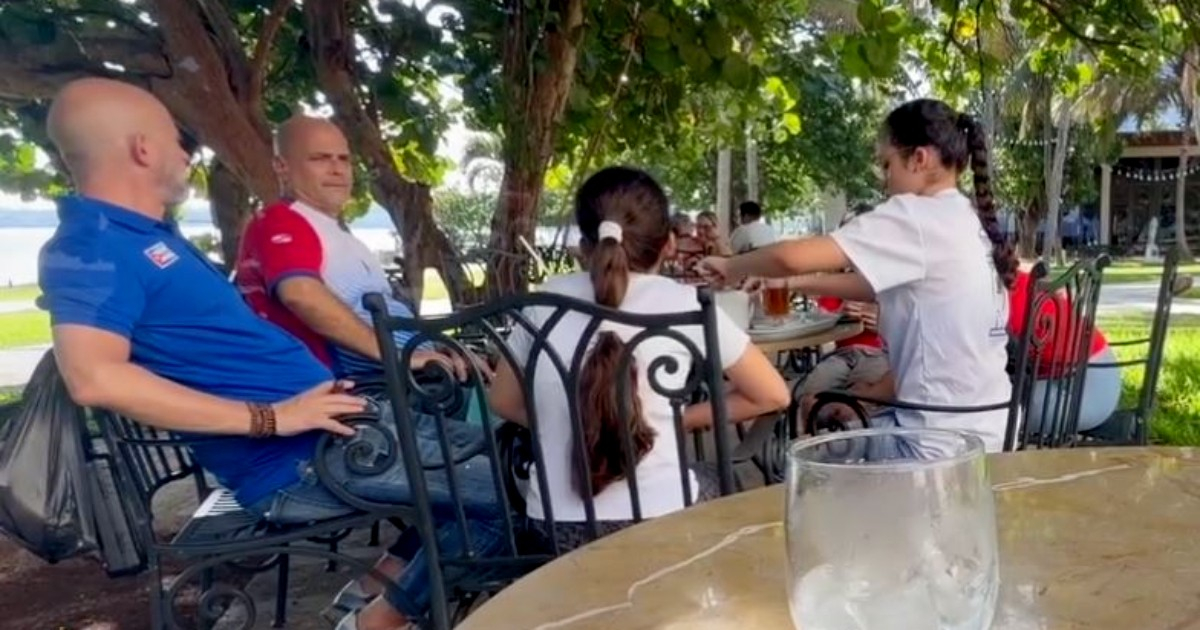
In a development that has drawn significant attention to the public movements of high-ranking Cuban officials, Gerardo Hernández Nordelo, the current National Coordinator of the Committees for the Defense of the Revolution (CDR), was recently documented at the historic Hotel Nacional de Cuba in Havana. The sighting occurred shortly following a government-organized political demonstration held along the city’s iconic Malecón, an event that highlighted the ongoing tensions within the Caribbean nation’s current socio-political landscape.
For observers of Cuban internal affairs, the presence of such a prominent figure—known internationally for his role as one of the “Cuban Five” intelligence officers—in one of the country’s most exclusive venues serves as a stark contrast to the daily economic realities faced by the general populace. As the nation grapples with severe fuel shortages, inflation, and a complex migration crisis, the optics of this encounter have ignited fresh discourse regarding the disconnect between the ruling elite and the citizens they represent.
Gerardo Hernández, who holds a seat on the Council of State and serves as a prominent face of the CDR, has long been a polarizing figure. His transition from an intelligence operative convicted in the United States to a high-ranking political leader in Cuba remains a centerpiece of the historical narrative surrounding the U.S.-Cuba diplomatic thaw that began in 2014. The U.S. Department of Justice confirmed his conviction in 2001 on charges including conspiracy to commit espionage and conspiracy to commit murder, before he was released as part of a prisoner exchange in December 2014.
The Context of Political Mobilization in Havana
The political act on the Malecón, which preceded the sighting at the Hotel Nacional, is part of a recurring pattern of state-sponsored demonstrations intended to project national unity and defiance against external pressures, particularly the long-standing United States embargo. These events are frequently organized by the CDR, an organization established in 1960 that functions as a neighborhood-based surveillance and social control network. According to the U.S. Department of State’s 2023 Country Reports on Human Rights Practices, the Cuban government maintains a monopoly on political activity, and the CDR remains a primary instrument for monitoring the activities of citizens at the local level.
When high-ranking officials are seen in luxury environments immediately following these high-energy political spectacles, it often invites scrutiny from independent media and the Cuban diaspora. The Hotel Nacional, a symbol of pre-revolutionary grandeur and a focal point for international tourism, represents a world far removed from the ration queues and infrastructure challenges described by residents in recent months. This juxtaposition is not merely a social observation. This proves a point of recurring friction in the public perception of the Cuban leadership.
Analyzing the Role of the CDR in Modern Cuba
Since assuming the role of National Coordinator of the CDR, Hernández has been tasked with revitalizing the organization, which has faced waning engagement among younger generations. The group’s primary mandate has shifted slightly to focus on “social work” and addressing local food security, yet its reputation as a repressive arm of the state continues to be its defining characteristic in international analysis. The Human Rights Watch 2024 World Report on Cuba notes that the government continues to rely on these structures to suppress dissent and maintain control over public discourse, particularly in the aftermath of the July 11, 2021, protests.

The imagery shared on social media platforms—capturing Hernández in a relaxed environment after a day of intense political rhetoric—underscores the dual reality of the Cuban political class. While the state apparatus calls upon citizens to make sacrifices in the name of the “Revolution,” the visibility of leadership in restricted or high-end spaces serves as a potent reminder of the stratified nature of contemporary Cuban society.
What This Means for Future Political Stability
The incident at the Hotel Nacional is indicative of a broader trend where every public move by a high-profile official is subject to digital surveillance by citizens and independent journalists. In an era where mobile internet access, despite its limitations and state control, has transformed the way information travels in Cuba, the ability for the government to manage its image is increasingly challenged. The government’s reliance on Amnesty International’s documented strategies of surveillance and harassment remains a central theme in reports on the country’s stability.
For the international community, the focus remains on whether these public demonstrations and the associated movements of the leadership will lead to any meaningful policy shifts or if they are simply a continuation of existing state strategies. As of now, there are no scheduled official government responses to the circulation of these images, nor is there any indication that such sightings will impact the operational duties of the CDR leadership.
Key Takeaways
- Gerardo Hernández, a former intelligence officer and current National Coordinator of the CDR, remains a central figure in the Cuban political hierarchy.
- The sighting at the Hotel Nacional highlights the ongoing gap between the lifestyles of the political elite and the general public, currently facing significant economic strain.
- The CDR continues to be a primary tool for the Cuban government to exert social control, as detailed in recent international human rights assessments.
- Public perception of government officials is increasingly influenced by social media, which provides a platform for documenting the activities of the leadership outside of state-controlled narratives.
As the situation in Cuba continues to evolve, international observers, human rights organizations, and the global press remain vigilant regarding the government’s next moves. There are no pending legal hearings or official state announcements regarding this specific incident. We encourage our readers to continue following our coverage for updates on regional political developments. We welcome your perspective on these events in the comments section below.