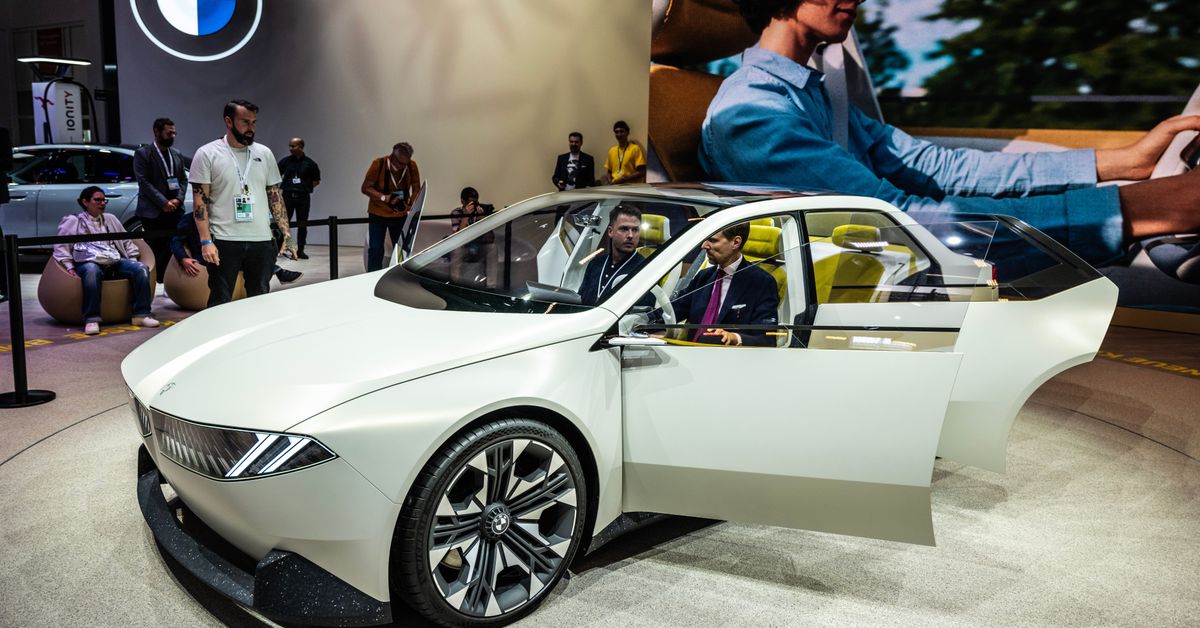
The German automotive industry—the historical engine of Europe’s industrial economy—is currently engaged in a high-stakes engineering race against a geopolitical clock. As the transition to electric vehicles (EVs) accelerates, a critical vulnerability has emerged in the heart of the machine: the electric motor. For years, the industry has relied on permanent magnet synchronous motors (PMSMs) for their high efficiency and power density, but these components depend on rare earth elements that are overwhelmingly controlled by a single source.
To secure their future, German giants like BMW and Mercedes-Benz are aggressively developing and deploying new electric motor architectures designed to achieve German auto industry electric motor independence. By pivoting away from rare earth magnets, these manufacturers are not just seeking a technical upgrade; they are attempting to decouple their supply chains from the strategic volatility of the Chinese market, ensuring that a diplomatic rift or trade restriction cannot paralyze their production lines.
This shift represents one of the most significant pivots in automotive powertrain engineering since the transition from internal combustion to electricity. The challenge is formidable: replacing high-performance magnets without sacrificing the range or performance that luxury EV buyers demand. However, the risk of “resource blackmail” has made this technical hurdle a strategic imperative for the European Union’s automotive sector.
The Magnet Dilemma: Why Rare Earths Create a Strategic Bottleneck
At the center of the conflict are rare earth elements (REEs), specifically neodymium, praseodymium, and dysprosium. These materials are essential for creating the powerful permanent magnets used in most EV motors. These magnets allow motors to be smaller, lighter, and more efficient, which directly translates to longer battery range and better vehicle performance.
The problem is not that these elements are “rare” in the geological sense, but that they are difficult and environmentally costly to extract and refine. China has spent decades dominating this pipeline. According to data from the U.S. Geological Survey (USGS), China continues to lead the world in both the mining and the processing of rare earths, controlling a vast majority of the global refined output. This concentration of power gives Beijing significant leverage over the global EV supply chain.
For German automakers, this dependence creates a “single point of failure.” If export quotas are tightened or diplomatic tensions rise, the supply of neodymium magnets could vanish overnight, halting the production of millions of vehicles. This vulnerability has pushed the industry to seek “magnet-free” alternatives that utilize more abundant, globally available materials like copper and aluminum.
Engineering a Way Out: The Rise of Externally Excited Synchronous Motors
The primary technical alternative being championed by German engineers is the Externally Excited Synchronous Motor (EESM). Unlike a permanent magnet motor, which has magnets built into the rotor to create a magnetic field, an EESM uses copper coils to create that field through an electrical current. This process is known as “external excitation.”
The advantages of EESM are primarily strategic and economic. By replacing rare earth magnets with copper windings, manufacturers can eliminate the need for neodymium and dysprosium entirely. Copper is widely available and can be sourced from a diversified set of global suppliers, including the Americas and Africa, drastically reducing the geopolitical risk associated with the powertrain.
However, the transition is not without engineering trade-offs. Permanent magnets are inherently efficient because they provide a constant magnetic field without consuming energy. In contrast, EESMs require a small amount of electricity to maintain the magnetic field in the rotor, which can slightly impact overall efficiency. The addition of coils and the necessary slip rings to feed current into the rotating rotor can make the motor slightly larger and more complex to manufacture.
Strategic Pivots: How BMW, Mercedes, and VW are Adapting
Different manufacturers are taking varied approaches to this transition, reflecting their specific brand priorities and technical philosophies.

BMW has emerged as a leader in the push for magnet-free technology. The company has already integrated externally excited synchronous motors into several of its electric drive units, including those found in the BMW i4 and iX. By opting for EESM, BMW has successfully reduced its reliance on rare earths while maintaining the high-performance characteristics expected of its “Ultimate Driving Machine” branding. This move serves as a proof-of-concept that luxury EVs can perform at a high level without relying on Chinese-processed magnets.

Mercedes-Benz is pursuing a dual-track strategy. While the company continues to use high-efficiency permanent magnets in some of its top-tier performance models, it is investing heavily in the research of alternative motor chemistries and diversifying its sourcing. Mercedes is focusing on “circular economy” initiatives, aiming to recover rare earths from old motors to create a closed-loop system that reduces the need for new raw material imports.
Volkswagen is leveraging its massive scale to drive innovation across its platform. VW is exploring a variety of motor types, including induction motors—which use no magnets at all—for certain vehicle segments. While induction motors are generally less efficient than PMSMs, they are incredibly robust and cheap to produce. By mixing and matching motor types across its portfolio, VW aims to balance cost, performance, and supply chain security.
The Regulatory Shield: The EU Critical Raw Materials Act
The industry’s technical pivot is being mirrored by a legislative one. The European Union has recognized that individual company efforts are not enough to counter systemic dependence on China. In response, the EU introduced the Critical Raw Materials Act (CRMA).
The CRMA sets ambitious benchmarks to ensure the EU’s economic security. Specifically, the act aims to ensure that by 2030, no more than 65% of any strategic raw material comes from a single third country. To achieve this, the EU is pushing for:
- At least 10% of the EU’s annual consumption of strategic raw materials to be extracted within the Union.
- At least 40% of the EU’s annual consumption to be processed within the Union.
- At least 25% of the EU’s annual consumption to come from recycled materials.
This regulatory framework provides the financial and legal incentive for German automakers to invest in the expensive R&D required to move away from rare earths. It transforms the “magnet-free” movement from a corporate preference into a continental security strategy.
The Trade-offs: Performance vs. Sovereignty
As the industry moves forward, the central question remains: will the consumer notice a difference? For the average driver, the shift from a permanent magnet motor to an externally excited one is largely invisible. Modern power electronics and software optimization have allowed engineers to bridge the efficiency gap. Through “field-oriented control” (FOC), computers can precisely manage the current in an EESM to mimic the performance of a permanent magnet motor across most driving conditions.
However, in the realm of ultra-high-performance EVs, the permanent magnet still holds a slight edge in power density—the amount of power a motor can produce relative to its size. This means that for the smallest, most powerful motors, the industry may still rely on rare earths for some time. The goal for German engineers is not necessarily a 100% immediate ban on magnets, but a drastic reduction in total volume and a diversification of the materials used.
Beyond the motor, the industry is also looking at “iron-nitride” magnets and other synthetic alternatives that could provide the strength of neodymium without the geopolitical baggage. If these materials can be scaled, they could provide the “holy grail” of EV engineering: the efficiency of a permanent magnet with the supply chain security of a copper coil.
Key Takeaways for the Future of EV Motors
- Geopolitical Risk: China’s dominance in rare earth processing (neodymium, dysprosium) has created a strategic vulnerability for European carmakers.
- Technical Solution: Externally Excited Synchronous Motors (EESM) replace permanent magnets with copper coils, eliminating the need for rare earths.
- Industry Leaders: BMW is already deploying magnet-free motors in production models, while Mercedes and VW are diversifying motor types and sourcing.
- Policy Support: The EU Critical Raw Materials Act provides a legal framework to reduce reliance on single-country sourcing by 2030.
- Performance Impact: While EESMs may have a slight efficiency penalty, software and electronics are largely neutralizing this for the end consumer.
The transition to magnet-free motors is more than a technical evolution; it is a statement of industrial sovereignty. By redesigning the electric motor, the German auto industry is ensuring that the green transition is not traded for a new form of energy dependence. The success of this pivot will determine whether Europe can lead the EV era on its own terms or remain beholden to the supply chains of its global competitors.
The next major milestone in this transition will be the rollout of the next generation of “platform” vehicles from the major German OEMs, expected between 2026 and 2028, which are slated to integrate these diversified powertrain technologies as standard across more affordable segments.
Do you think the shift toward magnet-free motors will accelerate the adoption of EVs, or will the slight efficiency trade-off hinder progress? Share your thoughts in the comments below.
Worth a look