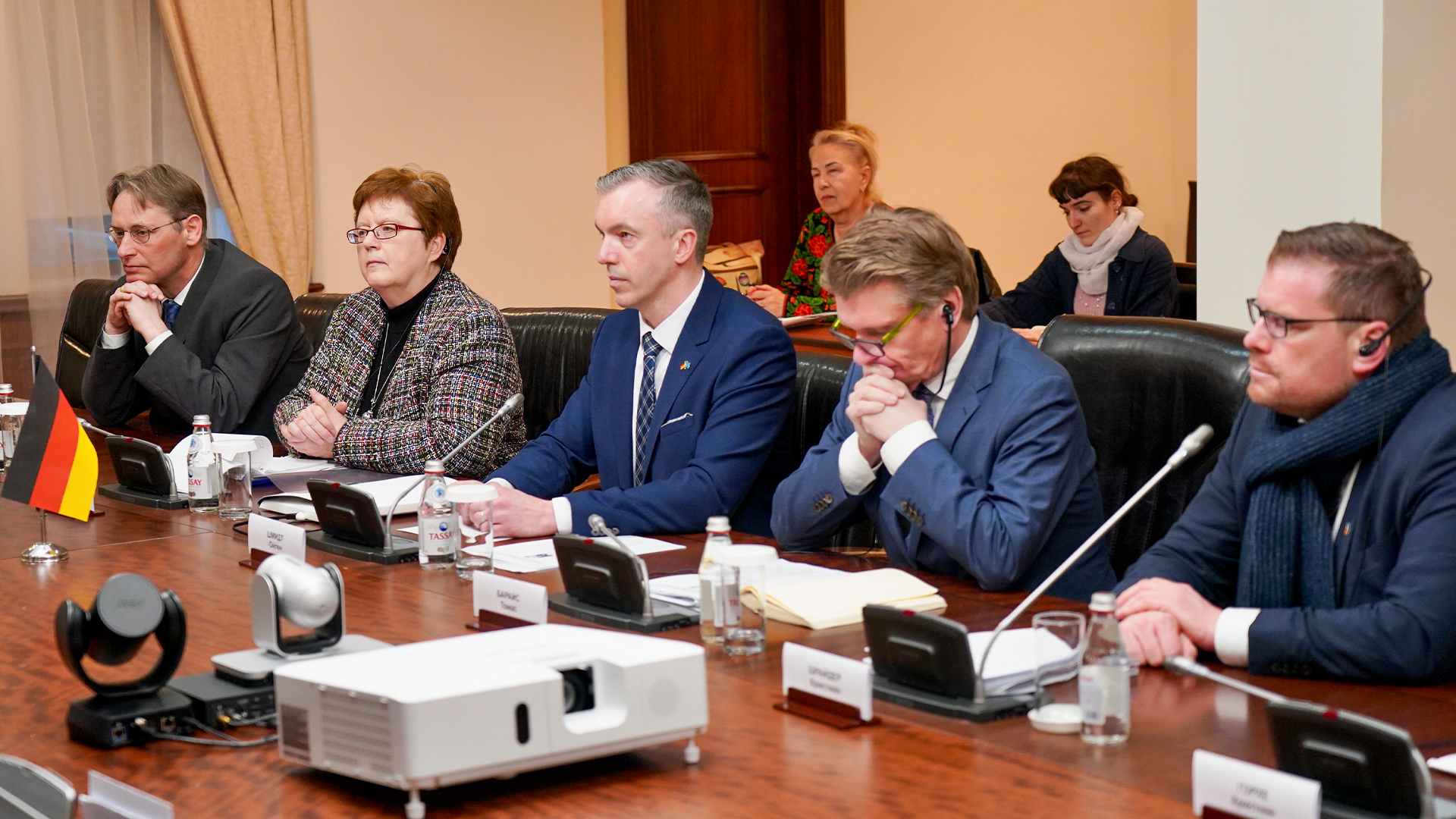
German Bundestag Labor Committee Delegation Visits Bolzano to Discuss Social Policies
On Tuesday, April 28, 2026, a delegation from the Committee on Labor and Social Affairs of the German Bundestag traveled to Bolzano, Italy, for high-level discussions with local officials on labor market reforms, social welfare programs, and cross-border cooperation. The visit, part of a broader fact-finding mission, underscores the growing importance of regional collaboration in addressing shared economic and social challenges within the European Union.
The German Bundestag, the federal parliament of Germany, plays a pivotal role in shaping national policies on employment, pensions, healthcare, and social security. The Committee on Labor and Social Affairs, one of its 24 standing committees, is responsible for drafting legislation and overseeing the implementation of laws that impact millions of workers and vulnerable populations across Germany. This visit to Bolzano highlights the committee’s proactive approach to engaging with regional stakeholders to gather insights and best practices.
While the exact agenda of the meeting remains undisclosed, sources indicate that the delegation met with Provincial Councilor for Labor, Social Policies, and Housing, Waltraud Deeg, to explore topics such as youth unemployment, integration of migrant workers, and the digital transformation of labor markets. Bolzano, an autonomous province in northern Italy with a unique bilingual (Italian-German) cultural and administrative framework, serves as a compelling case study for cross-border policy innovation.
The Role of the Committee on Labor and Social Affairs
The Committee on Labor and Social Affairs (Ausschuss für Arbeit und Soziales) is a cornerstone of Germany’s legislative process, with a mandate to address some of the most pressing issues facing the country’s workforce and social safety nets. According to the official Bundestag website, the committee’s responsibilities include:
- Drafting and amending laws related to employment, including minimum wage regulations, working conditions, and collective bargaining agreements.
- Overseeing social security systems, such as pensions, unemployment benefits, and healthcare.
- Addressing demographic challenges, including aging populations and labor shortages.
- Promoting integration and inclusion policies for migrants, refugees, and marginalized communities.
- Monitoring the impact of digitalization and automation on the labor market.
The committee is currently chaired by Matthias Bartke (SPD), a long-serving member of the Bundestag with extensive experience in labor policy. Bartke, who has held the position since 2021, has been a vocal advocate for strengthening social protections and modernizing Germany’s labor laws to adapt to the changing economic landscape. Under his leadership, the committee has prioritized issues such as fair wages, gender equality in the workplace, and the rights of gig economy workers.
In 2025, the committee played a key role in the passage of the “Act to Strengthen Collective Bargaining Autonomy” (Gesetz zur Stärkung der Tarifautonomie), which aimed to bolster the influence of trade unions and ensure fairer wages for workers in sectors with low collective bargaining coverage. The law, which came into effect in January 2026, has been closely watched by policymakers across Europe as a potential model for addressing wage stagnation and income inequality.
Why Bolzano? A Focus on Regional Innovation
Bolzano, the capital of the autonomous province of South Tyrol (Alto Adige), is a region with a distinctive political and cultural identity. With a population of approximately 530,000, South Tyrol operates under a unique autonomy statute that grants it significant legislative and administrative powers, particularly in areas such as education, healthcare, and labor policy. The province’s bilingual (Italian and German) and multicultural environment makes it a natural partner for German policymakers seeking to learn from regional best practices.
The delegation’s visit to Bolzano is part of a broader trend of cross-border cooperation between Germany and its neighbors. In recent years, German lawmakers have increasingly looked to regional governments for innovative solutions to national challenges. For example, in 2024, a similar delegation from the Bundestag visited Tyrol, Austria, to study the region’s successful apprenticeship programs, which have been credited with reducing youth unemployment and bridging skills gaps in key industries.
During their meeting with Provincial Councilor Waltraud Deeg, the German delegation likely discussed several key topics:

- Youth Employment and Vocational Training: South Tyrol has implemented a robust dual education system, combining classroom instruction with on-the-job training, which has been effective in reducing youth unemployment. The province’s vocational training programs have been particularly successful in sectors such as tourism, agriculture, and advanced manufacturing.
- Integration of Migrant Workers: Bolzano has developed innovative programs to integrate migrant workers into the labor market, including language training and recognition of foreign qualifications. These initiatives have been critical in addressing labor shortages in sectors such as healthcare and construction.
- Digital Transformation of Labor Markets: The province has invested heavily in digital infrastructure and upskilling programs to prepare workers for the demands of the digital economy. This includes initiatives to support remote work, e-commerce, and digital entrepreneurship.
- Social Welfare Reforms: South Tyrol’s social welfare system, which includes universal healthcare and generous family benefits, has been praised for its efficiency and accessibility. The German delegation may have sought insights into how these programs are funded and administered.
Councilor Deeg, who has held her position since 2018, is a key figure in South Tyrol’s labor and social policies. A member of the South Tyrolean People’s Party (SVP), she has been instrumental in advancing the province’s autonomy agenda and promoting cross-border cooperation with neighboring regions in Austria and Germany. In a statement following the meeting, Deeg emphasized the importance of sharing knowledge and experiences to address common challenges. “Our region has much to offer in terms of innovative solutions to labor market and social policy issues,” she said. “We are committed to working with our partners in Germany and across Europe to build a more inclusive and resilient economy.”
Broader Implications for Germany and the EU
The visit by the German Bundestag delegation to Bolzano reflects a growing recognition of the need for cross-border collaboration in addressing labor and social policy challenges. As Europe grapples with issues such as aging populations, labor shortages, and the impact of digitalization, regional governments are increasingly seen as laboratories for policy innovation. Germany, in particular, has much to gain from studying the successes of its neighbors, given its own demographic and economic pressures.
One of the key takeaways from the visit is likely to be the importance of flexibility and adaptability in labor market policies. South Tyrol’s ability to tailor its policies to the unique needs of its population—such as its bilingual workforce and strong ties to both Italian and German-speaking economies—offers valuable lessons for Germany, where regional disparities in unemployment and economic development remain a challenge. For example, Germany’s eastern states continue to lag behind the west in terms of economic growth and job opportunities, despite significant investment in infrastructure and education.
Another critical area of focus is the integration of migrant workers. Germany has one of the largest immigrant populations in Europe, with over 13 million people of foreign origin living in the country as of 2025. Though, challenges such as language barriers, recognition of foreign qualifications, and discrimination in the labor market persist. South Tyrol’s experience in integrating migrant workers—particularly in sectors such as healthcare and agriculture—could provide a blueprint for Germany’s federal and state governments.
The visit similarly comes at a time when the European Union is placing greater emphasis on social cohesion and economic convergence. The EU’s European Pillar of Social Rights, adopted in 2017, outlines 20 key principles aimed at ensuring fair and well-functioning labor markets and welfare systems across member states. Initiatives such as the European Skills Agenda and the Action Plan on Integration and Inclusion are designed to support member states in addressing skills gaps and promoting social inclusion. The collaboration between the German Bundestag and South Tyrol aligns with these broader EU goals, demonstrating how regional and national governments can work together to achieve common objectives.
What’s Next for the Committee on Labor and Social Affairs?
The delegation’s visit to Bolzano is part of a series of fact-finding missions and hearings scheduled for 2026. According to the Bundestag’s official calendar, the Committee on Labor and Social Affairs is expected to hold several key sessions in the coming months, including:

- May 2026: A hearing on the impact of artificial intelligence on the labor market, with testimony from industry experts, trade unions, and academic researchers.
- June 2026: A debate on proposed reforms to Germany’s pension system, including potential changes to the retirement age and contributions.
- September 2026: A session on the implementation of the “Act to Strengthen Collective Bargaining Autonomy”, with a focus on its effects on wages and working conditions.
In addition to these hearings, the committee is likely to continue its engagement with regional and international partners. Future visits may include trips to other European regions with innovative labor and social policies, such as Catalonia (Spain), which has implemented a universal basic income pilot program, and Finland, known for its progressive parental leave policies.
For stakeholders in Germany and beyond, the committee’s work will be closely watched as it shapes the future of labor and social policy in one of Europe’s largest economies. Businesses, trade unions, and advocacy groups are encouraged to monitor the committee’s official website for updates on hearings, reports, and legislative proposals.
Key Takeaways
- Cross-Border Collaboration: The visit by the German Bundestag’s Committee on Labor and Social Affairs to Bolzano highlights the growing importance of regional cooperation in addressing shared economic and social challenges within the EU.
- Focus on Innovation: South Tyrol’s unique autonomy and bilingual framework make it a compelling case study for labor market reforms, integration policies, and digital transformation.
- Legislative Priorities: The committee is currently focused on issues such as fair wages, youth unemployment, migrant integration, and the impact of digitalization on the labor market.
- EU Alignment: The visit aligns with the EU’s broader goals of promoting social cohesion and economic convergence, as outlined in the European Pillar of Social Rights.
- Next Steps: The committee will continue its fact-finding missions and hearings in 2026, with a focus on AI’s impact on labor, pension reforms, and the implementation of recent labor laws.
Conclusion
The delegation’s visit to Bolzano is a reminder of the critical role that regional governments play in shaping labor and social policies. As Germany and the EU navigate the challenges of an aging population, labor shortages, and digital transformation, collaboration with innovative regions like South Tyrol will be essential in developing effective and adaptable solutions.
For businesses, policymakers, and workers, the insights gained from this visit could inform future legislation and initiatives aimed at creating a more inclusive and resilient labor market. The next steps for the Committee on Labor and Social Affairs will be closely watched, with key hearings and reports expected in the coming months. Stay informed by following the Bundestag’s official website for updates.
What are your thoughts on the role of regional cooperation in addressing labor and social policy challenges? Share your views in the comments below and join the conversation on social media.
Worth a look