
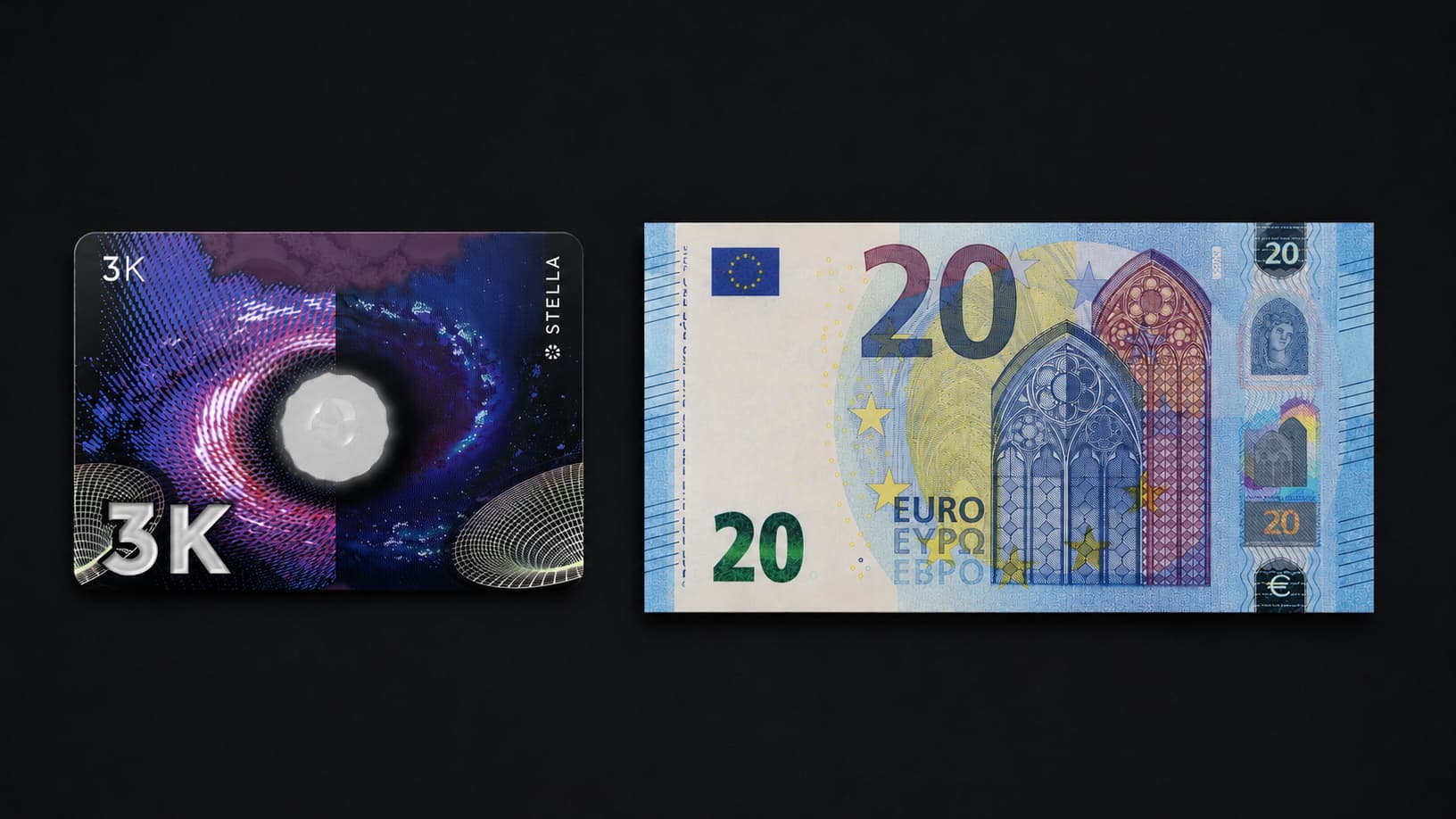
In a bold reimagining of physical currency, the German Federal Printing Office (Bundesdruckerei) has unveiled STELLA, a prototype banknote the size of a credit card—part of its groundbreaking EX NIHILO series designed to challenge conventional notions of money in an increasingly digital world. The radical redesign, presented at the Banknote Conference in Washington, D.C. on May 13, 2026, marks a significant step toward sustainable and functional cash for the future. Unlike traditional banknotes, STELLA is printed on a polymer substrate derived from renewable, non-fossil raw materials, reducing environmental impact while integrating innovative security features into an ultra-compact format.
The EX NIHILO series—Latin for “out of nothing”—embodies a philosophical and practical shift in how society perceives physical money. As central banks accelerate the development of digital currencies, the Bundesdruckerei argues that cash must evolve to remain relevant. “Innovative design approaches are necessary to ensure that cash can continue to fulfill these fundamental functions,” said Dr. Adrian Heuberger-Lewerenz, Senior Expert Currency Developer at Bundesdruckerei and lead designer of the prototypes. His statement underscores the urgency of adapting banknotes to meet modern demands for sustainability, security, and usability.
STELLA’s credit-card format is not merely a size reduction—it represents a holistic rethinking of banknote functionality. The prototype has been nominated for the International Association of Currency Affairs (IACA) Excellence in Currency Award 2026 in the “Best New House Note” category, reflecting its potential to set new industry standards. While digital payments dominate headlines, experts warn that cash remains indispensable for financial inclusion, data privacy, and economic resilience. The Bundesdruckerei’s initiative aims to bridge this gap by making physical money more practical for everyday use.
Why a Credit-Card-Sized Banknote?
The shift toward smaller, more durable banknotes is driven by three key imperatives: sustainability, security, and consumer convenience. Traditional banknotes—often printed on cotton-linen blends—contribute to deforestation and require significant energy for production. STELLA’s polymer substrate, sourced from renewable materials, aligns with global efforts to decarbonize manufacturing processes. According to Bundesdruckerei’s press release, the material not only reduces the carbon footprint but also enhances durability, extending the lifespan of each note.
Security is another critical innovation. The compact design forces designers to rethink how anti-counterfeiting features are integrated. Traditional banknotes rely on intricate patterns and holograms that are demanding to replicate in smaller formats. STELLA incorporates tactile marks and other cutting-edge technologies that remain effective even at reduced sizes. “The challenge was to pack advanced security into a space no larger than a credit card,” explained Heuberger-Lewerenz. “We achieved this by leveraging materials science and design thinking to create features that are both invisible to the naked eye and detectable by touch.”
For consumers, the credit-card format offers unparalleled convenience. With digital wallets and contactless payments reshaping transactions, physical cash must compete on usability. STELLA’s size makes it easier to carry, reducing the bulk associated with traditional wallets. Early feedback from the Banknote Conference suggests that the prototype could appeal to markets where cash remains dominant, such as emerging economies or regions with limited digital infrastructure.
The Broader Implications of STELLA
STELLA is not an isolated experiment—it is part of a broader conversation about the future of money. The Bundesdruckerei’s EX NIHILO series also includes IGNIS, a black banknote launched in 2024 that symbolizes humanity’s mastery of fire as a metaphor for innovation. Together, these prototypes explore how banknotes can transcend their historical role as mere transactional tools and become symbols of progress.

Central banks worldwide are grappling with the tension between digital innovation and the preservation of cash. The European Central Bank, for instance, has emphasized the importance of cash in maintaining financial sovereignty and protecting consumer data. STELLA’s success could influence policy discussions, particularly in regions where cash usage remains high. “This represents not about replacing digital currencies but ensuring that cash remains a viable, sustainable option for those who rely on it,” said Heuberger-Lewerenz.
The project also highlights the role of private-sector innovation in shaping public policy. By collaborating with industry partners, Bundesdruckerei has demonstrated how advancements in materials science and design can address real-world challenges. If adopted, STELLA could reduce production costs, lower environmental harm, and improve the user experience—making cash more relevant in a digital-first economy.
What’s Next for STELLA?
STELLA is currently in the prototype phase, with no confirmed timeline for mass production. However, its nomination for the IACA award suggests growing recognition of its potential. The Bundesdruckerei has indicated that further testing—including consumer trials and regulatory consultations—will determine its viability. If successful, STELLA could pave the way for a new generation of banknotes that are smaller, greener, and more secure.
For now, the focus remains on refining the design and gathering feedback. The Bundesdruckerei has invited financial institutions, policymakers, and technologists to engage with the prototype, ensuring that any future iterations reflect real-world needs. “Our goal is to create a banknote that works for everyone—whether they’re in a bustling city or a remote village,” said Heuberger-Lewerenz.
Key Takeaways
- Innovative Design: STELLA redefines banknote size and functionality, integrating advanced security into a credit-card format.
- Sustainability Focus: The polymer substrate is made from renewable materials, reducing environmental impact.
- Security Reinvention: Tactile and high-tech features ensure counterfeit resistance in a compact space.
- Consumer Convenience: The smaller size aligns with modern lifestyles, making cash easier to carry.
- Policy Implications: STELLA could influence global discussions on cash’s role in a digital economy.
- Next Steps: Prototyping and regulatory consultations will determine if STELLA moves to production.
As the world watches central banks experiment with digital currencies, STELLA offers a compelling counterpoint: physical money can evolve, too. For businesses, consumers, and policymakers, this prototype raises important questions about the future of cash—and whether innovation can keep it relevant in an era of rapid technological change.

What do you think? Could a credit-card-sized banknote become the norm? Share your thoughts in the comments below or join the conversation on Twitter. For updates on the IACA award and further developments, stay tuned to Bundesdruckerei’s official newsroom.