
Germany is fundamentally altering its civilian infrastructure to support military logistics, marking a strategic pivot as Berlin prepares for the possibility of a wider conflict in Europe. This shift, characterized by the conversion of commercial ports and the potential repurposing of public facilities, underscores a new reality where the Federal Republic is positioning itself as the primary logistics hub for NATO’s eastern flank.
The transition is not merely a matter of procurement but a structural overhaul of how the state manages its physical assets. From reinforcing loading docks in the North Sea to drafting plans for expanded civilian shelters, the German government is attempting to bridge a critical gap between its geopolitical ambitions and its decaying domestic infrastructure.
Still, the scale of the task has exposed significant vulnerabilities. Despite massive investments, military planners warn that logistics are lagging behind the pace of rearmament, creating a bottleneck that could jeopardize the rapid movement of troops and equipment during a crisis. This tension defines the current era of German defense: a race to modernize the “back office” of war before the strategic need becomes an immediate necessity.
Reinforcing the Gateway: The Bremerhaven Upgrade
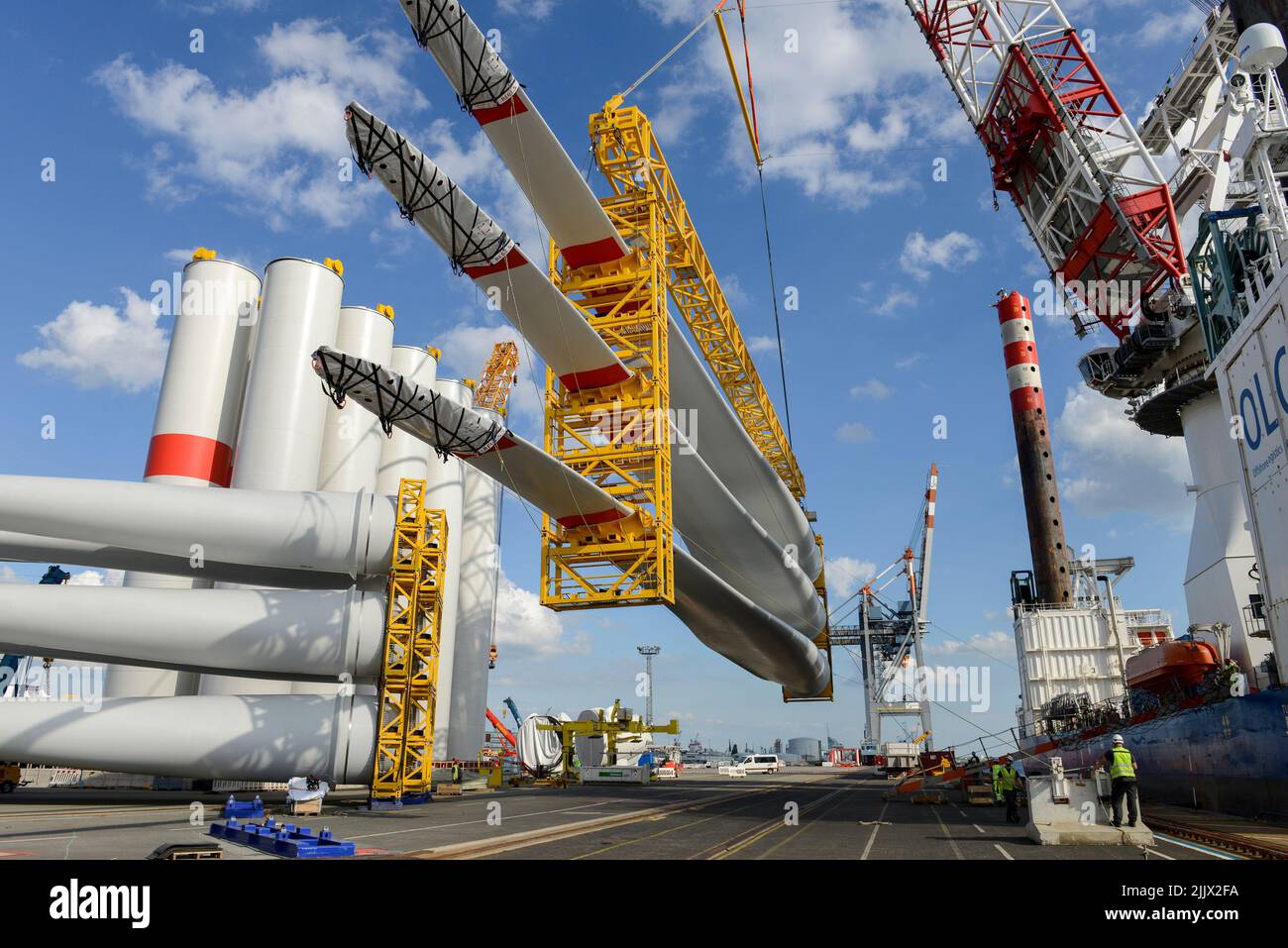
A primary example of this infrastructure conversion is taking place in Bremerhaven on Germany’s North Sea coast. Europe’s largest car port is currently undergoing a €1.35 billion ($1.6 billion)
upgrade, funded by the state investment specifically designed to reinforce loading docks. While the port has traditionally served as a hub for exporting vehicles from manufacturers like Mercedes-Benz and VW, the new modifications are intended to allow the port to handle the weight and scale of heavy military hardware.
This shift is part of a broader strategy to ensure that the “Military Mobility” of NATO forces is not hindered by civilian limitations. For decades, Germany’s infrastructure has been optimized for commercial efficiency rather than military resilience. The Bremerhaven project represents a conscious decision to prioritize the ability to receive and deploy armored divisions over purely commercial throughput.
The OPLAN DEU and the ‘Logistics Hub’ Strategy
The driving force behind these changes is the Operational Plan for Germany (OPLAN), a confidential blueprint that outlines how Berlin would organize the defense of its territory in a major NATO conflict. According to reports, the OPLAN views recent hybrid threats—including cyberattacks and sabotage—not as isolated incidents, but as preparation for war
and the opening salvo of a larger conflict.
Under this new strategic framework, Germany is transitioning from a “frontline state” to a “logistical heart.” This means the country is no longer just focusing on its own borders, but on its capacity to move up to 800,000 soldiers and their equipment across the continent. To achieve this, the government is exploring the conversion of public and private facilities into civilian shelters, as reported by Reuters in November 2024 as part of a proposal to expand domestic defense.
Key Infrastructure Challenges
Despite the strategic intent, the execution has been marred by what experts describe as an “infrastructure disaster.” The decay of bridges, rail lines and energy grids has created a precarious situation for NATO’s New Force Model. The primary obstacles include:
- Bridge Weight Limits: Many German bridges cannot support the weight of modern main battle tanks without risking collapse.
- Bureaucratic Friction: Prohibitive regulations and slow permitting processes have delayed the modernization of critical transport corridors.
- Energy Vulnerability: Aging electricity grids are seen as a critical weakness, though they are slated for investment under broader spending plans.
The Cost of Readiness: Funding and Friction
The financial commitment to this overhaul is staggering. Discussions have centered around a proposed €500 billion fund intended to revitalize transportation, energy grids, and housing over a 10-year period. This massive injection of capital is seen as the only way to save a decaying system that currently threatens the mobility of the entire European alliance.
Yet, the money alone has not solved the readiness gap. In February 2025, reports indicated that Germany was missing key military targets, with some assessments suggesting only 50% battle-ready
capacity despite the government’s overhaul efforts. This discrepancy highlights the difference between purchasing new weapons and building the infrastructure necessary to actually deploy them.
The “Zeitenwende,” or historic turning point, promised by Chancellor Olaf Scholz, is thus moving into a second, more difficult phase. While the first phase was about the Sondervermögen (special fund) for equipment, the second phase is about the physical reality of the German landscape—the roads, the ports, and the shelters.
Comparison: Commercial vs. Military Infrastructure Needs
| Feature | Commercial Priority (Pre-2022) | Military Priority (Current) |
|---|---|---|
| Port Docks | Optimized for car/container throughput | Reinforced for heavy armored vehicle loading |
| Rail/Roads | Just-in-time delivery for industry | High-weight capacity for troop movement |
| Public Spaces | Urban development and leisure | Convertible civilian shelters and bunkers |
| Energy Grid | Market-driven stability | Hardened resilience against sabotage |
What This Means for Europe
Germany’s struggle to modernize its infrastructure has implications for every NATO member. If the “linchpin” of European logistics fails, the ability to reinforce the eastern flank in the event of a Russian escalation is severely compromised. The conversion of civilian assets is not just a German domestic issue; it is a core component of the collective defense of the European Union.
The shift also signals a psychological break from the post-Cold War era. By preparing civilian infrastructure for war, Germany is tacitly acknowledging that the period of “peace dividends” has ended. The integration of private-sector logistics with military needs suggests a move toward a “total defense” model, where the distinction between civilian and military infrastructure becomes increasingly blurred.
As Berlin continues to navigate this transition, the focus remains on the “last mile” of logistics. The ability to move a tank from a port in Bremerhaven to a position in Poland or the Baltics depends not on the quality of the tank, but on the strength of the bridges and the capacity of the rail lines in between.
The next critical checkpoint for this transition will be the implementation and auditing of the infrastructure spending plan, as the government seeks to determine if the €500 billion investment can be deployed quick enough to meet the timelines set by NATO’s New Force Model.
We invite our readers to share their perspectives on Europe’s shifting defense landscape in the comments below. How should democratic nations balance civilian quality of life with the necessity of military readiness?
Keep reading