
The financial landscape of the American Southwest is shifting as rapidly as its demographics, and few companies are positioned as prominently at this intersection as Pinnacle West Capital Corporation. The parent company of Arizona Public Service (APS), one of the largest electric utilities in the United States, has seen its market valuation climb as investors bet on a unique convergence of industrial expansion and population surges in the desert state.
Recent market data indicates that Pinnacle West Capital has experienced significant growth over the past year, reflecting a broader investor confidence in the utility sector’s role in supporting the artificial intelligence (AI) revolution. While the energy sector often moves with a predictable, slow-growth cadence, the specific dynamics of the Arizona market—characterized by a massive influx of residents and the construction of power-hungry data centers—have turned the company into a focal point for those tracking the infrastructure needs of the digital age.
For investors, the narrative surrounding Pinnacle West is no longer just about maintaining a power grid; it is about scaling that grid to accommodate a latest era of computing. From the sprawling semiconductor plants to the clandestine data hubs of Big Tech, the demand for reliable, high-capacity electricity in Arizona is reaching unprecedented levels, providing a clear tailwind for the company’s long-term revenue projections.
The Data Center Boom and the AI Power Surge
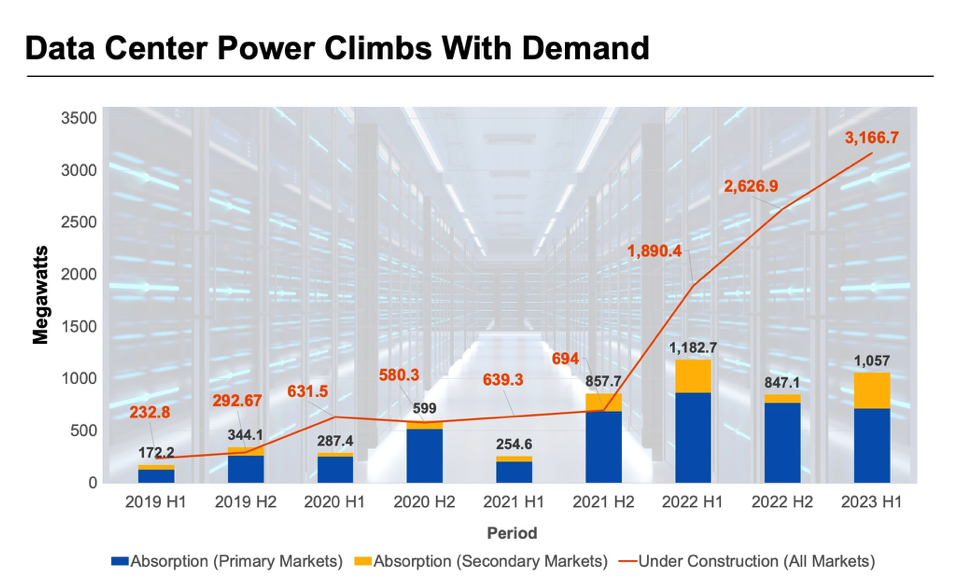
The primary catalyst driving the current interest in Pinnacle West Capital is the exponential rise in electricity demand from data centers. As generative AI becomes integrated into global business operations, the physical infrastructure required to process these workloads—massive server farms—requires an immense and constant supply of power. Arizona, specifically the Phoenix metropolitan area, has emerged as a premier destination for these facilities due to its available land, favorable tax environment, and established power infrastructure.
Data centers are notoriously energy-intensive, requiring power not only to run the servers but also to cool them in the oppressive heat of the Sonoran Desert. This creates a symbiotic relationship between the tech industry and utility providers. According to reports on regional energy trends, the proliferation of these centers is transforming the load profiles of utilities like APS, shifting them from traditional residential-heavy demand to industrial-scale, 24/7 consumption patterns.
This trend is further amplified by the arrival of “mega-projects” in the region. The most notable example is the massive investment by Taiwan Semiconductor Manufacturing Company (TSMC), which is constructing a multi-billion dollar semiconductor fabrication plant in Phoenix. These facilities are among the most energy-intensive industrial sites in existence, necessitating significant upgrades to the local transmission and distribution networks managed by Pinnacle West’s subsidiary.
Demographic Shifts: Arizona’s Population Engine
Beyond the high-tech industrialization, Pinnacle West is benefiting from a sustained migration trend. Arizona has consistently ranked as one of the fastest-growing states in the U.S. Over the last decade. This population growth is not merely a statistical curiosity; it represents a fundamental increase in the “base load” of the electrical grid. Every new housing development and commercial plaza increases the number of metered connections and the overall volume of kilowatt-hours sold.
The migration is driven by a combination of lower costs of living compared to coastal hubs and a business-friendly environment. As the population swells, the demand for residential electricity rises, particularly during the extreme summer months when air conditioning is a necessity for survival. This seasonal volatility creates a high-stakes environment for grid management, but it also ensures a steady, growing stream of revenue for the utility provider.
The integration of new residents also forces a modernization of the grid. Pinnacle West has had to invest heavily in “smart grid” technology to manage this growth efficiently. These investments, while costly in the short term, are often recoverable through regulatory rate cases, allowing the company to maintain its margins while expanding its infrastructure to meet the needs of a growing citizenry.
The Balancing Act: Clean Energy and Reliability
Despite the growth prospects, Pinnacle West faces a complex challenge: meeting this surging demand while adhering to increasingly stringent environmental mandates and corporate sustainability goals. The transition from coal-fired power plants to renewable energy is a central pillar of the company’s current strategy.
The company has committed to a transition toward a cleaner energy mix, incorporating more solar and wind power into its portfolio. However, the “intermittency” of renewables—the fact that solar doesn’t operate at night and wind doesn’t always blow—poses a risk to the reliability required by data centers. A data center cannot afford a millisecond of downtime, meaning Pinnacle West must balance the shift toward green energy with the maintenance of reliable “baseload” power, such as natural gas or nuclear energy.
This transition is not without friction. Regulatory bodies and environmental advocates often clash over the speed of the transition and the cost of new infrastructure. The company must navigate the Arizona Corporation Commission (ACC), the state’s regulatory agency that approves rate hikes and oversees utility operations. The ACC’s decisions on what costs can be passed on to consumers are critical to the company’s profitability.
Key Growth Drivers at a Glance
| Driver | Impact on Utility | Primary Source of Demand |
|---|---|---|
| AI Infrastructure | High-density, 24/7 power load | Hyperscale Data Centers |
| Semiconductor Manufacturing | Massive industrial energy spikes | TSMC and chip fabrication |
| Population Growth | Steady increase in residential meters | Domestic migration to Arizona |
| Energy Transition | Capital expenditure for renewables | State and Federal climate goals |
Financial Outlook and Investor Sentiment
From a financial perspective, Pinnacle West Capital is viewed as a “defensive” play with a “growth” kicker. Utilities are traditionally seen as safe havens because electricity is a non-discretionary service. However, the specific growth catalysts in Arizona—AI and semiconductors—provide a growth trajectory that is rare for the utility sector.
The company’s stock performance is closely tied to its ability to manage capital expenditures (CapEx) while maintaining a healthy dividend for shareholders. Investors are closely watching the company’s debt-to-equity ratio as it borrows to fund the massive infrastructure upgrades required for the data center boom. If the company can successfully integrate these new loads without compromising grid stability or incurring unsustainable debt, the upward trajectory of the stock is likely to continue.
the company’s ability to secure “Power Purchase Agreements” (PPAs) with tech giants allows it to lock in long-term revenue streams. These agreements often provide the financial certainty needed to justify the construction of new power plants or transmission lines, reducing the risk for shareholders.
Risk Factors: Water and Regulation
It would be remiss to ignore the existential risks facing any large-scale operation in the Southwest: water scarcity. Power plants, particularly traditional thermal plants, require vast amounts of water for cooling. Similarly, data centers use millions of gallons of water to keep servers from overheating. As the Colorado River basin faces long-term drought conditions, the competition for water between agriculture, residential use, and industrial power generation is intensifying.
Any regulatory restriction on water usage could directly impact the ability of Pinnacle West to expand its capacity or attract new data center clients. The company is investing in water-efficient cooling technologies, but the macro-environmental pressure remains a significant variable that could disrupt the current growth narrative.
political risk remains a factor. Changes in state leadership or a shift in the composition of the Arizona Corporation Commission could lead to more aggressive rate caps or mandates for faster decommissioning of fossil fuel assets, which could squeeze profit margins in the short term.
Summary of Strategic Position
- Market Advantage: Monopoly-like position in a high-growth geographic region.
- Revenue Catalyst: The “AI Gold Rush” requiring massive physical power infrastructure.
- Operational Challenge: Transitioning to renewables without sacrificing the 99.99% reliability required by tech clients.
- External Threat: Long-term water scarcity in the arid Southwest.
As the digital economy continues to decentralize and expand, the physical constraints of the power grid grow the ultimate bottleneck. Pinnacle West Capital is not just selling electricity; it is selling the capacity for the future of computing to exist in the desert. For the global investor, the company serves as a proxy for the physical reality of the AI boom—proving that the “cloud” actually relies on very heavy, very expensive, and very power-hungry hardware on the ground.
The next major milestone for investors will be the company’s next quarterly earnings report and the associated regulatory filings with the U.S. Securities and Exchange Commission (SEC), which will provide updated guidance on capital expenditures and load growth projections for the coming fiscal year.
We want to hear from you. Do you believe the utility sector is the safest way to play the AI boom, or are the environmental risks in the Southwest too high? Share your thoughts in the comments below.
Keep reading