
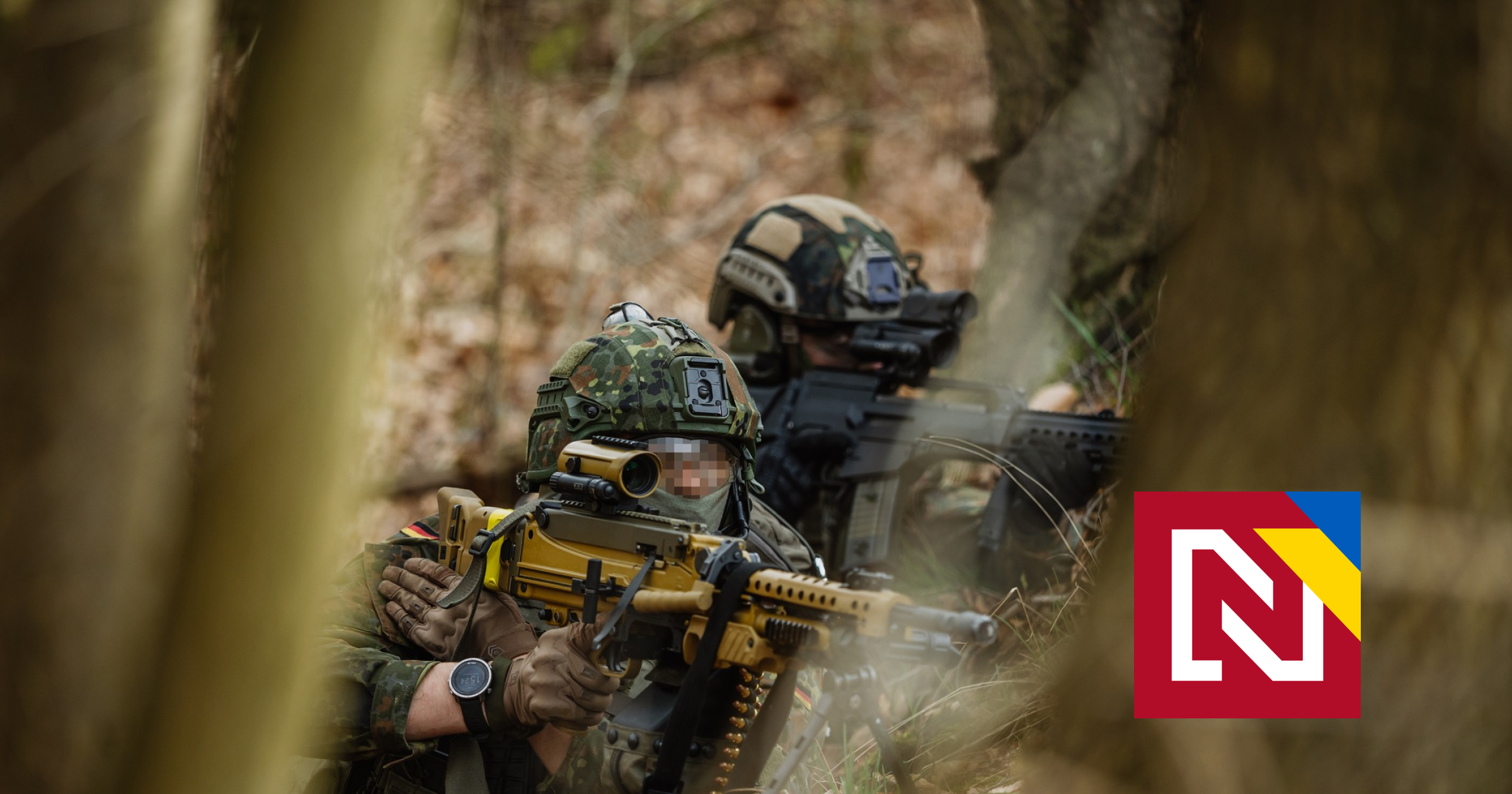
Germany’s Deterrence Plan: How Berlin Is Preparing for a Potential Conflict With Russia
BERLIN — Nearly three years after Russia’s full-scale invasion of Ukraine, Germany is undergoing its most significant military transformation since the Cold War. With growing concerns that Moscow’s ambitions may not stop at Ukraine, Berlin is rapidly rebuilding its defense capabilities, modernizing its armed forces, and preparing its population for the possibility of direct conflict. At the heart of this effort is a sweeping strategy designed not only to strengthen Germany’s own defenses but also to deter Russian aggression against NATO’s eastern flank.
Speaking exclusively to military and defense analysts, Germany’s top military officials have made it clear: the threat is no longer theoretical. Carsten Breuer, Inspector General of the Bundeswehr (Germany’s armed forces), has warned that Russia is actively preparing for potential attacks on NATO members, including Germany itself. “We must be ready to fight tonight,” Breuer stated in a recent interview, underscoring the urgency of Berlin’s military overhaul. His remarks reflect a broader shift in German defense policy, one that prioritizes readiness, resilience, and deterrence in the face of an increasingly assertive Kremlin.
This shift comes as Germany grapples with a stark reality: after decades of underinvestment in its military, the country is now racing to rebuild its defense infrastructure. The effort includes expanding the size of the Bundeswehr, accelerating weapons procurement, and reintroducing mandatory military service—a controversial but increasingly discussed option. At the same time, Berlin is working closely with NATO allies to ensure a unified response to any potential Russian aggression, particularly in Eastern Europe, where tensions remain high.
The Threat Assessment: Why Germany Believes It’s a Target
Germany’s concerns about Russian aggression are not new, but they have intensified since the start of the war in Ukraine. In October 2024, Breuer told Defense News that Russia’s invasion of Ukraine was part of a broader strategy to “redraw the map of Europe’s security policy.” He warned that Moscow’s actions in Ukraine were not an isolated event but a precursor to potential future conflicts, including against NATO members. “The war in Ukraine is not just about Ukraine,” Breuer said. “It is about the future of European security.”
These concerns were echoed by German Chancellor Olaf Scholz, who has repeatedly emphasized the need for Germany to accept a leading role in European defense. In a February 2024 speech, Scholz described the current security environment as “the most dangerous since the end of the Cold War,” calling for a fundamental shift in Germany’s approach to military preparedness. His government has since pushed through a series of defense reforms, including a €100 billion special fund for the Bundeswehr, aimed at modernizing equipment and increasing troop readiness.
Russia’s rhetoric has only added to Germany’s sense of urgency. In a December 2022 phone call with Scholz, Russian President Vladimir Putin demanded that NATO accept “new territorial realities” in Ukraine—a reference to Moscow’s illegal annexation of Ukrainian territory—as a precondition for peace talks. The call, which was later confirmed by the Kremlin, was widely interpreted as an attempt to legitimize Russia’s territorial gains and undermine Western support for Ukraine. Ukrainian President Volodymyr Zelenskyy condemned the call, warning that it risked opening a “Pandora’s box” that could embolden further Russian aggression.
Rebuilding the Bundeswehr: A Military in Transition
Germany’s military transformation is centered on three key pillars: expanding the size of the armed forces, modernizing equipment, and improving readiness. At the forefront of this effort is German Defense Minister Boris Pistorius, who has set an ambitious goal of increasing the Bundeswehr’s active-duty personnel to nearly 500,000 soldiers. “The target of reaching nearly half a million soldiers is not a ceiling—it is a floor,” Pistorius said in a June 2025 interview with Tagesschau. “We must be prepared for a long-term confrontation with Russia.”
To achieve this, the German government has introduced a series of measures aimed at attracting new recruits. These include financial incentives for soldiers, streamlined enlistment processes, and expanded training programs. The Bundeswehr has also launched a high-profile recruitment campaign, targeting young Germans with messages about service, patriotism, and the importance of defending Europe’s security.

However, expanding the military is only part of the equation. Germany is also investing heavily in modernizing its defense capabilities. The €100 billion special fund, approved by the German parliament in 2022, is being used to purchase new fighter jets, tanks, and air defense systems. Among the most significant acquisitions is the F-35 Lightning II, a fifth-generation stealth fighter that will replace Germany’s aging Tornado fleet. The first F-35s are expected to be delivered in 2026, with full operational capability projected by 2030.
In addition to hardware, Germany is also focusing on improving its cyber defenses and electronic warfare capabilities. The Bundeswehr’s Cyber and Information Space Command (CIR) has been expanded, with a mandate to protect critical infrastructure and counter Russian cyber threats. “Cyber warfare is already happening,” said a senior German defense official, speaking on condition of anonymity. “We must be prepared to defend ourselves in this domain as well.”
The Debate Over Conscription: A Return to Mandatory Military Service?
One of the most contentious aspects of Germany’s military transformation is the debate over reintroducing mandatory military service. The issue has divided politicians, military leaders, and the public, with opinions ranging from strong support to outright opposition.
Friedrich Merz, leader of the center-right Christian Democratic Union (CDU) and its Bavarian sister party, the Christian Social Union (CSU), has been a vocal advocate for reinstating conscription. In a July 2025 interview with Süddeutsche Zeitung, Merz argued that mandatory service would help address the Bundeswehr’s personnel shortages although fostering a sense of national duty among young Germans. “We need a military that reflects our society,” Merz said. “Conscription would ensure that we have the manpower to defend our country.”
Pistorius, however, has been more cautious on the issue. While he has acknowledged the potential benefits of conscription, he has also emphasized the need for a broader discussion about the future of military service in Germany. “The question is not just whether we reintroduce conscription, but how we make military service attractive to young people,” Pistorius said in a May 2025 speech. “We must offer them meaningful opportunities, whether through voluntary service or other forms of national service.”
The debate over conscription is likely to intensify in the coming months, particularly as Germany prepares for a potential snap election in early 2026. The issue has grow a political flashpoint, with parties on both the left and right offering competing visions for the future of the Bundeswehr. For now, the government has opted for a voluntary approach, but the discussion remains far from settled.
NATO’s Eastern Flank: Germany’s Role in Deterring Russian Aggression
Germany’s military buildup is not happening in isolation. As the largest economy in Europe and a key NATO member, Germany plays a central role in the alliance’s efforts to deter Russian aggression, particularly in Eastern Europe. Since the start of the war in Ukraine, Germany has significantly increased its military presence in the region, deploying troops to Lithuania, Poland, and the Baltic states as part of NATO’s enhanced Forward Presence (eFP) mission.
In Lithuania, Germany leads a multinational battlegroup of approximately 1,600 soldiers, one of four such battlegroups deployed by NATO to the Baltic states, and Poland. The German-led battlegroup, which includes troops from Belgium, the Netherlands, and Norway, is part of NATO’s broader strategy to reinforce its eastern flank and deter potential Russian attacks. “Our presence in Lithuania is a clear signal to Moscow,” said a German military officer stationed in the country. “We are here to defend NATO territory, and we are prepared to do so.”
Germany is also playing a leading role in NATO’s new defense plans, which were approved at the alliance’s 2023 Vilnius Summit. These plans outline a series of measures aimed at improving NATO’s readiness and response capabilities, including the creation of new force models and the pre-positioning of equipment in Eastern Europe. Germany has committed to providing a significant portion of the forces required for these plans, including a division-sized unit that could be rapidly deployed to the region in the event of a crisis.
Beyond military deployments, Germany is also working to strengthen its political and economic ties with Eastern European allies. In 2024, Germany and Poland signed a landmark defense cooperation agreement, which includes joint military exercises, intelligence sharing, and collaboration on defense procurement. The agreement is seen as a critical step in building a unified European defense posture, one that can effectively counter Russian aggression.
Public Opinion and the Challenges Ahead
Despite the urgency of Germany’s military transformation, the effort faces significant challenges, both domestically and internationally. One of the biggest hurdles is public opinion. While support for Ukraine remains strong in Germany, there is less consensus on the need for increased military spending and a larger Bundeswehr. A 2024 survey by Körber-Stiftung found that only 45% of Germans supported increasing defense spending, down from 52% in 2022. Similarly, a 2025 poll by Infratest dimap found that just 38% of Germans favored reintroducing conscription, with 57% opposed.

These divisions reflect broader concerns about the direction of German defense policy. Some critics argue that the government’s focus on military buildup is misplaced, and that more resources should be devoted to diplomacy and conflict prevention. Others worry that Germany’s increased military engagement could provoke Russia and escalate tensions in Europe. “We must be careful not to sleepwalk into a new Cold War,” said Sahra Wagenknecht, leader of the left-wing Bündnis Sahra Wagenknecht (BSW) party, in a March 2025 speech. “Diplomacy, not militarization, should be our priority.”
Despite these challenges, Germany’s military leaders remain steadfast in their commitment to rebuilding the Bundeswehr. “The world has changed, and we must change with it,” Breuer said in a recent address to the German parliament. “The threat from Russia is real, and we must be prepared to meet it.”
What Comes Next?
As Germany continues its military transformation, several key developments are on the horizon. In the coming months, the German government is expected to finalize its new defense strategy, which will outline the country’s long-term military priorities. The strategy is likely to include further increases in defense spending, additional investments in cyber defense, and a renewed focus on NATO’s eastern flank.
Meanwhile, the debate over conscription is set to intensify, with the government expected to release a white paper on the future of military service in early 2026. The paper will likely include proposals for expanding voluntary service programs and exploring alternative forms of national service, such as civil defense or disaster response.
On the international stage, Germany will continue to play a leading role in NATO’s efforts to deter Russian aggression. In 2026, Germany is scheduled to host a major NATO exercise, which will test the alliance’s readiness and response capabilities. The exercise, which will involve tens of thousands of troops from across the alliance, is expected to send a strong message to Moscow about NATO’s commitment to collective defense.
For now, Germany’s message is clear: the country is determined to defend itself and its allies, and it is prepared to take whatever steps are necessary to ensure its security. As Breuer place it, “We are not looking for conflict, but we will not shy away from it. Our goal is peace, but we will defend our freedom—whatever the cost.”
What do you think about Germany’s military transformation? Should NATO take a stronger stance against Russia, or is diplomacy the better path? Share your thoughts in the comments below and join the conversation.