The Enduring Spirit of Yiddish: From Devastation to Revival
Despite the unimaginable loss of life during the Holocaust, Yiddish remarkably remained the dominant language among Jewish communities immediately following World War II. However, over the latter half of the 20th century, the number of Yiddish speakers continued to decline.This was largely due to assimilation – both voluntary and forced – within the Ashkenazi population in places like the Soviet Union, the United States, and Israel, where Hebrew holds official language status.
Today, estimates suggest between 500,000 and 1 million people actively use Yiddish in their daily lives, primarily within ultra-Orthodox Jewish communities. UNESCO recognizes Yiddish as an endangered language, not only in Germany but also across its ancient sphere of influence – spanning from the United Kingdom to russia and Scandinavia to Italy – and even in Israel.
A Language Rooted in History
Yiddish emerged approximately 1,000 years ago, evolving from the German dialects spoken during that period. Consequently, the two languages share a significant amount of vocabulary. In fact, for those wiht a background in German, understanding Yiddish can be surprisingly accessible, as retiree Sabine Lioy notes.
Many individuals drawn to learning Yiddish do so becuase of their family heritage. However, a growing number are discovering the language independently, captivated by its rich cultural history. You might even recognize some Yiddish-derived words already in common English usage, like:
* Klutz: A clumsy person.
* Schlep: To carry something burdensome.
* Chutzpah: Audacity or sheer gall.
Berlin: A Modern Hub of Yiddish Culture
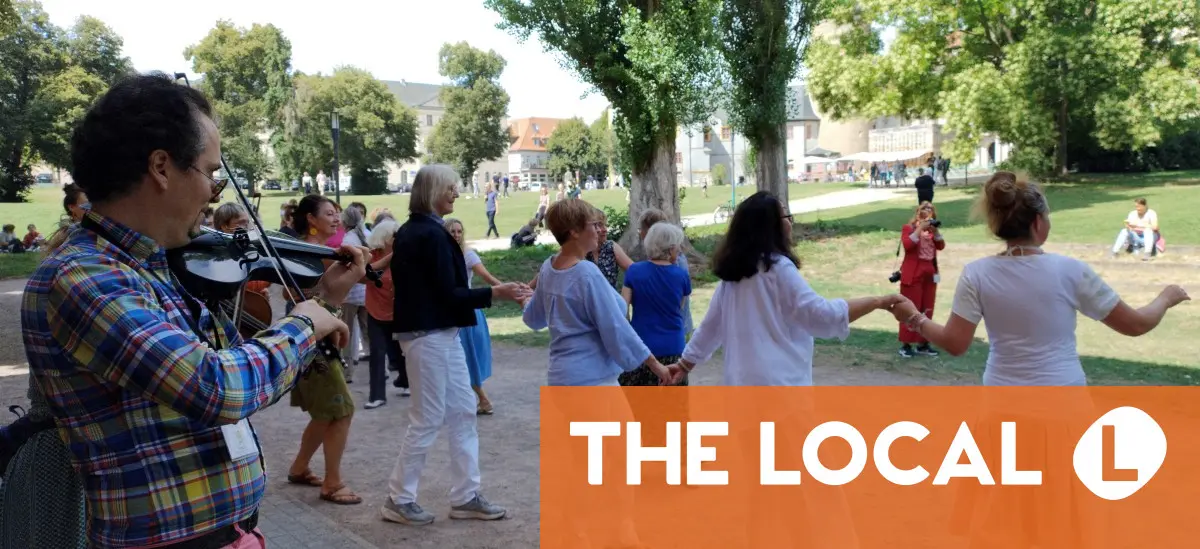
Berlin once served as a vibrant center for Yiddish writers and artists in the early 20th century. Poet and activist Jake Schneider explains it was essential for creatives to be seen in Berlin. Today, the city is experiencing a resurgence as a key location for secular Yiddish life.
Its thriving arts scene and energetic atmosphere fuel innovative events, including pop-up art exhibitions, open mic nights, and Yiddish dance parties. However, schneider and others involved in the Yiddish revival are mindful of the “danger of becoming really wrapped in a ball of nostalgia and wistfulness.”
Yiddish as a tool for Contemporary Dialog
Instead of simply preserving the past,this new generation is utilizing Yiddish as a platform to discuss contemporary Jewish identity and politics. The language is being actively employed to confront present-day challenges and even contemplate the future.
Consider daniel Kahn, a musician performing in Weimar, who addressed the complexities of the October 7 attacks by Hamas and the subsequent military response in Gaza. He performed a poignant work by Yiddish poet Zackary Sholem Berger, singing:
* “Their deaths will not revive the dead.”
* “Their hunger is not our bread.”
Kahn emphasized that Yiddish language and culture, with their centuries-old traditions, offer a powerful means of “confronting the present and even the future.”
Why Preserve Yiddish?
The story of Yiddish is a testament to resilience. It’s a language that has survived persecution, displacement, and assimilation. For you, learning or simply appreciating Yiddish can be a way to:
* Connect with your heritage: explore your family’s roots and understand the cultural context of your ancestors.
* Engage with a rich literary tradition: Discover a wealth of poetry, prose, and drama.
* Participate in a vibrant cultural revival: Contribute to the ongoing efforts to keep this unique language alive.
* Foster intercultural understanding: appreciate the complexities of Jewish history and identity.
Ultimately,the enduring spirit of Yiddish demonstrates the power of language to connect us to the past,inform the present,and inspire the future.It’s a language worth preserving, not just as a historical artifact, but as a living, breathing expression of culture and identity.