
An asteroid designated 2024 MK is set to make a close approach to Earth this weekend, offering amateur astronomers a rare opportunity to observe the space rock with standard binoculars or small telescopes. According to the European Space Agency (ESA), the asteroid will pass at a distance of approximately 290,000 kilometers—roughly 75% of the distance between the Earth and the Moon—on Sunday, June 30, 2024.
The object, which measures between 120 and 260 meters in diameter, was only discovered on June 16, 2024, by the Asteroid Terrestrial-impact Last Alert System (ATLAS) in South Africa. Despite the timing of its discovery, space agencies have confirmed that 2024 MK poses no risk of impact with our planet during this flyby. Its trajectory has been precisely mapped, and while it will appear as a moving point of light against the backdrop of distant stars, it will remain safely distant throughout its transit.
Understanding the Trajectory of 2024 MK
The close approach of 2024 MK provides a significant data-gathering opportunity for the global scientific community. Because the asteroid is relatively large and passing at such a short range, radar observatories such as NASA’s Goldstone Deep Space Communications Complex are expected to track the object to refine its orbit and determine its physical characteristics. According to NASA’s Center for Near-Earth Object Studies (CNEOS), tracking these objects is a core component of planetary defense, allowing researchers to characterize the composition and rotation of near-Earth objects (NEOs) with high precision.

The proximity of 2024 MK is unusual but not unprecedented. Space rocks of this size cross the Earth-Moon system periodically, though most are too faint to be seen without professional-grade equipment. The brightness of this asteroid, combined with its high-velocity path, makes it a prime candidate for observation by coordinated amateur astronomy groups worldwide.
How to Observe the Asteroid Safely
For those interested in viewing the asteroid, experts recommend using a pair of binoculars with at least 10x magnification or a small backyard telescope. Because 2024 MK is moving rapidly relative to the Earth, observers will need to use star charts or specialized astronomy software, such as Stellarium or The Sky Live, to identify its specific coordinates at their local time.
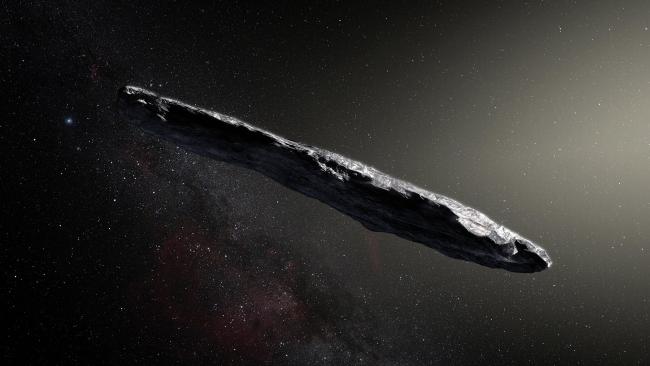
The asteroid will be brightest during the early hours of June 30, as viewed from the Southern Hemisphere, though visibility will shift as the object moves across the sky. Astronomers emphasize that light pollution will significantly impact the ability to spot the object; viewing from a location with dark skies is essential. As noted by the Minor Planet Center, which tracks the orbits of small solar system bodies, real-time positional data is updated frequently as more observatories contribute tracking measurements.
Why Near-Earth Object Monitoring Matters
The discovery and monitoring of asteroids like 2024 MK serve as a practical test for international planetary defense protocols. The ability to detect an object just two weeks before its closest approach highlights the ongoing advancements in survey technology. While 2024 MK is not a threat, the rapid identification of such objects is a primary goal for programs like the ESA’s Near-Earth Object Coordination Centre.
By studying these flybys, scientists gain insight into the “population” of asteroids in our immediate cosmic neighborhood. This data is critical for developing future mitigation strategies should a larger, more hazardous object be identified on an impact trajectory. The current observation campaign for 2024 MK involves a global network of telescopes, ensuring that no data point is missed as the asteroid departs the Earth’s vicinity.
What Happens Next
Following its flyby on June 30, 2024, 2024 MK will continue its orbit around the Sun, moving back into the deeper reaches of the solar system. Scientific institutions will continue to analyze the imagery and radar data collected during the encounter to finalize the object’s physical profile. For those who miss the visual window this weekend, professional updates regarding the orbital refined data will be published on the CNEOS official website in the coming weeks.
Readers are encouraged to share their experiences or questions regarding the flyby in the comments section below. For ongoing coverage of space exploration and technology trends, follow the Tech section at World Today Journal.
Related reading