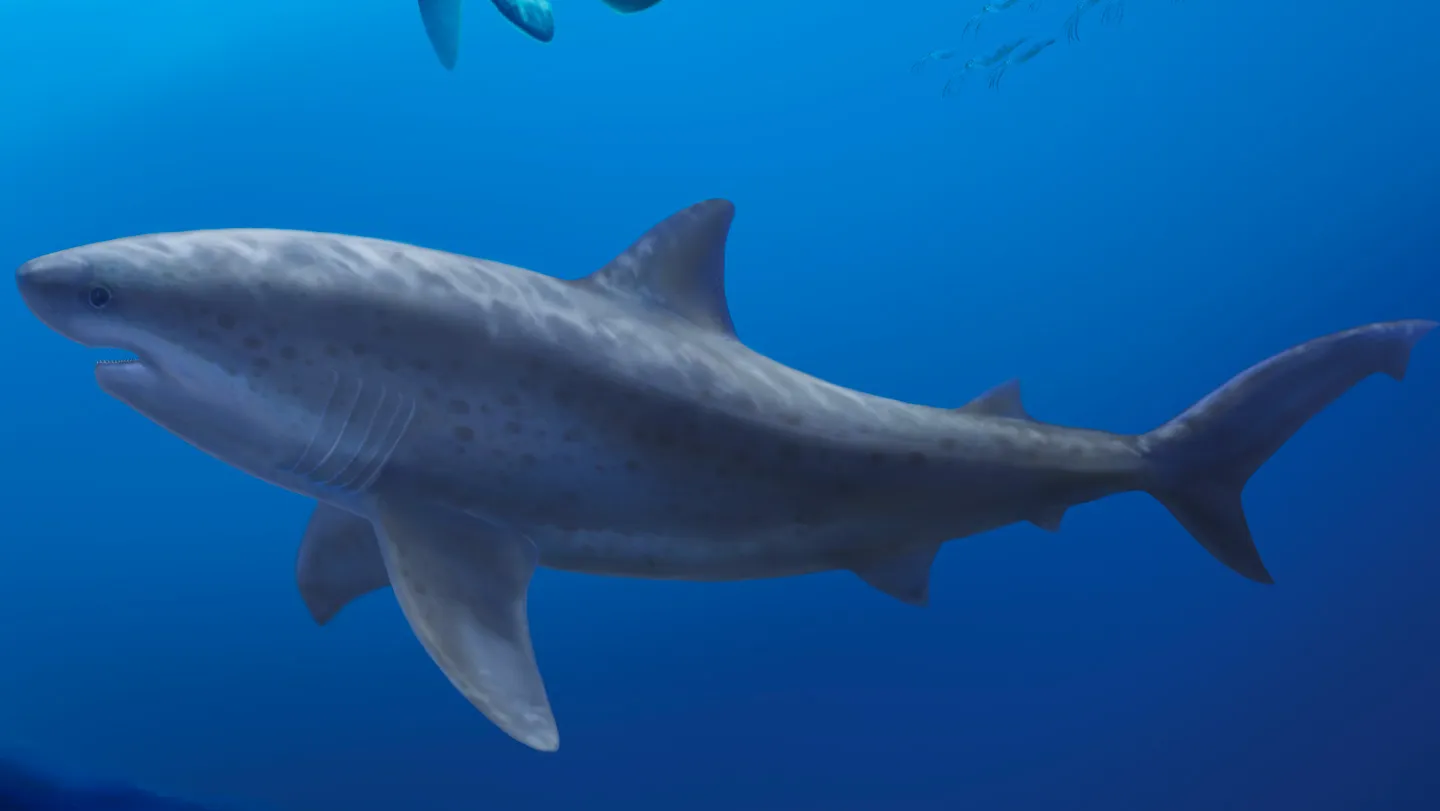
Some 115 million years ago,a veritable fleet of giant predators prowled the waters near Australia. there were long-necked plesiosaurs, snaggletoothed pliosaurs with massive heads, dolphinlike ichthyosaurs, and now — suggests new fossil findings — 8-meter-long sharks.
The findings, published October 25 in Communications Biology, push back the age of the earliest giant lamniform sharks — kin to great whites and Otodus megalodon — by 15 million years.
“These sharks were serious contenders,playing the role of apex predators alongside dominant megafauna such as marine reptiles,” says Mohamad Bazzi,an evolutionary biologist at Stanford University.
Such reptilian leviathans were previously considered the “sole sovereigns” of their aquatic domains, Bazzi says.
A set of large, fossil vertebrae found in 115-million-year-old seafloor deposits near Darwin in northern Australia were first reported scientifically in 1992, says Benjamin Kear, a vertebrate paleontologist at the Swedish Museum of Natural History in Stockholm. Little was known about them, so in 2024, Kear, Bazzi and their colleagues examined five of the vertebrae in detail to better understand the animal they came from.
“We were all stunned by the sheer size says Kear.Each vertebra was roughly 12 centimeters across, or around 50 percent larger than the vertebrae of a great white shark.
The team’s comparison with other living and extinct shark families suggested the vertebrae came from a cardabiodontid, an extinct variety of lamniform shark — a group that also includes species like sand tiger sharks, basking sharks and makos. The researchers estimate the animal could have been 8 meters long and weighed three metric tons. This great size and the fossils’ age raised the team’s eyebrows. It was 15 million years older than the earliest known giant lamniform — Leptostyrax, a possible cardabiodontid over 6 meters long. Researchers deduced that just 20 million years after they first evolved, lamniform sharks had already bulked up and raced to the top tiers of Early Cretaceous ocean food webs.
The findings raise more questions than they answer, says Bazzi. For instance, the team wonders how these sharks coexisted ecologically alongside the rich community of gargantuan Cretaceous Period predators.
“The discovery of this giant shark leaves open the exciting possibility that other large species once inhabited these environments,” says Bazzi.
Or perhaps the remains of even larger Cretaceous sharks lurk in the fossil record, waiting to be found.
Related reading