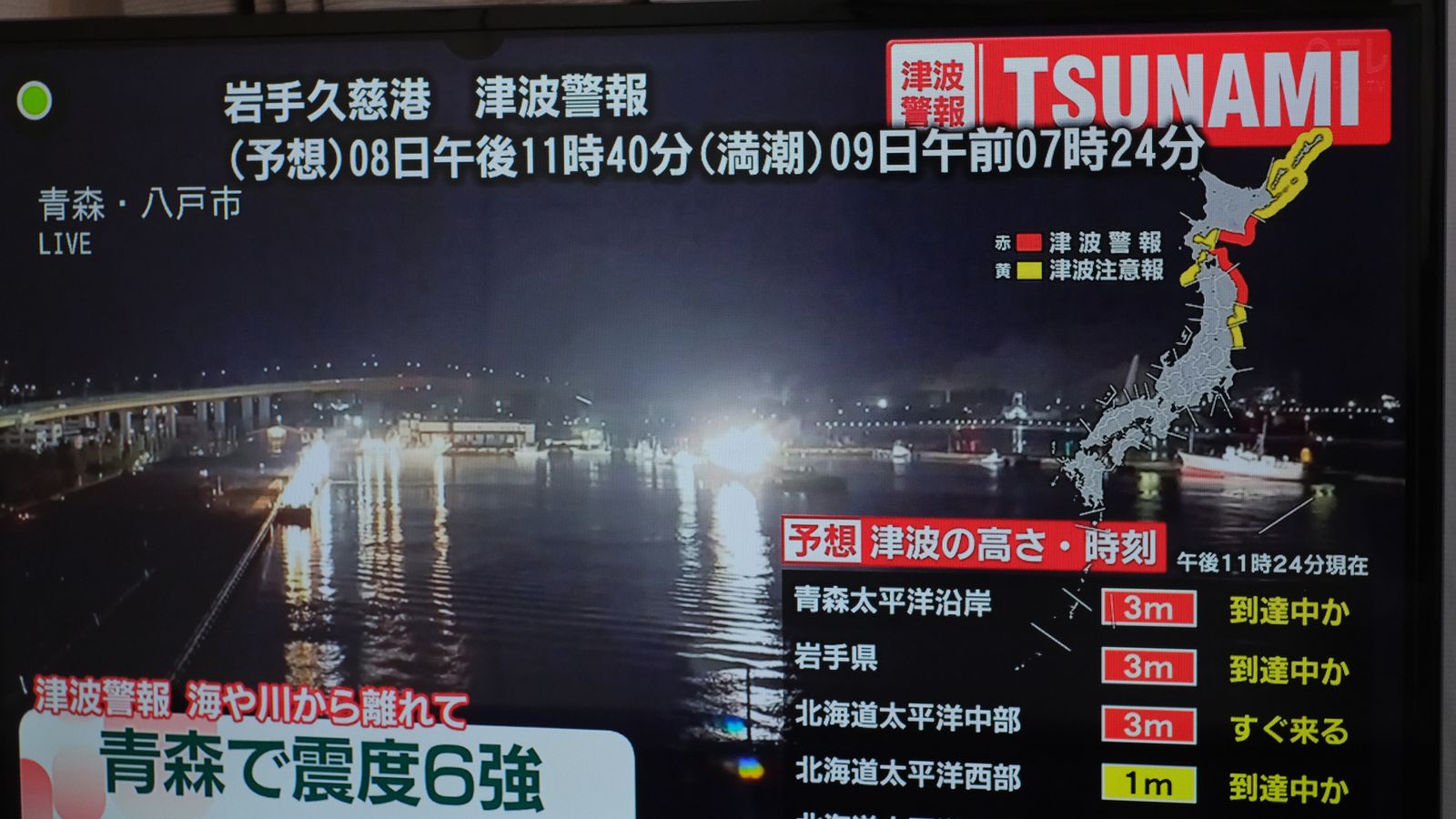
Recent Earthquake in Japan Prompts Tsunami Advisories and Aftershock Concerns
A significant earthquake struck off the coast of Aomori Prefecture, Japan, triggering tsunami advisories and raising concerns about potential aftershocks. Fortunately, the immediate threat appears to have subsided, but vigilance remains crucial. Let’s break down what happened and what you need to know.
The Earthquake and initial Impact
The earthquake, registering a magnitude of 5.9, occurred earlier today. It prompted authorities to issue tsunami advisories for coastal regions. While these advisories have since been lifted, residents are urged to stay alert for the possibility of further seismic activity.
Thankfully, initial reports indicate minimal widespread damage. However,the Rokkasho fuel reprocessing plant experienced a minor incident. Approximately 450 liters of water spilled from a spent fuel cooling area.
Nuclear Facility Status: No Immediate Risk
Rest assured, the Nuclear Regulation Authority has confirmed that water levels at the Rokkasho plant remain within normal parameters. Ther is currently no indication of a safety concern. Officials are closely monitoring the situation to ensure continued stability.
Lingering Concerns: Aftershocks and Future Preparedness
Despite the lifting of tsunami advisories, the potential for aftershocks remains. Experts are advising residents to remain cautious for at least a week.
Satoshi Harada, from the meteorological agency’s earthquake and volcano division, emphasized the importance of preparedness. He cautioned that a disaster comparable to the devastating 2011 earthquake could occur again. Therefore, proactive preparation is essential.
What You Can do to Prepare
Here are some steps you can take to enhance your preparedness:
* Develop a family emergency plan. Discuss evacuation routes and interaction strategies.
* Assemble an emergency kit. Include essentials like water, non-perishable food, a frist-aid kit, a flashlight, and a radio.
* Secure your home. anchor furniture and appliances to prevent them from shifting during an earthquake.
* Stay informed. Monitor official news sources and heed any warnings or advisories issued by local authorities.
* Know evacuation routes. Familiarize yourself with designated evacuation zones in your area.
Looking Ahead
Japan is situated in a highly seismically active zone, making earthquakes a recurring reality. While predicting earthquakes with absolute certainty remains impractical, ongoing monitoring and preparedness are vital.
Remember, staying informed and taking proactive steps can considerably enhance your safety and resilience in the face of these natural events. It’s about acknowledging the risk and empowering yourself to respond effectively.