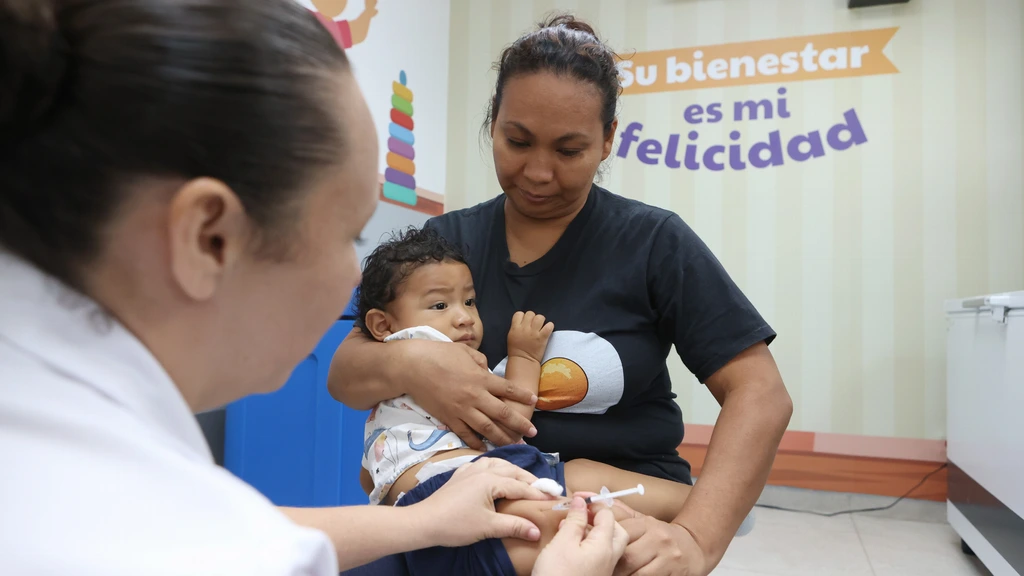
Global immunization coverage experienced a modest recovery in 2023, with 2.7 million more children receiving essential vaccines compared to the previous year. According to the latest data released by the World Health Organization (WHO) and UNICEF, the number of children who missed out on the first dose of the diphtheria, tetanus, and pertussis (DTP) vaccine fell to 14.5 million in 2023, down from 17.3 million in 2022. While this marks a positive step toward pre-pandemic levels, public health experts emphasize that significant disparities persist between nations, leaving millions of the world’s most vulnerable children unprotected against preventable diseases.
The State of Global Immunization Recovery
The 2023 figures indicate that the global immunization community is beginning to stabilize following the severe disruptions caused by the COVID-19 pandemic. In 2023, global coverage for the third dose of the DTP vaccine reached 84%, a figure that aligns closely with the levels observed in 2019. This benchmark is widely considered by the United Nations Children’s Fund (UNICEF) to be a primary indicator of the strength and reach of national health systems.
However, the recovery is not uniform. The data highlights that while some regions have effectively cleared the backlog created by pandemic-era lockdowns and supply chain interruptions, others remain trapped in a cycle of stagnation. The “zero-dose” children—those who have not received a single routine vaccine—remain a critical concern for international health organizations. In 2023, approximately 10.9 million of these children lived in fragile, conflict-affected, or vulnerable settings, where the delivery of medical supplies is frequently hampered by instability and a lack of basic infrastructure.
Geographic Disparities and Health Inequality
The gap between high-income and low-income countries remains a defining challenge in global health policy. As a physician, I frequently observe that the availability of a vaccine is only the first hurdle; the “last mile” of delivery—the cold chain logistics, trained health workers, and public trust—is where the system often fails. In many low-income nations, the recovery has been sluggish, exacerbated by economic downturns and the rising costs of healthcare delivery.
For instance, countries in the African region continue to face the highest burden of unvaccinated children. According to the WHO Immunization Analysis and Insights team, the concentration of zero-dose children in these areas correlates strongly with regions experiencing active conflict or extreme poverty. Conversely, many middle-income countries have successfully utilized digital tracking systems and community outreach programs to identify and reach children who were previously missed during the pandemic years.
Why Routine Vaccination Matters for Public Health
Routine immunization is the bedrock of public health, preventing an estimated 3.5 to 5 million deaths every year from diseases like measles, diphtheria, and polio. When vaccination rates drop, the risk of localized outbreaks increases significantly. The Centers for Disease Control and Prevention (CDC) notes that maintaining high community coverage—often referred to as herd immunity—is essential to prevent the spread of infectious agents, particularly in densely populated urban centers or displaced-person camps.
The current challenge is not merely about increasing the total number of doses administered, but ensuring that the quality and consistency of these programs are maintained. In many regions, the focus has shifted toward “catch-up” campaigns, which aim to vaccinate older children who missed their scheduled doses during the pandemic. While these initiatives are vital, they require sustained funding and political commitment, which can be difficult to maintain as global attention shifts to other emerging health crises.
Looking Ahead: Sustaining Progress
The path forward requires a multi-faceted approach that addresses both the supply side—ensuring vaccine availability—and the demand side—combating misinformation and building community trust. International organizations are currently focusing on the “Big Catch-up” initiative, a global effort to restore and surpass immunization levels reached before 2020. This program is scheduled to continue through 2025, with a heavy emphasis on strengthening primary healthcare systems in the 20 countries that house the majority of the world’s zero-dose children.
As we monitor these developments, the next major update regarding global immunization performance is expected in the second quarter of 2025, when the WHO and UNICEF release their consolidated 2024 coverage estimates. These reports will be critical in determining whether the momentum seen in 2023 can be sustained amidst ongoing geopolitical instability and shifting global health priorities. Readers interested in the specific vaccination status of their region or global health initiatives can access the latest datasets via the WHO Immunization Data Portal.
How has your community managed routine immunization schedules in the wake of the pandemic? Share your thoughts or local observations in the comments section below to join the conversation.
Related reading