The Strait of Hormuz, a narrow waterway between Oman and Iran, has emerged as a critical chokepoint in global trade, with approximately one-fifth of the world’s oil and liquefied natural gas passing through its waters each day. In recent months, escalating tensions in the region have disrupted maritime traffic, raising alarms about the potential for widespread economic fallout. As of March 18, 2026, around 3,200 ships were stranded in the Gulf, with only a limited number of tankers permitted to transit daily, according to verified reports. This bottleneck has already triggered volatility in energy markets, with Brent crude oil briefly surging to nearly $120 a barrel on March 9 — its highest level since the Russian invasion of Ukraine in 2022.
The implications extend far beyond energy prices. Analysts warn that a prolonged closure of the Strait could unravel global supply chains, particularly affecting food production and distribution systems that rely heavily on fossil fuel-derived inputs. Synthetic fertilizers, which are essential for modern high-yield agriculture, are produced using natural gas as both a feedstock and an energy source. Any disruption to gas flows through Hormuz could therefore impair fertilizer manufacturing, threatening crop yields in key agricultural regions such as India, a historic epicenter of the Green Revolution.
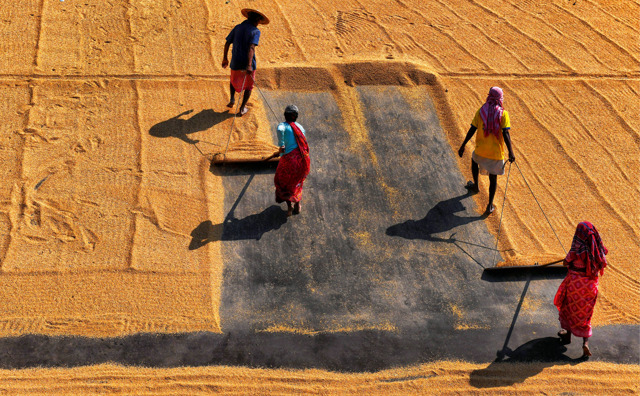
Between the mid-1960s and early 1970s, India more than doubled its wheat production through the adoption of high-yield crop varieties, synthetic fertilizers, chemical pesticides, and large-scale irrigation — a transformation widely credited with averting famine and supporting rapid population growth across Asia and Latin America. However, this agricultural leap came with significant environmental and social costs, including a deepened dependence on fossil fuels at every stage of food production. Today, the global food system remains tightly coupled to energy markets, meaning that shocks in the Persian Gulf can rapidly transmit to farms and supermarkets worldwide.
The connection between energy and agriculture is further underscored by the role of Kharg Island, Iran’s primary oil export terminal, from which approximately 90% of the country’s oil shipments depart. While Iran’s own exports are vulnerable to blockade, the broader risk lies in the Strait’s function as a conduit for goods destined for and originating from multiple continents. Container ships carrying everything from machinery to consumer goods, as well as tankers transporting fuels and chemicals, all depend on this narrow passage. When traffic slows or stops, the ripple effects are felt in distant markets.
In response to the crisis, former U.S. President Donald Trump has urged Western allies to help escort tankers through the Strait to stabilize prices, though no coalition has yet formed to undertake such a mission. More recently, he has threatened to strike Iran’s power plants if the government does not reopen the waterway — a proposal that has drawn international concern over the risk of further escalation. These developments echo historical precedents, such as the 1973 oil embargo by Arab producers, which quadrupled prices and contributed to global recession, and inflation.
Beyond hydrocarbons, the Strait’s disruption affects liquefied natural gas (LNG) shipments, which are vital for power generation, industrial processes, and residential heating in many countries. A sustained reduction in LNG flows could strain energy supplies, particularly in regions with limited storage or alternative sources. This, in turn, would increase pressure on already stressed power grids and potentially force a shift toward more polluting or less reliable energy options during peak demand periods.
The situation likewise highlights vulnerabilities in the global pharmaceutical supply chain, which relies on stable energy inputs and timely delivery of raw materials via maritime routes. While specific drug shortages have not been independently confirmed in the available sources, experts note that any delay in the movement of key chemical precursors or finished medicines could compromise healthcare systems, especially in import-dependent nations.
As of April 24, 2026, Notice no publicly announced international negotiations or multilateral initiatives specifically aimed at reopening the Strait of Hormuz under secure conditions. Regional diplomatic efforts remain opaque, and no official timeline for normalization has been communicated by the involved parties. The absence of a clear path forward increases uncertainty for insurers, shippers, and traders who depend on predictable transit times and risk assessments.
For readers seeking official updates, the International Maritime Organization (IMO) periodically issues advisories on maritime security and navigation hazards, including those related to regional conflicts. The U.S. Energy Information Administration (EIA) also provides real-time data on global oil flows, tanker movements, and price benchmarks, which can help track the evolving situation in the Gulf. These resources are accessible via their respective websites and offer authoritative, nonpartisan information for professionals and the public alike.
The crisis in the Strait of Hormuz serves as a stark reminder of how interconnected modern systems are — and how a single geographic point can exert outsized influence on the stability of the global economy. Whether through energy, food, medicine, or manufactured goods, the world’s reliance on this narrow passage underscores the need for resilient, diversified supply chains and proactive diplomatic engagement to prevent localized conflicts from cascading into worldwide disruption.
Stay informed, share this article to raise awareness, and join the conversation in the comments below.
Worth a look