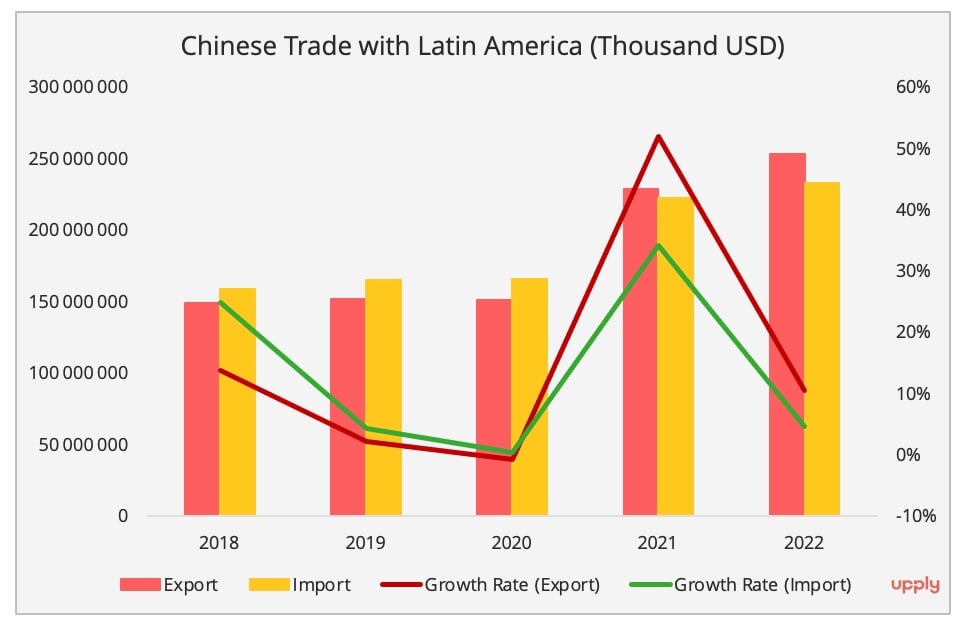
China’s economic strategy under its 14th Five-Year Plan (2021-2025) is creating a pivotal moment for Latin America and the Caribbean, offering unprecedented trade opportunities while presenting complex challenges for regional policymakers. According to the Chinese Ministry of Commerce, bilateral trade between China and Latin America reached $372 billion in 2022—a 10% increase from 2021—with China becoming the region’s largest trading partner for the first time in history. The plan’s emphasis on “global economic openness” and “international cooperation” has directly translated into new infrastructure investments, technology transfers, and market access agreements that are reshaping economic landscapes from Brazil’s soybean fields to Chile’s copper mines.
For Latin American nations, this relationship presents both a boon and a balancing act. On one hand, Chinese demand for commodities like copper, iron ore, and soybeans has become a critical revenue source—Brazil’s exports to China alone surged 23% in 2023, according to Brazil’s Ministry of Economy. On the other hand, the region’s heavy reliance on Chinese imports—particularly in manufacturing and electronics—has raised concerns about economic dependency and the potential for supply chain vulnerabilities.
The 14th Five-Year Plan’s focus on “high-quality Belt and Road Initiative (BRI) projects” has also intensified scrutiny. While China has committed $250 billion in infrastructure investments across Latin America since 2013 (Inter-American Dialogue), critics warn that some projects carry unsustainable debt risks. Ecuador’s recent debt restructuring negotiations with China—following the default on a $3.1 billion loan for a refinery project—highlight these tensions (Reuters).
Why China’s Economic Strategy Matters for Latin America
China’s approach under the 14th Five-Year Plan differs fundamentally from previous cycles. Where earlier initiatives focused primarily on resource extraction, today’s strategy emphasizes technology transfer, industrial cooperation, and digital economy integration. A 2023 report by the Center for Economic and Policy Research found that Chinese firms are now investing heavily in Latin America’s renewable energy sector—particularly in Chile and Peru—where they account for 40% of all foreign direct investment in solar and wind projects.
This shift presents Latin American countries with a critical choice: whether to deepen specialization in commodities or diversify into higher-value industries. Mexico, for example, has positioned itself as a manufacturing hub for Chinese electronics firms, attracting $12 billion in Chinese investment in 2023 alone (The Economist). Meanwhile, Caribbean nations like Jamaica and the Dominican Republic are negotiating free trade agreements with China that could provide market access for local agricultural products—though these come with strings attached regarding intellectual property protections.
The plan’s emphasis on “digital infrastructure” is another game-changer. China’s state-backed companies are expanding 5G networks and e-commerce platforms across Latin America, with Alibaba and JD.com already operating in 18 regional markets. For small businesses in countries like Colombia and Argentina, this access to China’s consumer market represents a potential breakthrough—but also requires navigating complex cross-border e-commerce regulations.
Key Challenges: Debt Sustainability and Economic Dependency
Despite the opportunities, Latin American leaders are grappling with three major challenges that stem directly from China’s economic strategy:
- Debt sustainability: The region’s total debt to China reached $180 billion in 2023, according to the IMF’s World Economic Outlook. While China has shown flexibility in restructuring debt (as seen with Argentina’s 2023 agreement), the long-term viability of these arrangements remains uncertain.
- Supply chain vulnerability: Latin America’s heavy reliance on Chinese imports—particularly in pharmaceuticals and food processing—was exposed during the COVID-19 pandemic. A 2022 Financial Times analysis found that 60% of Latin America’s critical imports now come from China, raising concerns about geopolitical risks.
- Industrial displacement: Chinese manufacturing exports to Latin America have surged 35% since 2020, undercutting local industries from textiles in Peru to automobiles in Brazil. The World Bank warns this could lead to long-term structural unemployment if not managed carefully.
What Happens Next: Three Critical Developments to Watch
As China’s 14th Five-Year Plan progresses, three developments will determine whether Latin America can capitalize on the opportunities while mitigating the risks:
- Belt and Road Initiative 2.0: China is reportedly refining its BRI approach to focus more on “green infrastructure” and “digital connectivity.” The Chinese government’s latest policy paper suggests new funding mechanisms that could make projects more sustainable—but details remain scarce. Latin American nations will need to negotiate carefully to ensure these investments align with their own climate goals.
- Regional integration initiatives: The Economic Commission for Latin America and the Caribbean (ECLAC) is pushing for a “Latin American-China Economic Partnership” that could create a unified negotiation front. If successful, this could give smaller nations more leverage—but would also require significant political coordination.
- Technology transfer negotiations: China’s commitment to transferring technology under the plan is creating new opportunities for Latin American firms. However, as Reuters reports, many of these agreements remain vague on intellectual property protections. The next 12 months will be critical in determining whether these transfers will truly benefit local industries or remain concentrated in Chinese state-owned enterprises.
Practical Steps for Businesses and Governments
For companies and policymakers in Latin America, navigating this relationship requires both strategic planning and careful risk management. Here are three concrete steps:
- Diversify supply chains: Governments should work with the UN Economic Commission for Latin America and the Caribbean to identify alternative suppliers for critical imports. The International Air Transport Association has developed tools to help businesses map supply chain vulnerabilities.
- Invest in digital infrastructure: Countries should prioritize upgrading customs systems and digital payment platforms to fully participate in China’s e-commerce expansion. The ITU’s Digital Transformation Initiative offers technical assistance programs.
- Negotiate balanced trade agreements: When entering into new agreements with China, Latin American nations should include clauses on technology transfer timelines and local content requirements. The WTO’s Trade Policy Review Mechanism provides templates for these negotiations.
What the Data Shows: A Regional Breakdown
The impact of China’s economic strategy varies significantly across Latin America. Below is a snapshot of how different countries are positioned:
| Country | Key Export to China | Chinese FDI (2023) | Major Chinese Project |
|---|---|---|---|
| Brazil | Iron ore, soybeans | $18.7 billion | Santo Antônio hydroelectric dam |
| Chile | Copper | $12.3 billion | Atacama Desert solar farms |
| Mexico | Automobiles, electronics | $12.0 billion | Tesla Gigafactory expansion |
| Argentina | Lithium, wine | $8.5 billion | Lithium Triangle mining concessions |
| Colombia | Coal, coffee | $6.2 billion | Pacific Railway modernization |
Source: Data compiled from China-Latin America Observatory, national statistics agencies, and company filings. Figures represent 2023 values unless otherwise noted.
Looking Ahead: The Next Policy Checkpoint
The next critical milestone will be the China-Latin America and Caribbean Business Forum, scheduled for October 15-17, 2024 in Beijing. This event, organized by the Chinese Ministry of Commerce, will bring together heads of state, business leaders, and international organizations to discuss the implementation of the 14th Five-Year Plan’s economic cooperation initiatives.
Key topics expected to be addressed include:
- New financing mechanisms for BRI projects
- Digital economy cooperation frameworks
- Sustainable debt restructuring models
- Technology transfer agreements
Latin American governments are advised to use this forum to push for clearer commitments on technology transfer and to explore joint initiatives with other regional partners. The outcomes of these discussions will shape the economic relationship for the next decade.
For businesses, the coming months offer both immediate opportunities and long-term strategic considerations. Those who can navigate the complexities of this relationship—while maintaining economic sovereignty—will be best positioned to benefit from China’s expanding economic influence.
What are your experiences with China-Latin America trade? Share your insights in the comments below, or connect with our business team for expert analysis on how to position your company for success in this evolving market.
Related reading