
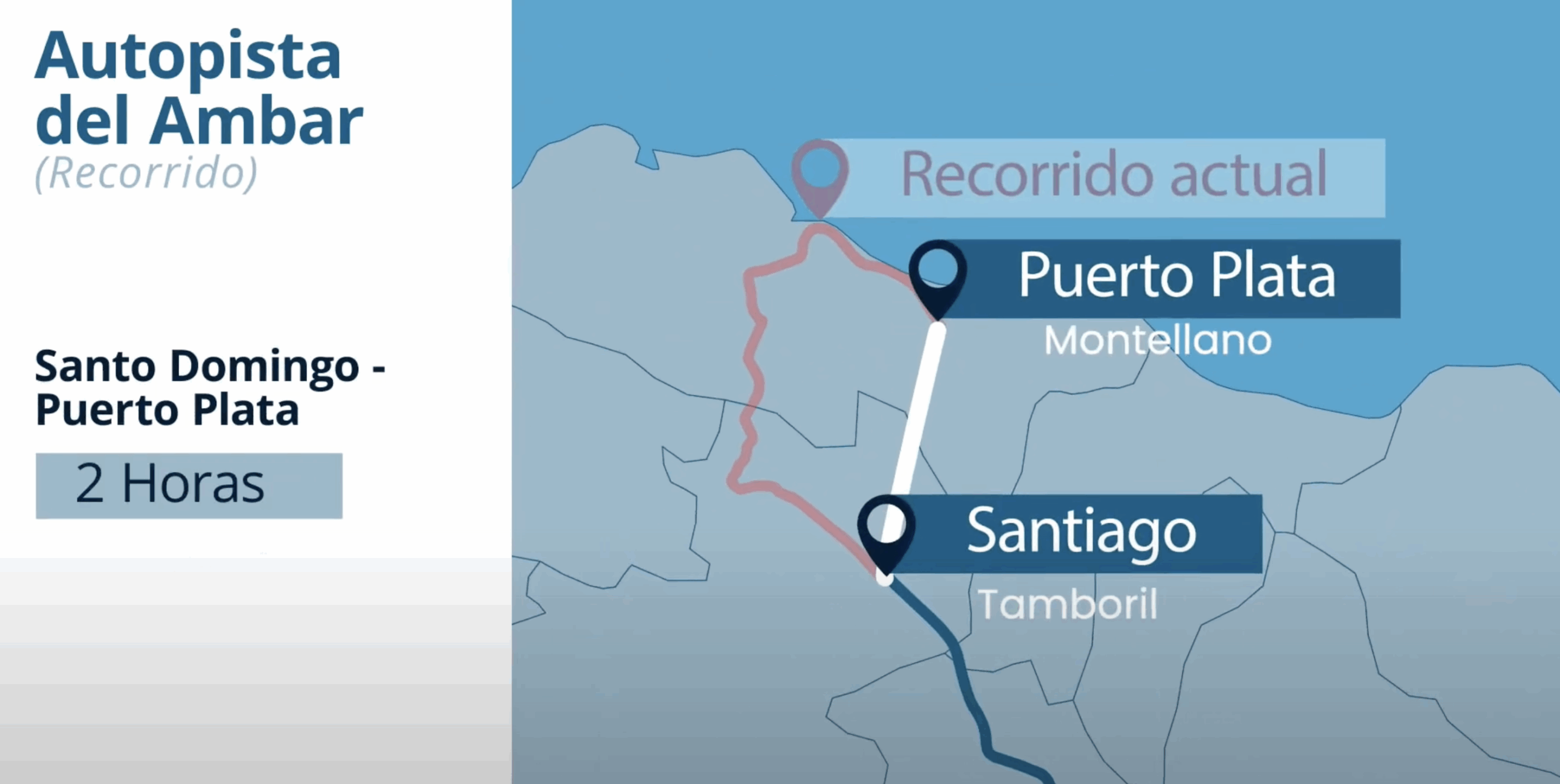
The Dominican Republic government has officially presented the “Autopista del Ámbar” (Amber Highway) project to private sector stakeholders, marking a significant step toward improving connectivity between the northern coast and the Cibao region. The proposed infrastructure project aims to reduce transit times between Puerto Plata and Santiago, creating a more direct link between the country’s primary tourism hub and its second-largest city, which serves as a vital center for medical and university services.
According to the Ministry of Public Works and Communications (MOPC), the highway is designed to catalyze economic growth by integrating the logistical capabilities of the Cibao region with the tourism infrastructure of the northern province. The project is being positioned as a key component in the government’s broader strategy to modernize national transit corridors, following a series of consultations with business leaders and local authorities regarding the potential impact on real estate, healthcare, and educational sectors.
Infrastructure Goals and Regional Connectivity
The Autopista del Ámbar is intended to replace or supplement existing, more circuitous routes that currently connect Santiago to Puerto Plata. By creating a high-speed artery, the government expects to facilitate a more efficient movement of goods and people. Santiago, often referred to as the “Heart City,” currently acts as a principal hub for specialized medical services and higher education in the Cibao region, according to statements from the Dominican Republic’s industrial and development agencies. The project aims to make these services more accessible to the growing population and visitor base in Puerto Plata.

Economic analysts have noted that improved road connectivity frequently correlates with increased foreign direct investment in tourism and residential real estate. By shortening the travel time, the government hopes to incentivize developers to expand projects in Puerto Plata, knowing that residents and tourists can reach the specialized hospitals and academic institutions of Santiago with greater ease. This integration is expected to support the long-term expansion of the regional economy, as reported by the Central Bank of the Dominican Republic in recent sector assessments.
Private Sector Engagement and Investment
The presentation to the private sector serves as a formal invitation for public-private partnerships (PPP) or similar collaborative financing models. The government has emphasized that the scale of the Autopista del Ámbar requires significant capital, making private participation essential for the project’s viability. Potential investors have been briefed on the projected traffic volumes and the expected reduction in logistics costs, which are critical metrics for institutional investors considering infrastructure bonds or long-term concessions.
While the project remains in the development and consultation phase, the government has been actively soliciting feedback from local chambers of commerce and tourism associations. These stakeholders have historically advocated for better infrastructure to support the northern coast’s competitiveness against other Caribbean destinations. The Ministry of Tourism has highlighted that infrastructure improvements are a prerequisite for sustaining the current growth in hotel occupancy rates and cruise ship arrivals in the Puerto Plata area.
Project Timeline and Next Steps
As of late 2024, the project is moving through the necessary feasibility and environmental impact assessment stages. The government has not yet released a definitive completion date, but officials have indicated that the next phase involves finalizing the technical specifications and opening a formal bidding process for construction contracts. Interested parties are encouraged to monitor the General Directorate of Public Procurement portal for official tender documents and project updates as they become available.

Future updates regarding the Autopista del Ámbar will likely be announced during upcoming regional economic summits or through official executive orders from the presidency. As the government transitions from the conceptual phase to project execution, the focus will remain on securing the necessary financing and environmental permits to begin ground-breaking. Readers interested in the development of this corridor can follow the official announcements from the Ministry of Public Works for the latest information on timelines and procurement milestones.
We invite our readers to share their perspectives on how this infrastructure project might affect the regional economy in the comments section below. Stay tuned to World Today Journal for continued coverage of major infrastructure developments and their implications for global markets.