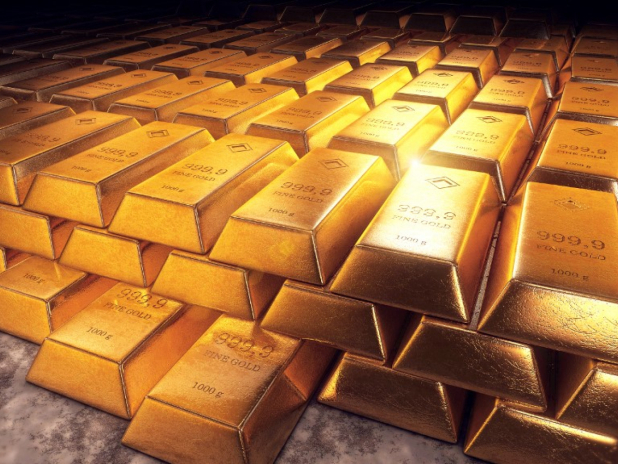
Global financial markets reacted sharply on Friday as gold prices rose amid renewed optimism over potential diplomatic progress between the United States and Iran, while oil prices slipped following reports that the Strait of Hormuz remains open for commercial shipping during a temporary ceasefire.
The developments underscore how geopolitical tensions in the Middle East continue to influence commodity markets, with investors weighing the implications of reduced conflict risks against ongoing uncertainties in global energy supplies. Gold, traditionally viewed as a safe-haven asset during periods of instability, gained as traders interpreted diplomatic signals as a potential de-escalation in regional hostilities.
Spot gold increased by $40.30, or 0.8%, to close at $4,830.34 per ounce, while June gold futures rose $41.10, or 0.9%, to settle at $4,849.40 per ounce, according to market data reported by financial news outlets. The rise in gold prices coincided with statements from Iran’s foreign minister indicating that maritime traffic through the Strait of Hormuz would continue uninterrupted during the pause in hostilities.
Meanwhile, crude oil prices declined as the assurance of open shipping lanes eased concerns about supply disruptions in one of the world’s most critical energy chokepoints. The Strait of Hormuz, located between Oman and Iran, serves as a vital conduit for approximately one-fifth of global petroleum consumption, making its status a key determinant of oil market sentiment.
Silver similarly posted gains, with May futures rising 2.8% to $80.90 per ounce, while copper edged up 0.1% to $6.082 per pound. Platinum increased slightly to $2,114.40 per ounce, and palladium declined 0.6% to $1,572 per ounce, reflecting mixed movements across precious and industrial metals.
The market response highlights the sensitivity of commodity prices to geopolitical developments, particularly those involving major oil-producing regions. Traders often adjust positions rapidly in response to news about diplomatic engagements or military de-escalation, as such events can alter risk premiums embedded in asset valuations.
Analysts note that while short-term fluctuations in gold and oil prices are frequently driven by headline news, longer-term trends depend on fundamental factors including monetary policy, inflation expectations, and global demand patterns. The current movement in gold may reflect both safe-haven demand and speculative positioning ahead of potential diplomatic breakthroughs.
Market participants continue to monitor official statements from both U.S. And Iranian authorities for further clarity on the trajectory of negotiations. Any confirmed progress toward a formal agreement could influence not only commodity markets but also broader risk appetite across equities and currencies.
As of the latest reporting, no formal agreement has been announced, and officials caution that discussions remain ongoing. The situation remains fluid, with market volatility likely to persist until clearer signals emerge from diplomatic channels.
For readers seeking to understand how international diplomacy affects financial markets, this episode illustrates the immediate impact that geopolitical narratives can have on trader behavior and asset pricing, even in the absence of concrete policy changes.
Stay informed with verified updates from trusted financial news sources as the situation develops.
Keep reading