
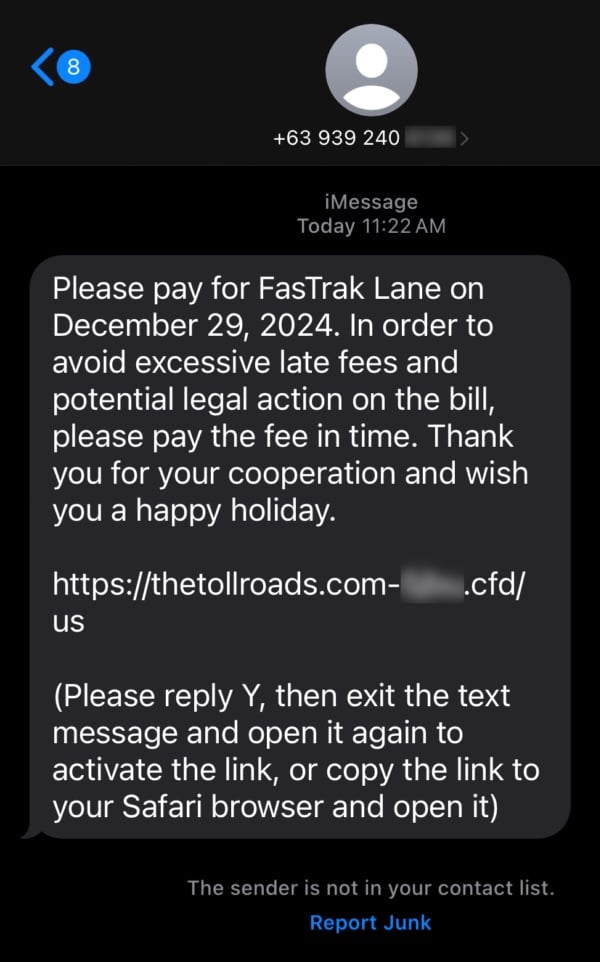
Google has sued Outsider Enterprise, a China-based phishing operation, alleging the group used AI tools—including Google’s own Gemini—to generate and scale fraudulent text messages and fake websites targeting millions of users worldwide. The lawsuit, filed in a U.S. federal court, marks one of the first major legal actions against cybercriminals leveraging generative AI to automate large-scale scams. According to court documents and statements from Google’s legal team, the phishing network exploited AI to craft convincing impersonations of legitimate brands, government agencies, and financial institutions, significantly increasing the volume and sophistication of fraud attempts.
Outsider Enterprise, described in court filings as a “large-scale phishing network,” has been linked to campaigns that sent millions of fraudulent SMS messages and created fake websites designed to steal sensitive user data, including login credentials and payment information. Google’s lawsuit claims the operation generated tens of thousands of fake domains and used AI to rapidly adapt phishing messages based on real-time responses from victims. The case underscores growing concerns about how AI tools—even those designed for legitimate purposes—are being repurposed by cybercriminals to scale illegal activities with unprecedented efficiency.
While Google has not publicly commented on the specifics of the lawsuit beyond its court filings, the company’s legal team has emphasized the need for stronger industry-wide measures to combat AI-driven fraud. The lawsuit also raises questions about the responsibility of tech companies in monitoring how their AI tools are used, particularly when those tools are accessible globally. Meanwhile, cybersecurity experts warn that this case may only be the tip of the iceberg, as similar tactics could be adopted by other criminal groups.
What the Lawsuit Alleges: How Outsider Enterprise Used AI to Scale Phishing
According to the lawsuit, Outsider Enterprise operated as a sophisticated phishing-as-a-service operation, selling access to its AI-powered tools to other cybercriminals. Key allegations include:
- Automated message generation: The group used AI to create personalized phishing messages at scale, mimicking the tone and language of legitimate entities such as banks, e-commerce platforms, and government agencies.
- Dynamic fake websites: AI was employed to rapidly generate and host fake websites that closely resembled real services, complete with convincing login pages and payment portals.
- Real-time adaptation: The phishing messages and websites were dynamically updated based on user interactions, making them harder to detect as fraudulent.
- Global reach: The operation targeted users in multiple countries, including the U.S., Europe, and Asia, with messages sent via SMS, email, and social media platforms.
Google’s legal filings cite internal data showing that the phishing campaigns resulted in millions of attempted fraud transactions, with victims losing hundreds of millions of dollars in aggregate. The lawsuit does not specify exact financial losses but highlights the broader impact on consumer trust and online security.
Who Is Outsider Enterprise, and How Did Google Identify the Operation?
Outsider Enterprise has been identified by cybersecurity researchers as a China-based criminal group with ties to previous phishing and malware campaigns. The group’s operations were first flagged by Google’s Threat Analysis Group (TAG), which monitors state-sponsored and criminal hacking activities. According to TAG’s public reports, the operation began scaling in late 2022, coinciding with the release of advanced AI tools like Gemini.
Google’s legal team obtained evidence through court-ordered disclosures and cooperation with cybersecurity firms, including Kaspersky and CrowdStrike. The lawsuit names multiple individuals and entities allegedly involved in the operation, though their identities have not been publicly disclosed to avoid tipping off remaining actors.
Why This Case Matters: The Growing Threat of AI-Powered Cybercrime
This lawsuit comes at a time when AI tools are increasingly being adopted by cybercriminals to bypass traditional security measures. A 2024 report by Mandiant found that 68% of advanced persistent threat groups have experimented with AI to automate phishing, malware development, and social engineering attacks. The use of AI in phishing is particularly concerning because it lowers the barrier to entry for less technical criminals, allowing them to launch highly convincing scams with minimal effort.
Google’s case also highlights a broader industry challenge: how to regulate AI tools without stifling innovation. While companies like Google and Microsoft have implemented safeguards—such as watermarking AI-generated content—cybercriminals continue to find ways to circumvent these measures. The lawsuit may pressure tech firms to adopt stricter monitoring and reporting requirements for AI tools, particularly those used in messaging and web hosting.
What Happens Next: Legal and Cybersecurity Implications
Google’s lawsuit is currently pending in the U.S. District Court for the Northern District of California. The next key developments will likely include:

- Discovery phase: Google’s legal team will seek to gather additional evidence, including communications between Outsider Enterprise members and records of financial transactions linked to the phishing campaigns.
- Potential injunction: Google may seek a court order to shut down the phishing domains and disrupt the operation’s infrastructure, similar to past actions against malicious domains tied to ransomware groups.
- International cooperation: Given the transnational nature of the operation, Google may collaborate with law enforcement agencies in China, where Outsider Enterprise is based, though such cooperation can be complicated by differing legal standards.
- Industry-wide response: The lawsuit could prompt other tech companies to review their AI tool policies and invest in proactive cybersecurity measures to detect and prevent AI-driven fraud.
For users, the case serves as a reminder to remain vigilant against phishing attempts, even those that appear highly personalized. Google and other tech companies recommend:
- Verifying the sender’s identity before responding to messages or emails.
- Avoiding clicking on links in unsolicited communications.
- Using multi-factor authentication (MFA) to add an extra layer of security.
- Reporting suspicious activity to platforms like Google’s phishing reporting tool.
Key Takeaways: What Readers Should Know
- AI is accelerating cybercrime: Tools like Gemini are being repurposed to automate phishing at scale, making scams harder to detect.
- Global reach, local impact: Outsider Enterprise targeted users worldwide, but the tactics could be adopted by other groups.
- Legal action may force industry changes: Google’s lawsuit could push tech companies to tighten controls on AI tools.
- Users must stay alert: Phishing messages are becoming more convincing—always verify before sharing information.
- Report suspicious activity: Platforms like Google provide tools to help shut down phishing operations.
The next major checkpoint in this case will be the completion of the discovery phase, expected by Q4 2024, followed by potential motions for summary judgment. Google has indicated it will continue to update the public on developments as the case progresses. In the meantime, users are encouraged to review their security settings and stay informed about emerging threats.
Have you encountered suspicious messages or websites? Share your experiences in the comments below, and help raise awareness about this growing threat.
Worth a look