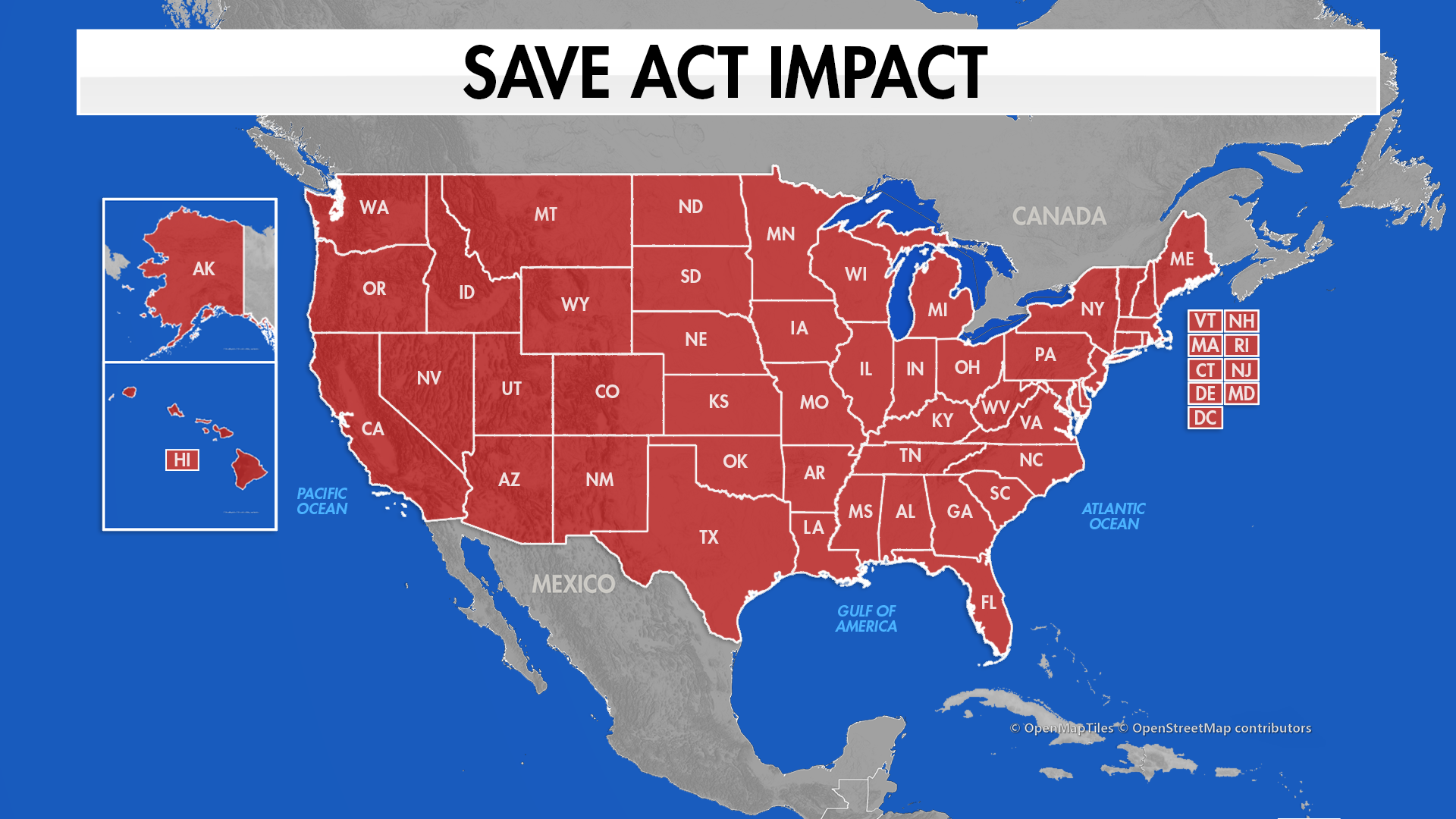
GOP Faces Internal Divisions and Democratic Opposition as SAVE America Act Reaches Senate
Washington D.C. – The SAVE America Act, legislation requiring proof of U.S. Citizenship for voter registration, is emerging as a pivotal battleground in the U.S. Senate, testing the resolve of Republicans and drawing fierce opposition from Democrats. The bill, which passed the House earlier this month, is championed by former President Donald Trump, who has indicated he will prioritize its passage over other legislative matters. However, the path forward in the Senate is fraught with challenges, including a likely Democratic filibuster and internal disagreements within the Republican party regarding parliamentary procedure. The debate over the SAVE America Act underscores the ongoing national conversation surrounding election integrity and voter access, issues that have become increasingly polarized in recent years.
The core of the legislation mandates that individuals provide documentation verifying their U.S. Citizenship when registering to vote. This requirement, proponents argue, is essential to safeguarding the integrity of elections and preventing non-citizens from participating in the democratic process. Senator Jon Husted of Ohio, a vocal supporter of the bill, succinctly stated the Republican rationale: “We need to make it straightforward to vote and hard to cheat in America.” Senator Rick Scott of Florida echoed this sentiment, describing the Act as “an important bill” during a recent appearance on Fox News. However, the reality of the Senate’s political landscape presents a significant hurdle to its enactment.
Filibuster Threat and Republican Strategies
With only 53 Republican senators, overcoming a Democratic filibuster – which requires 60 votes – will be a formidable task. Senate Majority Leader John Thune of South Dakota has pledged to bring the SAVE America Act to the floor for debate, promising a “full and robust debate.” However, this commitment does not guarantee passage. The prospect of a prolonged filibuster looms large, potentially leading to a stalemate. The filibuster, a Senate rule allowing a minority of senators to delay or block a vote on a bill, has been a subject of intense debate in recent years, with some Republicans advocating for its elimination – a move often referred to as “nuking the filibuster” – to facilitate the passage of key legislation like the SAVE America Act.
Senator Roger Marshall of Kansas is among those openly calling for abolishing the filibuster, stating, “I would nuke the filibuster to pass the SAVE America Act.” This position reflects a growing willingness within some segments of the Republican party to fundamentally alter Senate rules in pursuit of their legislative objectives. Conversely, other Republicans suggest allowing Democrats to engage in a traditional, extended filibuster, harking back to a time when such tactics were more common. Senator Josh Hawley of Missouri, for example, encouraged Democrats to “move hold the floor like it used to be in the old days,” a nod to the historical norms of Senate debate.
Democratic Opposition and Concerns Over Voter Suppression
Democrats have uniformly condemned the SAVE America Act, framing it as an attempt to suppress voter turnout and restrict access to the ballot box. Senate Minority Leader Chuck Schumer characterized the bill as “one of the worst things we’ve seen in America in a very long time.” Senate Minority Whip Dick Durbin echoed these concerns, arguing that the true motivation behind the bill is to reduce the number of eligible voters participating in the upcoming November election. These criticisms highlight the deep partisan divide surrounding election laws and the ongoing debate over the balance between election security and voter access.
Concerns have also been raised regarding the practical implications of the citizenship requirement. The Brennan Center, a voting rights advocacy group, has pointed out that over 21 million Americans lack readily available documentation to prove their citizenship. The Act would require Ohio residents to present either a valid U.S. Passport or a driver’s license accompanied by a birth certificate to verify their citizenship during voter registration. This requirement, critics argue, could disproportionately affect marginalized communities and individuals with limited access to these documents, effectively creating barriers to voting.
The Bill’s Path Through Congress and Trump’s Influence
The SAVE America Act passed the House of Representatives on February 24, 2026, by a vote of 218-213. However, its prospects in the Senate remain uncertain. The bill has become a key priority for former President Donald Trump, who has reportedly warned that he will not sign any other legislation – with the possible exception of a Department of Homeland Security funding measure – until Congress aligns with his demands and passes the SAVE America Act. This strong endorsement from Trump adds another layer of complexity to the debate, potentially increasing pressure on Republican senators to support the bill despite internal reservations and the looming threat of a Democratic filibuster.
Ohio Senators Jon Husted and Bernie Moreno have both publicly expressed their support for the SAVE America Act. Their backing underscores the bill’s resonance within the Ohio Republican party and reflects the broader national focus on election security. The debate over the SAVE America Act is not merely a legislative battle; it is a reflection of deeply held beliefs about the fundamental principles of democracy and the role of government in ensuring fair and accessible elections.
Key Takeaways
- The SAVE America Act, requiring proof of citizenship for voter registration, faces significant hurdles in the Senate.
- A Democratic filibuster is anticipated, necessitating 60 votes for passage – a threshold Republicans currently cannot meet.
- Internal Republican divisions exist regarding potential strategies, including altering Senate rules to overcome the filibuster.
- Democrats strongly oppose the bill, arguing it will suppress voter turnout and disproportionately affect marginalized communities.
- Former President Trump has made passage of the SAVE America Act a key priority, potentially influencing Republican senators.
The Senate is expected to hold a procedural vote on the SAVE America Act in the coming weeks, which will likely serve as a crucial test of the bill’s viability. The outcome of this vote will not only determine the fate of the legislation but also signal the direction of the broader debate over election integrity and voting rights in the United States. The coming debate promises to be contentious and closely watched by both proponents and opponents of the bill, as well as by election officials and voters across the country.
This article is a developing story. Check back for updates as the situation unfolds.
What are your thoughts on the SAVE America Act? Share your opinions in the comments below, and please share this article with your network.
- Saudi Oil Tankers Divert Red Sea Routes Amid Houthi Threats and Yanbu Port Surge
- Orange Weather Alert: Heavy Rains and Severe Storms on Friday
- BP Q2 Profit Hits $5.7 Billion Amid Trump Criticism of Big Oil Windfalls (time.news)
- Trump Administration Begins Systematic Appropriation of Japanese Manga (newsdirectory3.com)