
GOP Senators Put Trump on Notice as Iran War Powers Deadline Looms
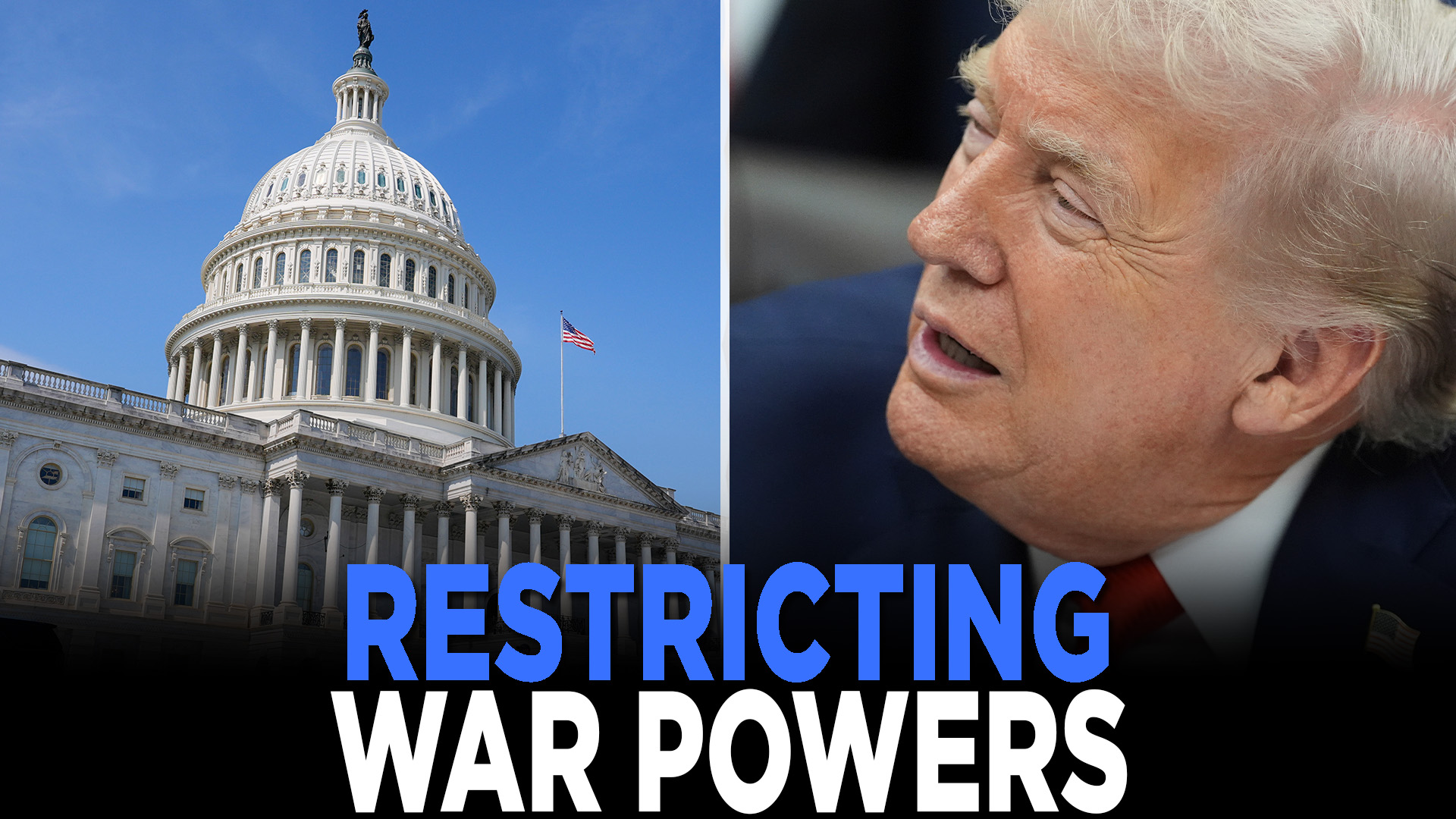
WASHINGTON — A growing faction of Republican senators is signaling a willingness to challenge President Donald Trump’s authority to continue military operations in Iran without explicit congressional approval, as a critical 60-day deadline under the War Powers Act approaches this week. The shift, led by influential GOP lawmakers including Senate Appropriations Chair Susan Collins (R-ME), underscores a rare intraparty divide over executive war powers and could force a high-stakes vote on the future of U.S. Involvement in the conflict.
The War Powers Resolution of 1973, enacted in the aftermath of the Vietnam War, requires the president to terminate any use of U.S. Armed forces in hostilities within 60 days unless Congress authorizes their continued deployment. With the deadline set to expire on Friday, May 1, 2026, lawmakers on both sides of the aisle are grappling with whether to assert their constitutional role in matters of war and peace—or risk ceding that authority to the White House. The law also mandates that the president must notify Congress within 48 hours of commencing hostilities, a requirement the Trump administration has reportedly complied with, according to statements from Collins and other senators.
Collins, a senior Republican and a key swing vote in the narrowly divided Senate, broke ranks with many in her party on Tuesday when she indicated she would support a resolution to end U.S. Military action in Iran if hostilities continue beyond the 60-day window. In a statement published on her official Senate website, Collins emphasized that “sustained combat operations require full engagement with Congress,” while also warning that passing such a resolution “now would send the wrong message to Iran and to our troops.” Her remarks reflect a delicate balancing act: acknowledging the constitutional role of Congress while stopping short of outright opposition to the administration’s Iran policy.
The War Powers Act: A Constitutional Flashpoint
The War Powers Resolution, often referred to as the War Powers Act, was passed in 1973 over President Richard Nixon’s veto in an effort to reassert congressional authority over military engagements. The law stipulates that the president must withdraw U.S. Forces from hostilities within 60 days unless Congress explicitly authorizes their continued use. An additional 30-day withdrawal period is allowed if the president certifies that military necessity requires it. The law has been a source of controversy since its inception, with presidents from both parties arguing that it infringes on their constitutional role as commander-in-chief.
In the current context, the Trump administration launched a series of airstrikes against Iranian-backed militias in Iraq and Syria in late February 2026, following a drone attack on a U.S. Military base in Jordan that killed three American service members. The administration notified Congress of the strikes within the required 48-hour window, as confirmed by multiple lawmakers, including Collins. However, as the 60-day deadline nears, the White House has not sought formal congressional authorization for continued military operations, setting the stage for a potential showdown with Capitol Hill.
Legal scholars remain divided on the constitutionality of the War Powers Act, with some arguing that it represents an unconstitutional encroachment on the president’s authority, while others contend We see a necessary check on executive overreach. The Supreme Court has never ruled directly on the law’s constitutionality, leaving its enforcement largely to political negotiation between the branches of government. For now, the looming deadline has forced lawmakers to confront a fundamental question: Will Congress reassert its war powers, or will it allow the president to continue military operations unchecked?
GOP Fractures Emerge as Deadline Nears
Collins is not alone in her willingness to challenge the administration. Sen. John Curtis (R-UT), a member of the Senate Armed Services Committee, told reporters on Tuesday that he is “uncomfortable” with the prospect of continued military action in Iran without congressional approval. “I am not opposed to a resolution,” Curtis said, though he added that he would need to review the specific language before committing his support. “I want to obviously see what’s in it.”
Curtis’s stance aligns with that of Sen. Josh Hawley (R-MO), a vocal critic of foreign military engagements who has previously called for a more restrained U.S. Foreign policy. In comments to NOTUS, Hawley expressed concern about the lack of congressional action, saying, “Let’s hope that there’s not just stasis, that just nothing happens between now and the end of the month.” His remarks suggest a growing unease among some Republicans about the potential consequences of inaction, both constitutionally, and politically.

Despite these defections, the GOP remains deeply divided on the issue. Senate Minority Leader Mitch McConnell (R-KY) has signaled opposition to any resolution that would restrict the president’s ability to conduct military operations, arguing that such measures would undermine U.S. Deterrence in the Middle East. “The last thing we should do is tie the president’s hands while Iran continues to threaten our allies and our interests,” McConnell said in a floor speech last week. His position reflects the broader reluctance among many Republicans to challenge a president of their own party, particularly on matters of national security.
Democrats, meanwhile, have struggled to unite their caucus behind a single approach. While some progressive lawmakers have pushed for a resolution to end hostilities, others have been hesitant to accept a vote that could be framed as undermining U.S. Military efforts. Sen. Tim Kaine (D-VA), a leading advocate for congressional war powers, has introduced multiple resolutions aimed at reasserting Congress’s role, but none have gained sufficient traction to force a vote. “This is not about politics—it’s about the Constitution,” Kaine said in a statement. “If we don’t act now, we risk setting a dangerous precedent for future presidents.”
Iran’s Role and the Stakes for U.S. Policy
The current debate over war powers is unfolding against the backdrop of escalating tensions between the U.S. And Iran. The Iranian government has long been accused of supporting proxy militias across the Middle East, including groups responsible for attacks on U.S. Personnel and allies. In her March 4 statement, Collins described Iran as “the world’s leading sponsor of terrorism,” citing its support for groups like Hamas, Hezbollah, and Iraqi militias. She also warned that Iran’s advancing ballistic missile program and nuclear ambitions pose an “existential threat” to regional stability.
The Trump administration’s decision to launch airstrikes in February was framed as a response to Iranian aggression, particularly the drone attack on the U.S. Base in Jordan. However, critics argue that the strikes risked further escalation without a clear long-term strategy. “We need a diplomatic off-ramp, not an open-ended military commitment,” said Sen. Chris Murphy (D-CT), a member of the Senate Foreign Relations Committee. “Congress has a responsibility to ask hard questions about where this is headed.”
The administration, for its part, has defended its actions as necessary to protect U.S. Interests and deter future attacks. In a classified briefing to lawmakers last month, Defense Secretary Lloyd Austin reportedly outlined the administration’s strategy, which includes continued military pressure on Iranian-backed groups while leaving the door open for diplomatic engagement. However, details of the briefing remain scarce, and some lawmakers have criticized the administration for a lack of transparency about its long-term objectives.
What Happens Next?
With the 60-day deadline set to expire on Friday, the coming days are likely to see intense negotiations among lawmakers, the White House, and congressional leadership. Several potential outcomes are on the table:
- Congressional Authorization: The White House could seek formal approval from Congress to continue military operations, though this would require securing enough votes in both the House and Senate—a tall order given the current divisions.
- A War Powers Resolution: Lawmakers could introduce a resolution to end hostilities, forcing a vote that would put senators on the record about their stance on the conflict. Such a resolution would likely pass the Democratic-controlled House but face an uphill battle in the Senate, where Republicans hold a slim majority.
- Executive Action: The administration could argue that the War Powers Act does not apply to the current operations, citing the limited scope of the airstrikes or the ongoing nature of the threat from Iranian-backed groups. This approach would likely face legal challenges and further inflame tensions with Congress.
- Stalemate: If no action is taken by the deadline, the status quo could persist, with the administration continuing military operations while lawmakers debate their next steps. This outcome would likely spark further criticism from war powers advocates, who argue that inaction effectively cedes congressional authority to the executive branch.
One thing is clear: the outcome of this debate will have far-reaching implications for the balance of power between the executive and legislative branches. It could also shape the trajectory of U.S. Policy in the Middle East for years to arrive, particularly as Iran continues to expand its influence in the region. For now, lawmakers are running out of time to decide whether they will reclaim their constitutional role—or allow the president to set the terms of America’s military engagement in Iran.
Key Takeaways
- 60-Day Deadline: The War Powers Act requires the president to terminate hostilities within 60 days unless Congress authorizes their continuation. The deadline for the current operations expires on May 1, 2026.
- GOP Divisions: A growing number of Republican senators, including Susan Collins (R-ME) and John Curtis (R-UT), have signaled support for a resolution to end military action in Iran without congressional approval.
- Constitutional Stakes: The debate centers on whether Congress will reassert its war powers or allow the president to continue military operations unchecked, setting a precedent for future conflicts.
- Iran’s Role: The Trump administration’s airstrikes were framed as a response to Iranian-backed attacks on U.S. Personnel, but critics argue they risk further escalation without a clear diplomatic strategy.
- Next Steps: Lawmakers face a narrow window to act before the deadline, with potential outcomes including congressional authorization, a war powers resolution, or continued executive action.
What Readers Can Do
As this story develops, readers can stay informed by following official updates from Congress and the White House. The U.S. Senate and House of Representatives provide live streams of floor proceedings and committee hearings, which can be accessed through their respective websites:
For those interested in the legal and constitutional aspects of the War Powers Act, the full text of the resolution is available through the Library of Congress. The Congressional Research Service has published multiple reports on the law’s history and application, offering valuable context for the current debate.
The next critical checkpoint will be the Senate’s scheduled pro forma session on Thursday, April 30, where lawmakers may introduce or debate a resolution ahead of the Friday deadline. Readers are encouraged to follow reputable news outlets for real-time updates and analysis as the situation unfolds.
What are your thoughts on the balance of war powers between Congress and the president? Should lawmakers take a more active role in authorizing military engagements, or is executive flexibility necessary for national security? Share your views in the comments below and join the conversation.
Related reading