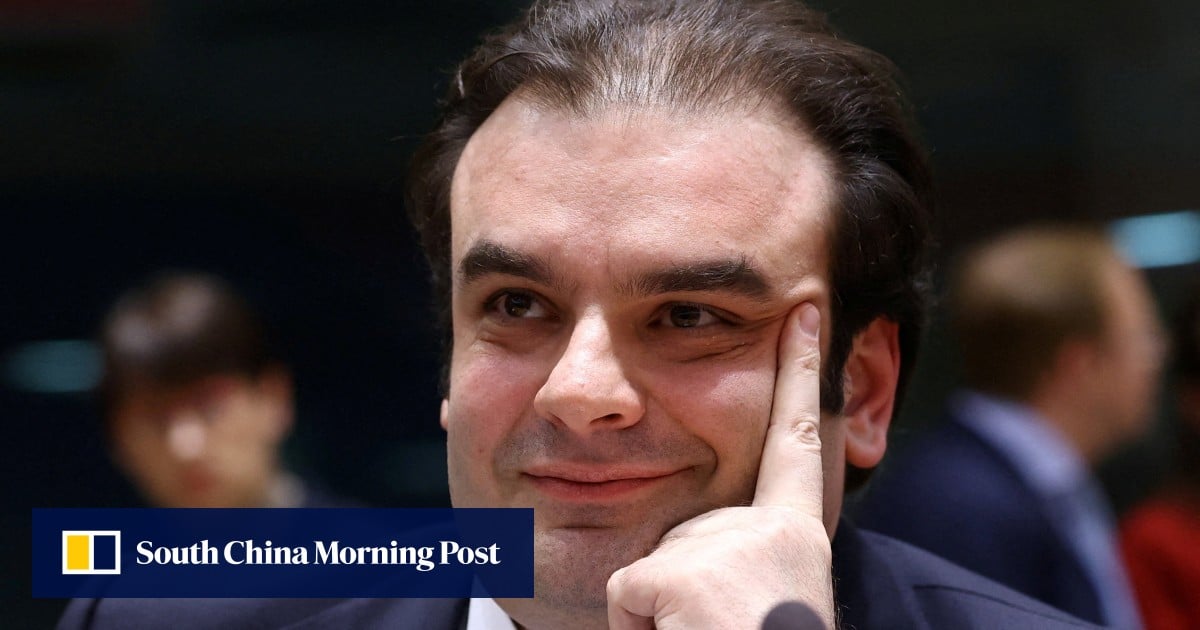
Greece‘s pierrakakis Elected Eurogroup President: A Symbol of Economic Recovery
The appointment of Greece’s kyriakos Pierrakakis as president of the Eurogroup marks a pivotal moment for both Greece and the eurozone. This election signifies a dramatic turnaround for a nation once on the brink of economic collapse,now poised to help shape the financial future of the currency bloc. Pierrakakis secured the position, defeating the Belgian candidate, and will lead the assembly of finance ministers from the 20 countries sharing the euro.
From Bailouts to Leadership: Greece’s Remarkable Journey
Just over a decade ago, Greece faced a severe debt crisis, requiring three separate bailouts between 2010 and 2015 to prevent a complete economic meltdown. Years of excessive borrowing and unsustainable spending practices brought the country to the precipice of exiting the eurozone. Many questioned whether Greece could remain a member of the single currency.
However,Greece has undergone a importent economic transformation. Today, the nation boasts:
* Steady economic growth exceeding 2% annually.
* The highest investment rates within the Eurozone.
* consistent budget surpluses.
* A rapidly declining public debt, though still the highest in Europe.
This remarkable recovery hasn’t gone unnoticed. European Economic Commissioner Valdis Dombrovskis highlighted the symbolic importance of Pierrakakis’s election, acknowledging Greece’s past struggles and celebrating it’s current status as a top-performing economy.
What Does This Mean for the Eurozone?
Pierrakakis’s leadership of the Eurogroup comes at a crucial time. The Eurozone faces ongoing challenges, including inflation, geopolitical instability, and the need for continued structural reforms. His experience navigating Greece’s own economic difficulties will be invaluable as the Eurogroup addresses these complex issues.
You can expect Pierrakakis to prioritize:
* Fiscal Responsibility: Continuing to advocate for sound fiscal policies across the Eurozone.
* Sustainable Growth: Promoting investments that foster long-term, sustainable economic growth.
* Financial Stability: Strengthening the resilience of the Eurozone’s financial system.
* Inclusive Policies: Ensuring that economic benefits are shared broadly across all member states.
His appointment signals a shift in the Eurozone’s dynamics, demonstrating that economic recovery and responsible financial management can lead to positions of influence and leadership.
Evergreen Section: Lessons from Greece’s Economic Turnaround
Greece’s story offers valuable lessons for any nation facing economic hardship. The path to recovery isn’t easy, but it is possible with a commitment to:
* Structural Reforms: implementing basic changes to improve economic efficiency and competitiveness.
* Fiscal Discipline: Maintaining responsible government spending and managing debt levels.
* Investment in Innovation: Fostering innovation and attracting foreign investment.
* Political Stability: Creating a stable political environment conducive to economic growth.
* International Cooperation: Working collaboratively with international partners to address economic challenges.
These principles are universally applicable, and understanding them is crucial for anyone interested in economic policy and global financial stability.
FAQ: understanding the Eurogroup and Greece’s role
1. What is the Eurogroup, and why is its president important?
The eurogroup is an informal body comprised of the finance ministers of the 20 European Union countries that have adopted the euro.The president chairs meetings, guides discussions, and represents the Eurogroup in international forums, making the role vital for shaping Eurozone policy.
2.how did Greece avoid defaulting on its debt in the early 2010s?
Greece received three bailout packages from Eurozone governments and the International Monetary Fund (IMF) between 2010 and 2015. these bailouts provided crucial financial assistance,but also came with strict conditions requiring greece to implement austerity measures and economic reforms.
3. What does “fiscal surplus” mean in the context of Greece’s recovery?
A fiscal surplus means that the Greek government collected more in revenue (taxes, etc.) than it spent over a specific period. Achieving consistent fiscal surpluses is a key indicator of economic health and demonstrates Greece’s improved financial management.
4. Is Greece’s public debt still a concern?
Yes,Greece still has the highest level of public
Related reading