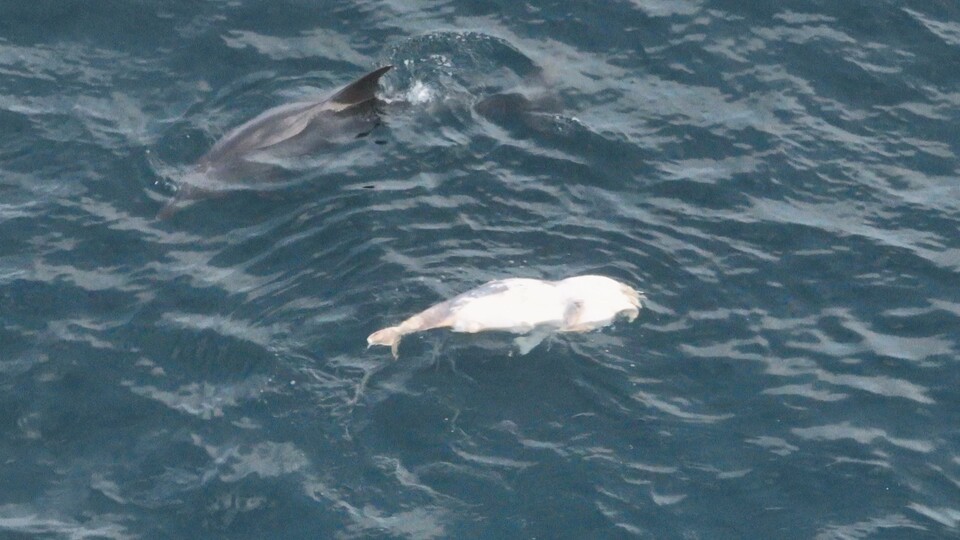
In the coastal waters off Jeju Island, South Korea, researchers and environmental observers have recently documented instances of Indo-Pacific bottlenose dolphin mothers carrying their deceased calves for extended periods. This behavior, often referred to as “grief-carrying” or post-mortem calf carrying, has been observed by local marine conservation groups monitoring the endangered population of Indo-Pacific bottlenose dolphins (Tursiops aduncus) that inhabit the waters surrounding the island.
According to reports from marine biologists and environmental organizations, including those monitoring the Jeju coast, these observations highlight the complex social bonds maintained by these cetaceans. While the specific reasons for this behavior remain a subject of study, marine scientists generally categorize it as a manifestation of the strong maternal attachment inherent in dolphin social structures. This phenomenon has been documented in various dolphin species globally, though catching such instances on camera in the wild remains rare.
Understanding Maternal Attachment in Jeju’s Dolphin Population
The Indo-Pacific bottlenose dolphin population in Jeju is recognized as a critically important group for marine research. The local government and conservationists have implemented various measures to protect these animals, which face threats from habitat degradation and entanglement in fishing gear. The recent observations of mothers carrying their calves serve as a reminder of the emotional and social complexity these animals exhibit within their pods.
Experts suggest that for many mammals, including cetaceans, the period following the death of an offspring involves a transition phase where the mother may continue to interact with the carcass. This behavior is typically temporary, lasting from a few days to several weeks, before the mother eventually abandons the calf. Research published by organizations like the International Union for Conservation of Nature (IUCN) indicates that such behaviors do not indicate a lack of awareness of the death, but rather a biological delay in the cessation of maternal care behaviors.
Conservation Challenges and Habitat Protection
The waters around Jeju Island are the only place in South Korea where this specific population of bottlenose dolphins resides. Because of their limited range and small population size—estimated by the Cetacean Society and local maritime authorities to be fewer than 120 individuals—every loss is significant to the survival of the group. The Jeju provincial government has designated the area as a protected habitat to mitigate human-induced stressors.

In addition to monitoring dolphin health, local authorities are focusing on broader marine welfare, including the management of coastal facilities. For instance, the Jeju provincial government recently launched a public funeral facility for companion animals, which began operations on the 10th of the current month. While this facility is designed for terrestrial pets, it reflects an increasing regional focus on animal welfare and the ethical treatment of living creatures in the Jeju ecosystem.
Ongoing Monitoring and Research Efforts
Marine researchers, including those associated with local documentary teams and academic institutions, continue to monitor the pods to assess the impact of environmental changes on dolphin reproductive success. The goal is to collect data that can inform future conservation policies and reduce mortality rates among calves, which are particularly vulnerable to environmental pollutants and vessel strikes.
For those interested in the ongoing conservation status of these dolphins, the Ministry of Oceans and Fisheries provides periodic updates on marine mammal protection strategies and the status of endangered species in Korean waters. Continued public interest and adherence to marine observation guidelines—such as maintaining a safe distance from pods—are vital to ensuring that these animals can navigate their natural behaviors without unnecessary human interference.

As researchers continue to analyze these incidents, the focus remains on long-term population stability. Observers are encouraged to report sightings of dolphin pods to official marine authorities, but are strictly advised against approaching the animals, as stress can negatively impact their ability to nurse and care for their young.
We welcome your thoughts on these conservation efforts. Please share your insights or questions in the comments section below as we continue to follow the latest updates from the marine research community in Jeju.