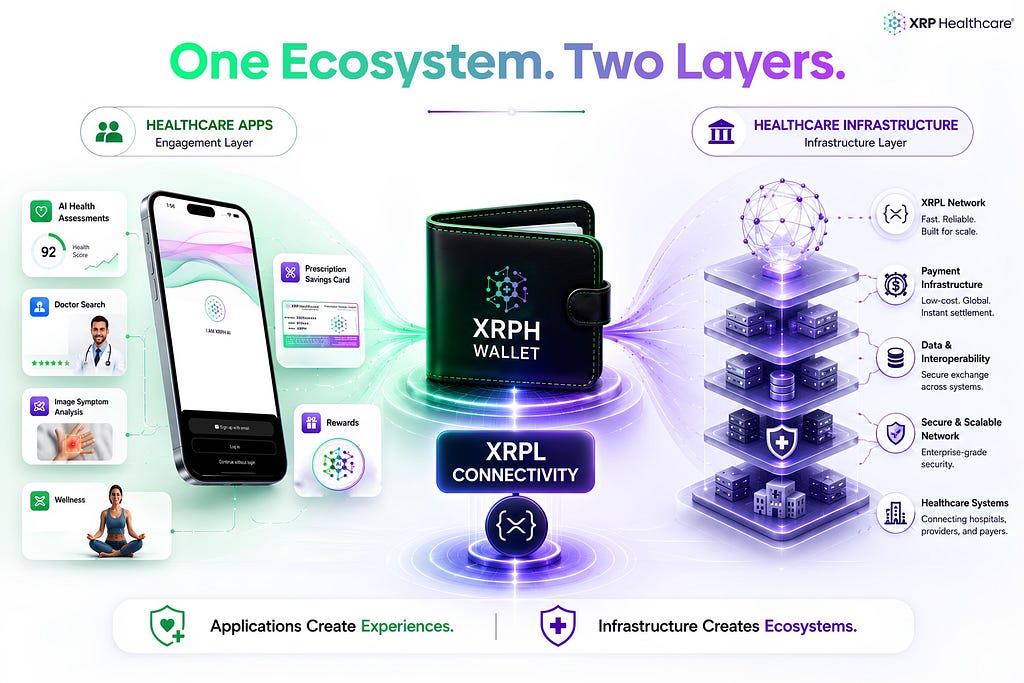
Modern healthcare technology is shifting its focus from standalone applications to robust, integrated ecosystems, a transition driven by the necessity for improved data connectivity and system interoperability. While patients and providers often interact primarily with user-facing interfaces—such as telemedicine platforms or symptom checkers—the underlying infrastructure acts as the essential architecture that allows these tools to communicate, scale, and function as a unified service. According to industry analysis, the development of healthcare infrastructure is becoming as critical as the applications themselves, as it addresses the fragmented nature of current digital health tools.
As a physician, I have observed how the proliferation of individual health applications has often led to data silos, where information cannot move efficiently between different providers or systems. This fragmentation creates friction in patient care and limits the potential for cohesive digital health management. The emerging model of healthcare infrastructure—which increasingly incorporates blockchain technology and secure connectivity layers—aims to solve this by providing a scalable, reliable, and interoperable foundation for diverse health services.
The Structural Evolution of Digital Health
Traditionally, healthcare infrastructure has been defined by administrative systems, payment networks, and secure communication channels. However, as digital transformation accelerates, the definition is expanding to include decentralized ledgers and automated connectivity protocols. Infrastructure is rarely the most visible component of a software platform, yet it is the primary determinant of whether a system can handle growth while maintaining security and data integrity.
The core issue with the current landscape of standalone health apps is their inability to share information seamlessly. When a user utilizes one system for appointment booking and another for wellness tracking, the lack of interoperability often forces the patient to manually bridge the gap. By contrast, a connected ecosystem utilizes infrastructure to ensure that these disparate services can interact, allowing for a more fluid experience that reduces administrative burden and improves data accessibility.
Integration of Blockchain in Healthcare
Platforms like XRP Healthcare have adopted an approach that separates the ecosystem into two distinct layers: infrastructure and engagement. This model focuses on using the XRP Ledger (XRPL) to provide the connectivity layer, which supports various engagement tools such as AI-driven health assessments and prescription savings programs. The use of distributed ledger technology in this context is intended to leverage the network’s speed, low transaction costs, and scalability to support a global user base.
Data provided by XRP Healthcare indicates that their ecosystem currently includes over 74,000 users across more than 65 countries. These users have engaged in over 28,000 AI-powered health assessments and processed more than 12,500 transactions through their prescription savings card, resulting in a reported $1.2 million in cumulative prescription savings. These figures illustrate how infrastructure, when paired with accessible engagement tools, can facilitate tangible utility for patients and healthcare consumers.
Connectivity and Future Scalability
The move toward connected ecosystems is not merely a technical preference but a requirement for the next generation of healthcare services. As new tools—such as advanced AI symptom analysis or automated payment systems—are introduced, they require a stable, pre-existing foundation to function effectively. Without an infrastructure layer, these innovations would remain siloed, preventing them from contributing to a comprehensive healthcare experience.

Infrastructure enables developers to add new services without the need to rebuild the entire platform from the ground up. This modularity is essential for long-term scalability. By investing in the underlying connectivity layers, organizations can ensure that their platforms remain adaptable to changing regulatory environments and technological advancements. This approach shifts the focus from building “more apps” to building “more connections,” which is the primary driver of digital health innovation today.
Frequently Asked Questions
What is healthcare infrastructure?
Healthcare infrastructure refers to the behind-the-scenes systems, such as data networks, payment rails, and interoperability protocols, that support healthcare services and enable different applications to communicate with one another.

Why is infrastructure important for healthcare apps?
Infrastructure provides the necessary connectivity and scalability that standalone apps lack. It allows for interoperability, meaning users can move between services seamlessly, and it provides a foundation for future innovation without requiring a total system redesign.
How does the XRP Ledger support healthcare?
The XRP Ledger is used as an infrastructure layer for healthcare platforms due to its characteristics of fast settlement, low transaction costs, reliability, and global accessibility, which are designed to support connected, scalable ecosystems.
What is the difference between an infrastructure layer and an engagement layer?
The infrastructure layer acts as the technical foundation—including wallets and ledger connectivity—while the engagement layer represents the user-facing tools, such as AI symptom checkers, doctor search functions, and reward programs.
The future of medical technology will likely be defined by how effectively these systems can talk to one another. As we move toward more integrated digital health models, the priority will remain on building systems that are not only user-friendly but also structurally sound and inherently connected. Future developments in this space will depend on continued efforts to bridge the gap between backend infrastructure and patient-facing innovation. We encourage readers to share their thoughts on the role of digital infrastructure in the future of patient care in the comments section below.