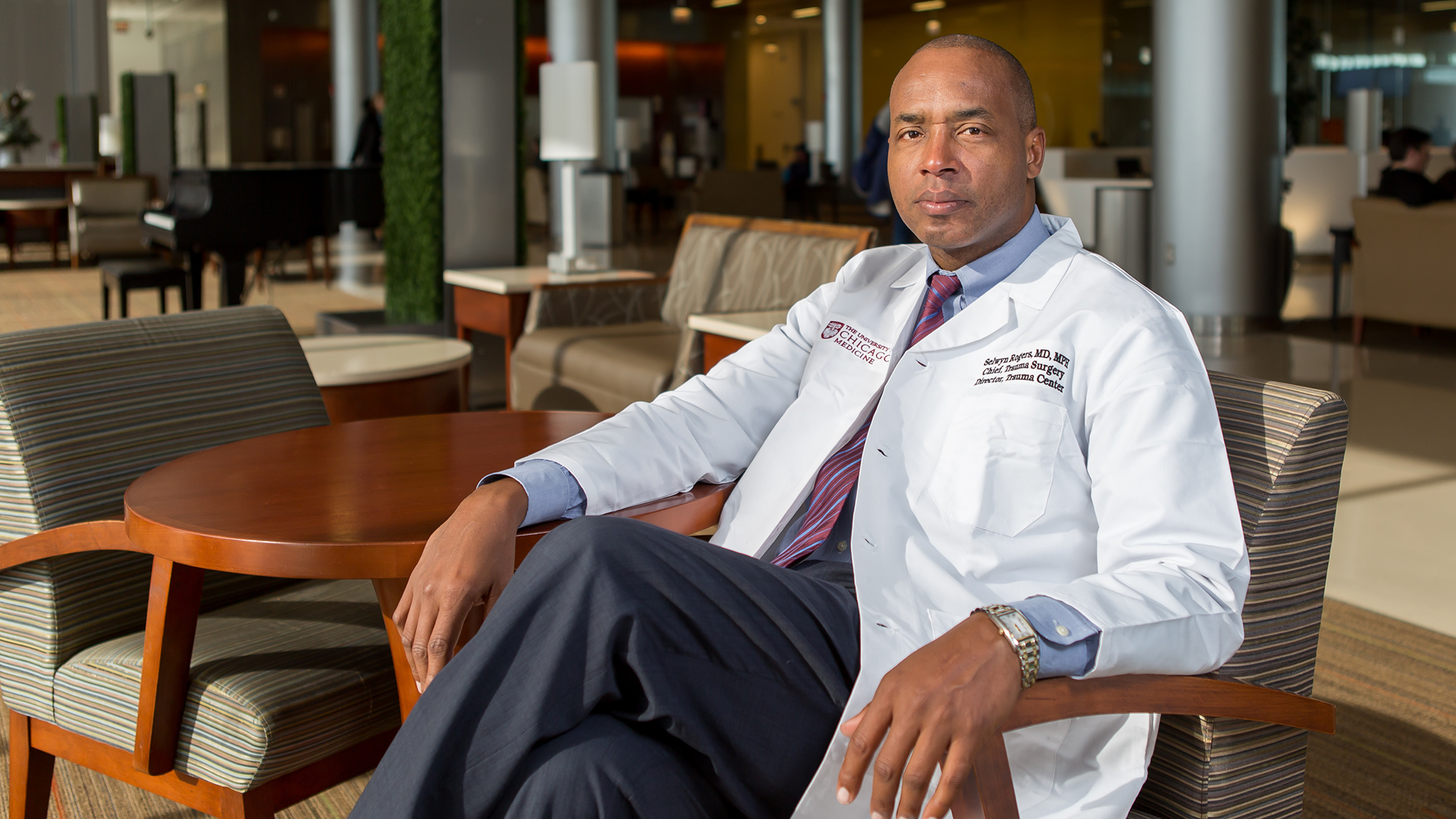
Dr. Selwyn Rogers Jr., founding director of the University of Chicago Medicine Trauma Center, treats America’s gun violence epidemic as both a surgical challenge and a public health crisis. Having helped establish the adult trauma facility on Chicago’s South Side in 2018, Rogers spent years witnessing the profound toll of penetrating trauma in urban communities. For nearly thirty years prior to the center’s opening, residents on the South Side endured lengthy ambulance trips to distant medical facilities after suffering severe injuries, resulting in losses of life.
In his forthcoming book, “Healing the Gun Violence Epidemic: Ending Violence, Rebuilding Communities, and a Trauma Surgeon’s Vision for Restoring Hope,” scheduled for publication by North Atlantic Books in 2026, Rogers examines the structural forces driving interpersonal violence across the United States. Drawing on his experience as a trauma surgeon and public health research, the book chronicles stories of grieving families, reformed individuals, and community organizations working to dismantle the root causes of urban violence. Rogers argues that treating trauma solely within the operating room fails to address the underlying risks that frequently lead to patient re-injury.
Evolution of Trauma Care and the South Side Gap
The absence of an adult trauma center on Chicago’s South Side lasted from 1991 until the University of Chicago Medicine Trauma Center opened its doors in 2018. During that nearly three-decade gap, critically injured patients required emergency transport across vast distances. Time remains a decisive factor in survival following penetrating injuries, where minutes often dictate whether a patient recovers or loses vital functions.
The urgent need for local specialized care gained widespread public attention following the August 15, 2010 shooting of 18-year-old community activist Damien Turner. Turner, who led a youth advocacy group called Fearless Leading by the Youth, was shot four blocks from the University of Chicago and transported to Northwestern, where he arrived dead. His mother’s assertions that a local trauma facility could have saved his life catalyzed grassroots community mobilization under the banner “Trauma center now,” paving the way for the eventual establishment of the South Side center where Rogers now practices.
Shifting From Criminal Justice to Public Health
Rogers traces his public health perspective back to his medical training in Boston during the early 1990s crack epidemic, where he observed that patients suffering from penetrating trauma were disproportionately African-American and Hispanic males. Subsequent academic work at Vanderbilt University School of Medicine and Meharry Medical College reinforced his understanding of how socioeconomic disparities directly influence medical outcomes across short geographic distances.
In his clinical practice, Rogers compares the traditional medical response to trauma with how physicians treat chronic illnesses like heart disease. While acute surgical intervention successfully repairs immediate physical damage, patients frequently return to the identical environmental risk factors that precipitated their initial injury without holistic follow-up care. To counter this cycle, health systems increasingly adopt secondary prevention frameworks through hospital-based violence intervention programs.
Community-Based Secondary Prevention and Trusted Messengers
Across the United States, approximately 80 hospital-based violence intervention programs operate using guidelines coordinated by the Health Alliance for Violence Intervention. These programs utilize credible messengers—individuals from the affected communities with lived experience or justice system involvement—to provide psychological support and bridge the gap between medical discharge and community resources. Organizations such as the Institute for Nonviolence Chicago and Cure Violence deploy outreach workers to mediate active disputes and prevent retaliatory shootings before they occur.
These programs connect recovering patients with existing support networks, including the Supplemental Nutrition Assistance Program and the Victims of Crime Act fund, helping individuals transition toward long-term stability and legal employment.
Readers seeking immediate support resources or looking to connect with established victim advocacy networks can consult directories provided by the Directory of Crime Victim Services, the Trauma Survivors Network, or the National Child Traumatic Stress Network.
North Atlantic Books has announced that “Healing the Gun Violence Epidemic” will hit bookshelves in 2026. We invite readers to share their perspectives and join the conversation in the comments section below.
Worth a look
- The Best Food Plans for Weight Loss and Strength Gains
- La Frontera Association Collects Clothing and Hygiene Products for Evacuees
- Greece Tourism Crisis: Luxury Costs, Water Scarcity, and Infrastructure Strain (newsdirectory3.com)
- Havenwood Heritage Heights Concord NH: Fitness Centers, Outdoor Activities, and Health Services for Seniors (news-usa.today)