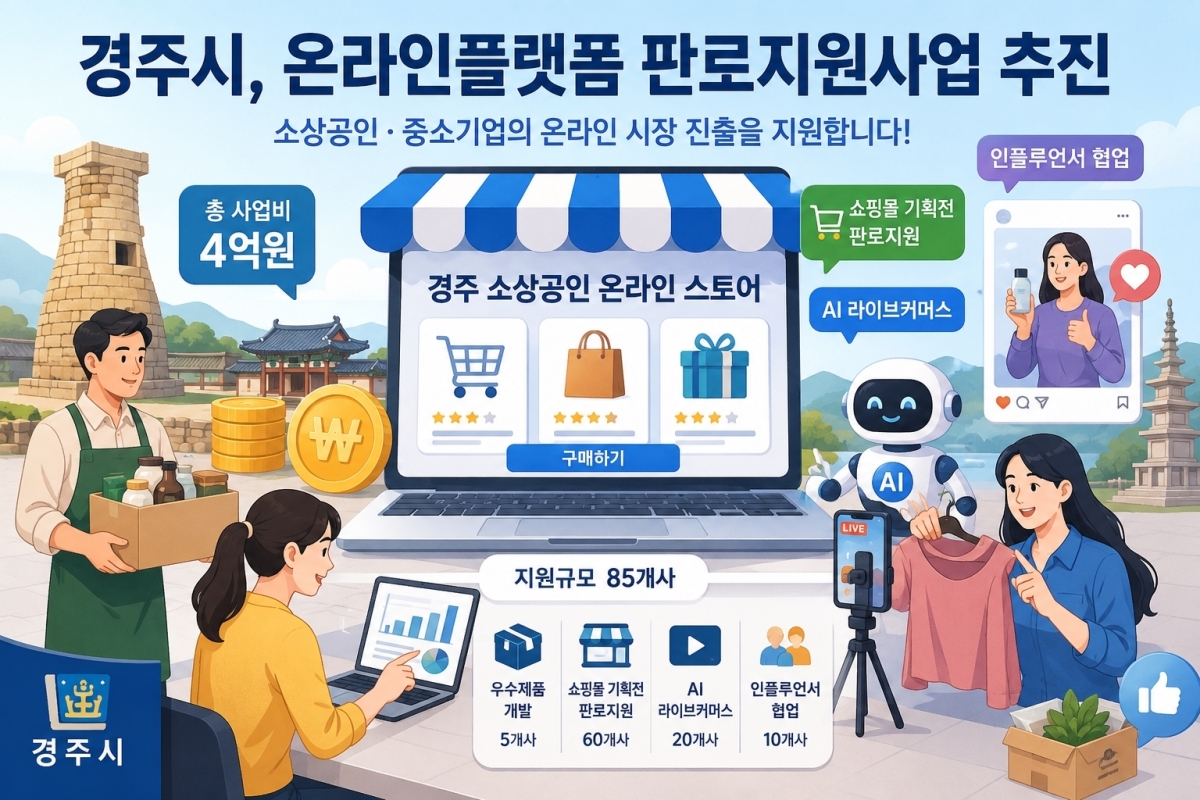
Gyeongju City plans to implement an AI-driven live commerce program as part of its 2026 online platform sales support project to assist local small businesses and small-to-medium enterprises (SMEs) in entering the digital marketplace. The initiative aims to lower the barrier to entry for online sales by providing merchants with access to artificial intelligence hosts, product development assistance, and specialized shopping mall exhibitions.
The project, which is scheduled for implementation in 2026, focuses on bridging the digital divide for local producers who may lack the technical expertise or time to manage complex live-streaming sales. By integrating AI technology, the city intends to automate much of the presentation process traditionally required for successful live commerce.
How will AI live commerce assist Gyeongju’s local merchants?
The core of the 2026 initiative involves the use of AI live commerce, a technology that utilizes digital avatars or “virtual humans” to act as sales hosts. In traditional live commerce, businesses must hire human presenters, set up professional studios, and manage real-time broadcasts, which can be cost-prohibitive for small-scale vendors.

According to the project’s framework, AI hosts can mitigate these challenges by providing a consistent and scalable way to showcase products. These AI entities can be programmed to deliver product information, respond to common customer inquiries, and maintain a presence on shopping platforms without the scheduling constraints of human talent. This technology allows local businesses to participate in the growing live-shopping trend—a sector that has seen significant growth in South Korea—at a fraction of the traditional cost.
For many small business owners in Gyeongju, the primary obstacle to digital expansion is not the product itself, but the labor-intensive nature of digital marketing. The city’s plan seeks to address this by providing the technological infrastructure necessary to run these sales channels autonomously or with minimal human intervention.
What specific support will be provided to small businesses and SMEs?
Gyeongju City has outlined a multi-layered support system designed to move local products from traditional physical markets to digital storefronts. The 2026 online platform sales support project includes three primary pillars of assistance:
- Product Development: The city will support the creation and refinement of high-quality goods specifically suited for the online market. This includes improving packaging, branding, and product features to meet the expectations of digital consumers.
- Shopping Mall Exhibitions: The initiative will facilitate curated exhibitions within major online shopping malls. These digital showcases are intended to increase the visibility of Gyeongju-based products by placing them in front of larger, more diverse consumer bases.
- AI Live Commerce Integration: As noted previously, the city will provide the tools and technology for AI-led live streaming, allowing merchants to sell through interactive video formats.
By combining these elements, the city aims to create a complete pipeline for digital commerce, moving from the initial stages of product optimization through to active, tech-enabled sales.
Comparison of Traditional vs. AI-Supported Live Commerce
To understand the impact of this shift, the following table compares the standard live commerce model with the AI-supported model Gyeongju City intends to implement.

| Feature | Traditional Live Commerce | AI-Supported Live Commerce |
|---|---|---|
| Personnel Requirements | Human hosts and technical staff | AI digital avatars/virtual hosts |
| Operational Cost | High (talent fees, studio rental) | Lower (software and tech-based) |
| Scheduling | Fixed, time-sensitive broadcasts | Flexible, potentially continuous |
| Technical Barrier | Requires high presentation skills | Requires minimal merchant input |
Why is Gyeongju City prioritizing digital sales channels?
The move toward digital transformation is a response to changing consumer behaviors and the economic necessity for local governments to support rural and regional economies. As traditional brick-and-mortar retail faces increasing competition from e-commerce giants, local municipalities are looking for ways to ensure their small-scale producers remain competitive.
The implementation of this project addresses several critical economic factors:
Overcoming Geographical Limitations: Local businesses in Gyeongju are no longer restricted to the physical foot traffic of the city. Digital platforms allow them to reach customers nationwide and even internationally.
Reducing Economic Risk: For an SME, a failed live-streaming event can result in significant financial loss due to the high costs of production. By utilizing AI, the city reduces the financial risk associated with digital marketing experimentation.
Enhancing Regional Competitiveness: By modernizing the way local goods are marketed, Gyeongju City aims to elevate the brand image of its regional products, moving them from “local specialties” to competitive consumer goods in the broader digital economy.
The initiative is part of a broader trend in South Korea, where local governments are increasingly investing in “smart” commerce solutions to revitalize regional markets and support the digital transition of traditional merchants.
The city is expected to provide further details regarding the application process and specific eligibility requirements for the 2026 support project as the implementation date approaches.
Please share your thoughts on the use of AI in local commerce in the comments below, and share this article with your network to keep them updated on regional digital trends.
Keep reading
- Actor Responds to Controversy Over Footwear During Guruvayur Temple Visit
- Weekly Movie Releases in Leganés: PAW Patrol The Mighty Movie Now Showing
- Uber to Invest $10 Billion in Robotaxi Platform and Autonomous Vehicles (newsdirectory3.com)
- Germany Mandates Electronic Withdrawal Button for Online Shops by 2026 (archyworldys.com)