Antarctica Under Heightened Surveillance as Avian Influenza H5N1 Spreads
The remote and fragile ecosystem of Antarctica is facing increased scrutiny as the highly pathogenic avian influenza (HPAI) H5N1 virus continues its global spread. Scientists are actively monitoring wildlife populations for signs of the virus, a development that raises concerns about the potential impact on the continent’s unique biodiversity. The situation underscores the interconnectedness of global ecosystems and the challenges of protecting even the most isolated regions from emerging infectious diseases. This heightened vigilance comes as the virus has already been detected in South America, prompting fears of further transmission to the Antarctic.
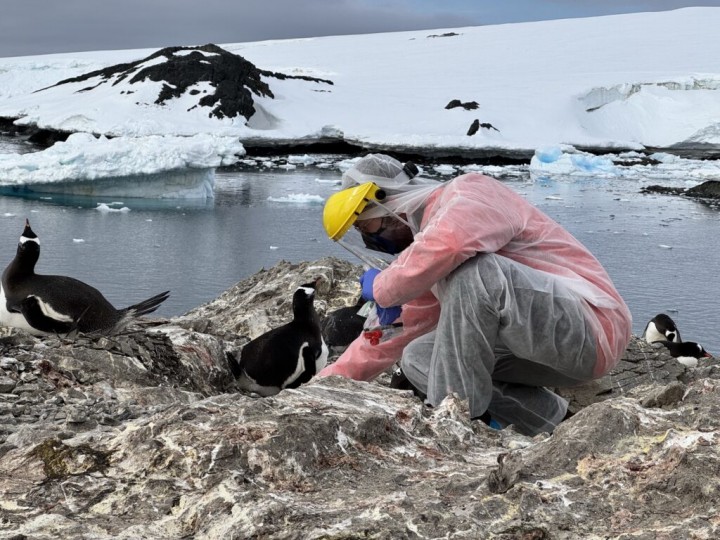
A collaborative effort between the Chilean Antarctic Institute (INACH) and the University of Chile is at the forefront of this monitoring initiative. The program, led by Dr. Víctor Neira, a researcher at the University of Chile, focuses on analyzing biological samples collected from key Antarctic species, including Adélie penguins and Weddell seals, to detect the presence of the H5N1 pathogen early on. This proactive approach is crucial for understanding the virus’s behavior in a polar environment and implementing appropriate preventative measures. The initiative began in December 2024 with the installation of two laboratories at the Escudero and O’Higgins Antarctic bases, equipped with advanced PCR technology for rapid virus detection.
Confirmed Cases and Current Assessment
While the virus has been confirmed in deceased skuas and cormorants, scientists are currently reporting no evidence of widespread mortality events within the larger penguin and seal colonies. This is a cautiously optimistic assessment, but experts emphasize that the situation remains dynamic and requires continuous monitoring. The initial detection of the virus in scavenging birds like skuas and cormorants suggests that the virus may have arrived in Antarctica through migratory patterns or contact with infected marine vessels. The potential for the virus to spread to more vulnerable species, such as penguins, is a significant concern.
To ensure accuracy, the Chilean team employs a two-pronged diagnostic strategy. Rapid antigen tests are conducted in the field, providing preliminary results, while more definitive polymerase chain reaction (PCR) tests are performed in the Antarctic laboratories. This combination allows for swift identification of potential cases and timely implementation of response protocols. The laboratories at Escudero and O’Higgins are staffed primarily by students and professionals from the University of Chile’s Faculty of Veterinary Sciences and Animal Husbandry (FAVET UChile), who have received specialized training in advanced diagnostic techniques. Matthias Cabrera and David Gajardo were specifically mentioned as key personnel involved in the installation and operation of these crucial facilities.
The Broader Implications of H5N1 in Antarctica
The presence of H5N1 in Antarctica is not merely a regional concern; it has global implications. The virus has been circulating globally for several years, causing outbreaks in poultry and wild bird populations across Europe, Asia, and North America. Its recent arrival in South America and now detection in Antarctica highlights the virus’s ability to spread over vast distances, potentially through migratory birds. Understanding how the virus behaves in the unique Antarctic environment is critical for predicting its future trajectory and mitigating its impact on global wildlife populations.
Dr. Neira emphasizes that the impact of the virus extends beyond the Antarctic territory itself. He highlights the importance of understanding the virus’s propagation pathways to prevent future outbreaks, adopting a “One Health” approach that recognizes the interconnectedness of human, animal, and environmental health. This approach is particularly relevant in Antarctica, where the ecosystem is highly sensitive to external disturbances. The One Health Commission, of which Dr. Neira is a member, advocates for collaborative, multidisciplinary efforts to address complex health challenges like avian influenza.
International Collaboration and Future Monitoring
Recognizing the global significance of the situation, international collaboration is a top priority. Sharing data, expertise, and resources is essential for effectively monitoring the virus and developing appropriate response strategies. The Chilean-led initiative is actively seeking to strengthen partnerships with other Antarctic research programs and international organizations involved in avian influenza surveillance. This collaborative approach will be crucial for tracking the virus’s spread, assessing its impact on Antarctic wildlife, and developing effective mitigation measures.
The ongoing monitoring program will continue to collect and analyze samples from various Antarctic species, providing valuable data on the virus’s prevalence, genetic evolution, and potential for transmission. Researchers will also be investigating the virus’s impact on the Antarctic food web and the overall health of the ecosystem. The data collected will inform future research efforts and help to refine monitoring strategies. The initiative, supported by INACH and FAVET UChile, aims to establish long-term monitoring capabilities in Antarctica, ensuring that the continent remains a sentinel for emerging infectious diseases.
What is H5N1 and Why is it a Concern?
H5N1 is a subtype of the influenza A virus, known for its high pathogenicity – meaning it can cause severe disease and high mortality rates in birds. While primarily affecting avian species, H5N1 has the potential to infect mammals, including humans, while human cases remain rare. The virus spreads easily among birds through direct contact, contaminated surfaces, and airborne transmission. The current global outbreak is particularly concerning due to its widespread geographic distribution and the increasing number of confirmed cases in various bird species.
The primary concern regarding H5N1 is its potential to mutate and become more easily transmissible between humans. While current strains require close contact with infected birds for transmission to humans, a mutation could allow for more efficient human-to-human spread, potentially leading to a pandemic. Public health officials worldwide are closely monitoring the virus’s evolution and developing preparedness plans in case of a significant shift in its transmissibility.
The World Health Organization (WHO) provides detailed information on avian influenza, including updates on the global situation, risk assessments, and guidance for prevention and control. The United States Centers for Disease Control and Prevention (CDC) also offers comprehensive resources on H5N1, including information for travelers and healthcare professionals.
The situation in Antarctica serves as a stark reminder of the interconnectedness of global health and the importance of proactive surveillance and international collaboration in addressing emerging infectious disease threats. Continued monitoring, research, and preparedness efforts are essential to protect both wildlife populations and human health.
The next update from the Chilean Antarctic Institute regarding the H5N1 monitoring program is expected in late March 2026. We encourage readers to share their thoughts and concerns in the comments below and to share this article with their networks to raise awareness about this critical issue.
Worth a look