Building Resilience from the Ground Up: How Seed Security is Transforming Food Systems in Haiti
Haiti faces a complex and escalating crisis. Displacement, food insecurity, climate vulnerability, and armed violence are converging to create a deeply challenging environment for its people. Yet, amidst these difficulties, a quiet revolution is taking root – one centered on empowering farmers through seed security and sustainable agricultural practices. This isn’t just about providing aid; it’s about fostering lasting resilience.
For years, Haiti’s agricultural sector has been battered by climate shocks, leaving communities vulnerable and dependent on external assistance. The Food and agriculture Association of the United Nations (FAO) is shifting this paradigm,moving beyond emergency response to long-term solutions. Central to this approach is the Gestion des Postes agricoles Semenciers (GPAS) programme – a strategic initiative focused on strengthening local seed systems.
From Emergency Relief to Sustainable Food Security
GPAS doesn’t simply hand out seeds. It’s a holistic program designed to rebuild agricultural capacity from the ground up. Here’s how it works:
High-Quality Seeds: Farmers receive access to semences de base – high-quality, first-generation seeds – to revitalize their farms.
Skill Progress: Comprehensive training covers best practices in cultivation, harvesting, and crucial financial management skills. Local Knowledge Integration: The program expertly blends scientific advancements with the invaluable, generations-old knowledge of Haitian farmers regarding their local ecosystems.
Farmer-Led Selection: Crucially, farmers themselves choose the seed varieties they want to cultivate. This often means prioritizing local species already adapted to the environment and deeply embedded in Haitian agricultural traditions.
“The farmers and locals know their environment, all the particularities. They know the type of soil, the type of climate.And this knowledge is passed down from generation to generation,” explains Jacques, a key figure within the FAO program. This respect for indigenous expertise is basic to GPAS’s success.
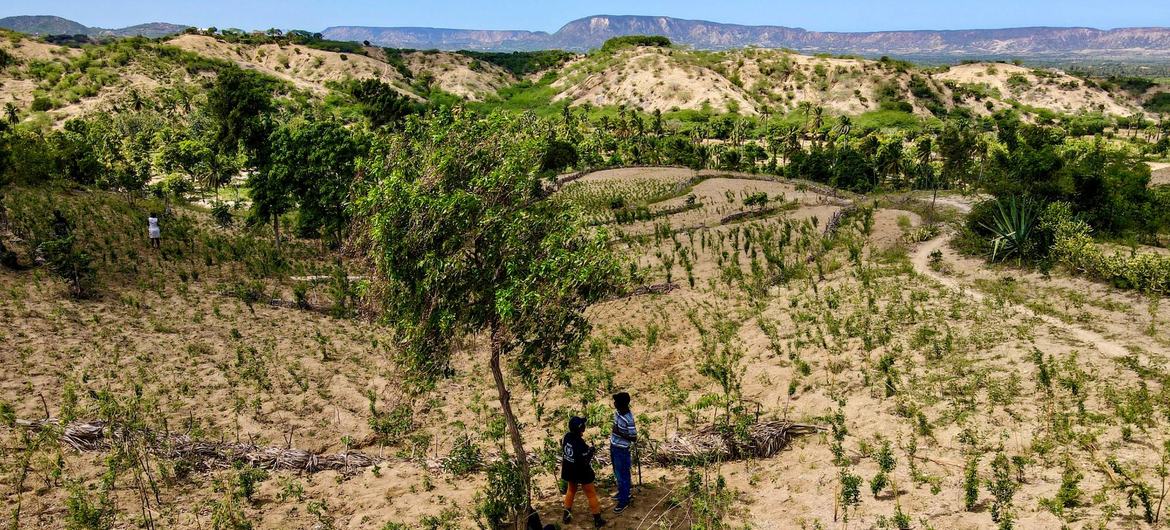
!Climate shocks have plagued Haiti’s agricultural sector.
WFP Haiti/Theresa Piorr: Climate shocks continue to threaten Haiti’s agricultural sector, highlighting the need for resilient farming practices.
protecting the Future: Seed Banks and Storage
Beyond providing seeds, FAO is investing in infrastructure to ensure their long-term availability. This includes equipping seed banks with essential tools like silos for proper storage.
This is particularly vital in the face of increasingly frequent and severe climate events.Effective storage protects seed stocks, allowing farmers to continue planting even after devastating storms or prolonged droughts.
“We can consider the seeds as an adaptation tool which allows farmers to continue to cultivate crops even during extreme conditions,” Jacques emphasizes. It’s a proactive approach, building a buffer against future shocks.
Beyond Assistance: Empowering self-Sufficiency
GPAS represents a core principle of the FAO’s work: moving beyond immediate humanitarian aid to create self-sustaining communities. As Vauthier, another FAO representative, explains, the goal is to empower individuals to take control of their own lives.”Resilience can give communities back dignity. It can make your brain think in a very different way, not as assisted but as someone taking control of his own life,” Vauthier states. This shift in mindset is perhaps the most important outcome of the program.
One Seed, Lasting Impact
In a country grappling with widespread crisis – 1.3 million displaced,nearly six million facing food insecurity – it’s easy to question the impact of a single seed. However, the FAO believes in the power of small, locally-driven changes.
These changes may not be revolutionary, but they are demonstrably effective and sustainable. The focus is on building a foundation for long-term food security, one farm, one community at a time.
Seed banks play a critical role in this process. They reduce farmers’ reliance on external aid, enabling them to produce their own seeds and strengthen their autonomy.
“What happens is that farmers are less dependent on other human beings. they
Related reading