
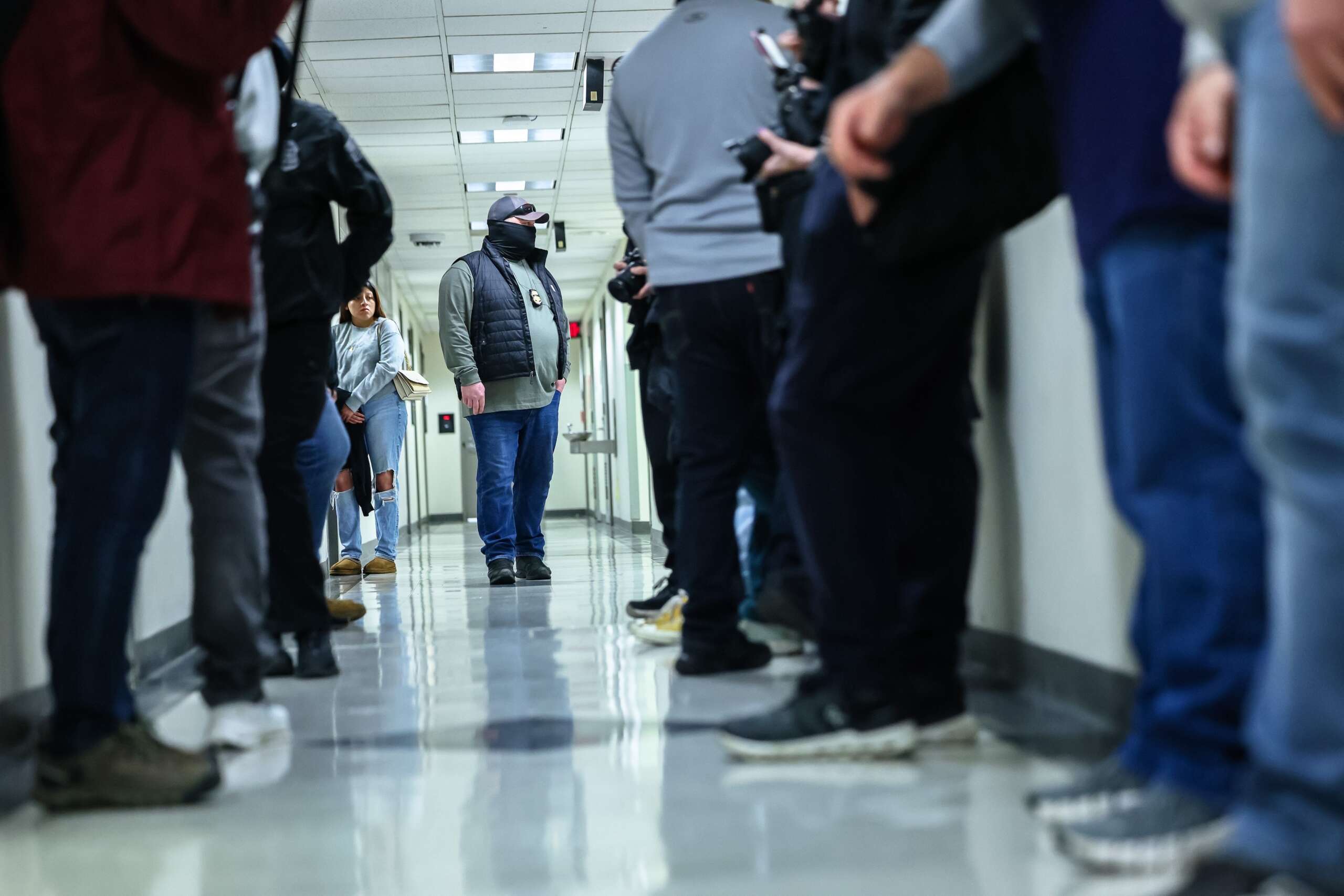
Immigrants and asylum seekers appearing before the Executive Office for Immigration Review (EOIR) in New York City are increasingly facing significant procedural delays due to technical failures in the remote interpretation system. Last week, a group of Haitian asylum seekers waited for nearly eight hours at the Manhattan immigration courthouse on Broadway, only to have their proceedings rescheduled when the required language interpreters failed to connect to the court’s remote platform, according to reports from observers present at the scene. This disruption reflects broader challenges within the U.S. immigration court system as it struggles to manage a record-high backlog of pending cases.
The incident highlights the reliance of the U.S. Department of Justice (DOJ) on the Language Services Unit to provide remote interpretation for non-English speaking respondents. Under the Immigration and Nationality Act, immigration judges are mandated to provide competent interpretation to ensure due process for individuals in removal proceedings, a requirement that becomes physically impossible to fulfill when technical systems fail or personnel are unavailable. According to the Transactional Records Access Clearinghouse (TRAC) at Syracuse University, the national immigration court backlog reached over 3.5 million pending cases as of early 2024, placing unprecedented strain on courtroom resources, including the availability of certified interpreters.
The Mechanics of Remote Interpretation Failures
Immigration courts frequently utilize video teleconferencing (VTC) and remote interpretation services to process cases efficiently. However, the system relies on stable telecommunications and the availability of qualified interpreters for dozens of languages. When a connection drops or a translator fails to join a scheduled session, the judge is often forced to grant a continuance—an administrative delay that pushes the hearing date further into the future. This creates a cycle where the already overwhelmed docket becomes even more congested.
According to the Executive Office for Immigration Review (EOIR), which oversees the nation’s immigration courts, the agency is tasked with ensuring that all parties can participate in proceedings. Despite these mandates, advocates for immigrant rights have long argued that technical glitches and the lack of in-person interpreters disproportionately affect vulnerable populations, particularly those who lack legal counsel. The experience of waiting hours in a courthouse only to be told that the interpreter is unavailable can be a significant setback for individuals who must take time off work or arrange childcare to attend their hearings.
Legal Implications for Due Process
The right to an interpreter is considered a cornerstone of due process in the United States legal system. Without accurate, real-time interpretation, an asylum seeker cannot effectively present their claim or respond to the government’s arguments. The Department of Justice’s own guidelines emphasize the necessity of language access to maintain the integrity of immigration proceedings. When these services fail, it raises questions about whether the court can legally proceed with a hearing.

Legal experts note that repeated delays can have practical consequences for asylum seekers. Beyond the stress of the process, delays in receiving a final decision can prolong the period during which an individual is unable to obtain a work permit or secure stable housing. The U.S. Citizenship and Immigration Services (USCIS) outlines that asylum applicants may only apply for employment authorization after a specific period has elapsed following the filing of their application, a timeline that is often disrupted by court continuances.
Managing the Record-High Court Backlog
The incident at the Manhattan courthouse is not an isolated event but rather a symptom of a system operating at capacity. The immigration court system has faced years of scrutiny regarding its ability to process cases fairly and expeditiously. The Government Accountability Office (GAO) has previously reported on the challenges the EOIR faces in managing its caseload, specifically citing staffing shortages and the need for improved technology to support remote hearings.
For the individuals affected by last week’s technical failure, the immediate next step is a rescheduled hearing. The court will typically issue a new Notice of Hearing, which serves as the official notification for the next appearance date. Respondents are generally advised to maintain contact with their legal representatives to ensure they receive these updates, as missing a rescheduled hearing can result in an in absentia removal order—a final decision issued by the judge when the respondent fails to appear.

As the U.S. government continues to evaluate its immigration infrastructure, the focus remains on balancing the need for speed with the legal requirement for fairness. Observers of the New York immigration courts expect that until systemic improvements are made to the remote interpretation infrastructure, technical interruptions will continue to pose a challenge to the timely resolution of asylum claims. For those interested in tracking the status of court backlogs or policy updates, the TRAC Immigration project provides ongoing data analysis and public reporting on these developments.
Readers who have been affected by similar procedural delays or who wish to contribute to the ongoing discussion regarding immigration court access are invited to share their experiences in the comments section below. Your feedback helps provide a clearer picture of how these systemic issues impact individuals navigating the federal immigration process.