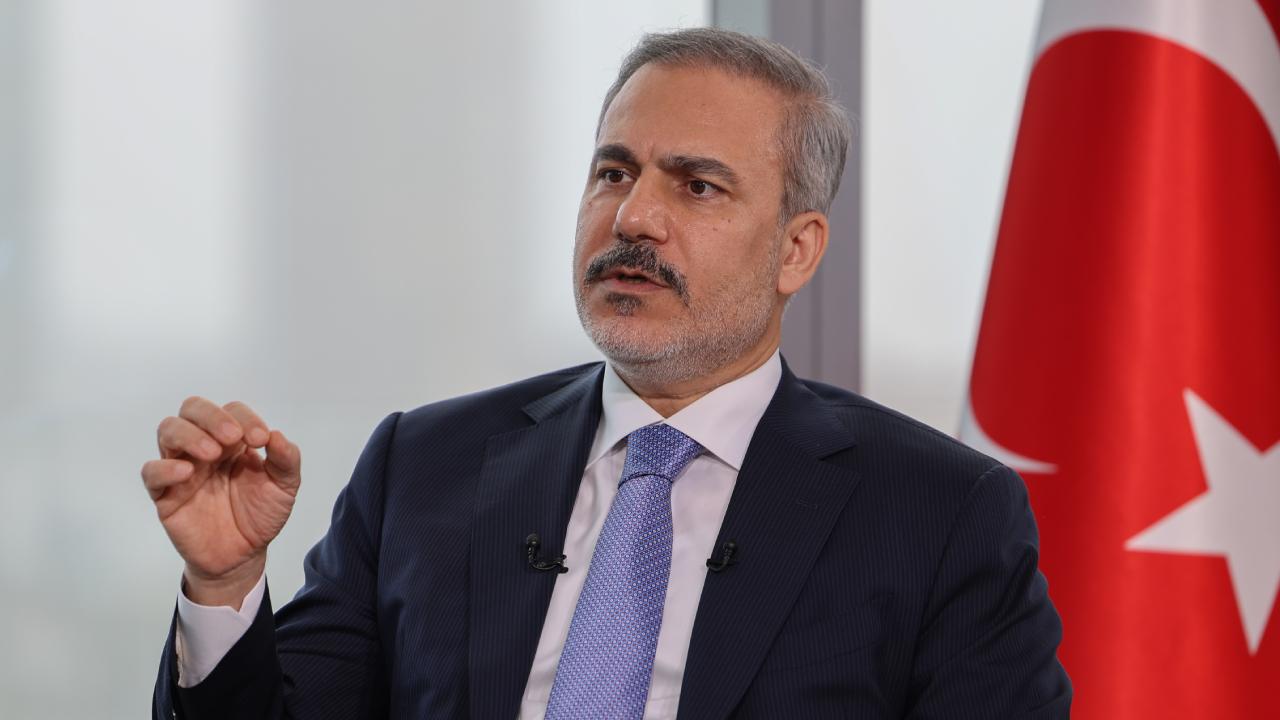
Turkey’s Foreign Minister Signals Limited Prospects for Iran-U.S. Dialogue, Emphasizes Avoiding Wider Conflict
Ankara – As tensions remain high in the Middle East following recent exchanges between Iran and Israel, Turkish Foreign Minister Hakan Fidan has indicated a lack of serious ongoing initiatives to restart negotiations between Tehran and Washington. Speaking in an exclusive interview with the Associated Press on March 14, 2026, Fidan nevertheless suggested that Iran remains open to informal diplomatic channels, even as conditions are currently unfavorable for substantive talks. The comments come as Turkey seeks to navigate a delicate path, prioritizing its own security and aiming to avoid being drawn into a regional escalation. Fidan’s assessment reflects a complex geopolitical landscape where distrust runs deep and the potential for miscalculation remains significant.
Fidan emphasized that Iranian perceptions of “betrayal” – stemming from attacks while engaged in nuclear negotiations with the United States – are a key obstacle to renewed dialogue. He stated that Iranians “feel betrayed” because they were attacked during active nuclear negotiations with the U.S., but added, “I think they are open to any sensible back-channel diplomacy.” This sentiment underscores the deep-seated mistrust that has characterized relations between Iran and the U.S. For decades and which has been further exacerbated by recent events. The collapse of the Joint Comprehensive Plan of Action (JCPOA), the 2015 nuclear deal, and the subsequent reimposition of sanctions by the U.S. Have contributed to a sense of frustration and resentment within Iran.
Iran’s Position and Turkey’s Mediation Efforts
While acknowledging the current impasse, Fidan indicated that Turkey continues to engage with Iran, urging de-escalation and restraint. He revealed that Ankara is actively working to persuade Iran to halt attacks targeting other Gulf nations. “We are trying to convince the Iranians to stop these attacks,” Fidan said. Turkey has historically maintained relatively good relations with both Iran and the United States, positioning itself as a potential mediator in regional disputes. But, the current climate presents significant challenges to any such efforts. The recent escalation has complicated Turkey’s balancing act, requiring careful diplomacy to avoid alienating either side.
Addressing the recent incident involving ballistic munitions fired from Iran that entered Turkish airspace, Fidan stated that Iranian officials have insisted the projectiles were not intended for Turkish territory. “Iranian officials maintain that the missiles were not fired at Turkey,” he noted. Despite acknowledging the possibility of provocation, Fidan reiterated Turkey’s firm commitment to remaining outside the conflict. “We are aware that we are being provoked and will be provoked. However, our goal is to stay out of this war,” he stated. This position reflects Turkey’s strategic priorities, which include safeguarding its own security and avoiding entanglement in a wider regional conflict. The interception of the missiles by NATO defenses demonstrates Turkey’s reliance on its alliance commitments for protection.
Leadership Transition in Iran and Regional Stability
Fidan also touched upon the recent leadership developments in Iran, following the reported health issues of Supreme Leader Ayatollah Ali Khamenei. Regarding the status of the new leader, Mücteba Hamaney, Fidan indicated a lack of definitive information. “We do not have much information about the injuries of Mücteba Hamaney. What we know is that he is alive and at work,” he said. The succession process in Iran is closely watched by regional and international actors, as it could have significant implications for the country’s domestic and foreign policies. Fidan suggested that the power vacuum created by the transition period has been filled by the Iranian Revolutionary Guard Corps (IRGC). “I believe this void has been filled by the Iranian Revolutionary Guard Corps,” he assessed. The IRGC’s growing influence within Iran is a source of concern for some regional powers, who view the organization as a destabilizing force.
Criticism of Netanyahu and Israel’s Regional Agenda
In a strongly worded critique, Fidan leveled criticism at Israeli Prime Minister Benjamin Netanyahu, accusing him of deliberately cultivating external enemies to advance his political agenda. “As long as Netanyahu is there, Israel will always show someone as an enemy. They need this to advance their own agendas. If it wasn’t Turkey, they would choose another country,” Fidan stated. This assessment reflects a long-standing Turkish perspective on the Israeli-Palestinian conflict, which views Israel’s policies as a major obstacle to regional peace. Fidan further asserted that Israel’s objectives in the region extend beyond security concerns, alleging a pursuit of territorial expansion. “Their goal is not security, but to gain more land. As long as they do not abandon this idea, there will always be war in the Middle East,” he said. These remarks underscore the deep-seated disagreements between Turkey and Israel regarding the root causes of the conflict and the path towards a lasting resolution.
Turkey’s Position on Gaza and a Potential Palestinian Governance Structure
Turning to the ongoing conflict in Gaza, Fidan reiterated Turkey’s commitment to finding a peaceful resolution. He stated that Turkey has not yet received a formal invitation to participate in an international force that may be deployed in the region. “We have not yet received a formal invitation to participate in an international force to be established in the region,” he said. Fidan also revealed that the U.S. Is attempting to quietly secure Israeli agreement for Turkey’s participation. “I think the Americans are trying to reach a silent agreement with the Israeli side regarding Turkey’s participation,” he disclosed. Turkey has consistently advocated for a two-state solution to the Israeli-Palestinian conflict and has been a vocal critic of Israel’s military actions in Gaza.
Outlining Turkey’s proposed solution for Gaza, Fidan emphasized the need for a politically independent Palestinian governance structure. “Our priority is the establishment of a management committee consisting of 15 politically independent Palestinian administrators. We expect them to go to Gaza and start working as soon as possible,” he stated. This proposal reflects Turkey’s belief that a viable Palestinian state is essential for achieving lasting peace and stability in the region. The formation of such a committee would require the cooperation of various Palestinian factions, as well as the support of international actors.
Key Takeaways
- Limited Dialogue Prospects: There are currently no significant efforts underway to resume negotiations between Iran and the U.S., according to Turkish Foreign Minister Hakan Fidan.
- Iran’s Perceived Betrayal: Iranian perceptions of having been “betrayed” during previous negotiations, coupled with subsequent attacks, are hindering renewed diplomatic efforts.
- Turkey’s Neutrality: Turkey is prioritizing its own security and aims to remain neutral in the escalating regional conflict, despite acknowledging the risk of provocation.
- Criticism of Netanyahu: Fidan sharply criticized Israeli Prime Minister Benjamin Netanyahu, accusing him of deliberately seeking external enemies for political gain.
- Gaza Governance Proposal: Turkey is advocating for the establishment of a 15-member Palestinian governance committee to administer Gaza.
Looking ahead, the situation in the Middle East remains highly volatile. The next key development to watch will be the outcome of ongoing diplomatic efforts to de-escalate tensions between Iran and Israel, and the potential for a broader regional conflict. Readers are encouraged to follow updates from reputable news sources and engage in constructive dialogue on these critical issues.
Keep reading