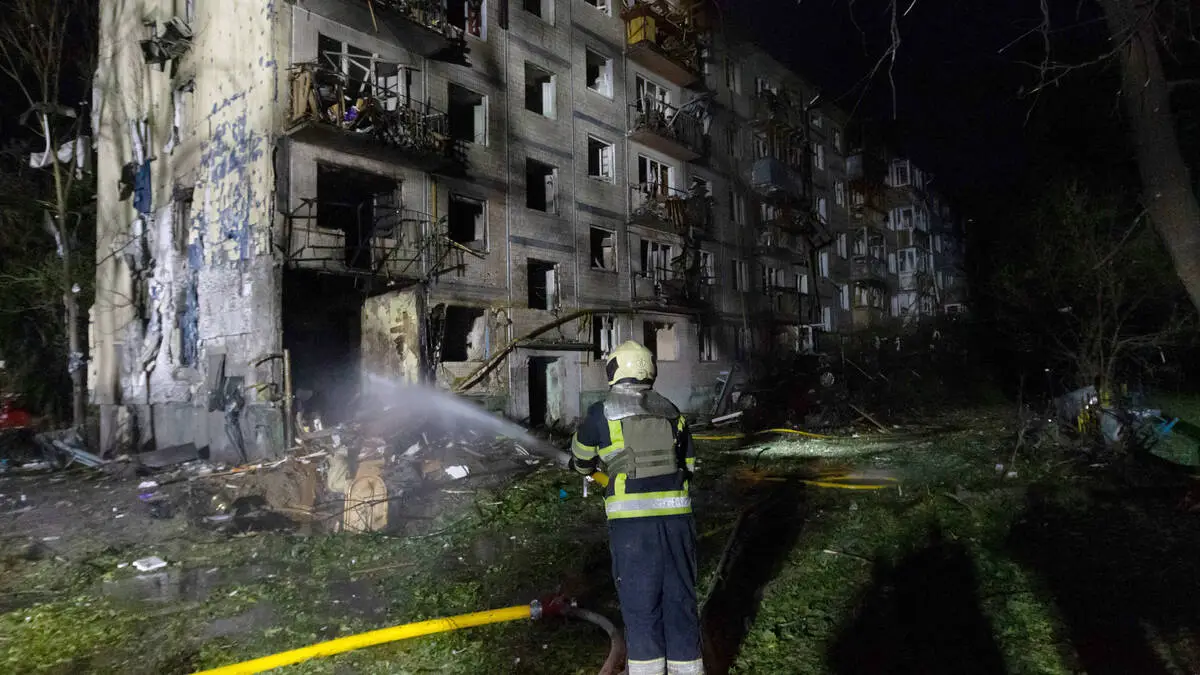
At least nine people were killed in Kyiv as Russia launched 35 missiles and 185 drones in a massive nighttime bombardment, according to officials. Ukrainian President Volodymyr Zelenskyy reported that his forces intercepted only one ballistic missile, citing a severe shortage of interceptors for U.S. Patriot systems.
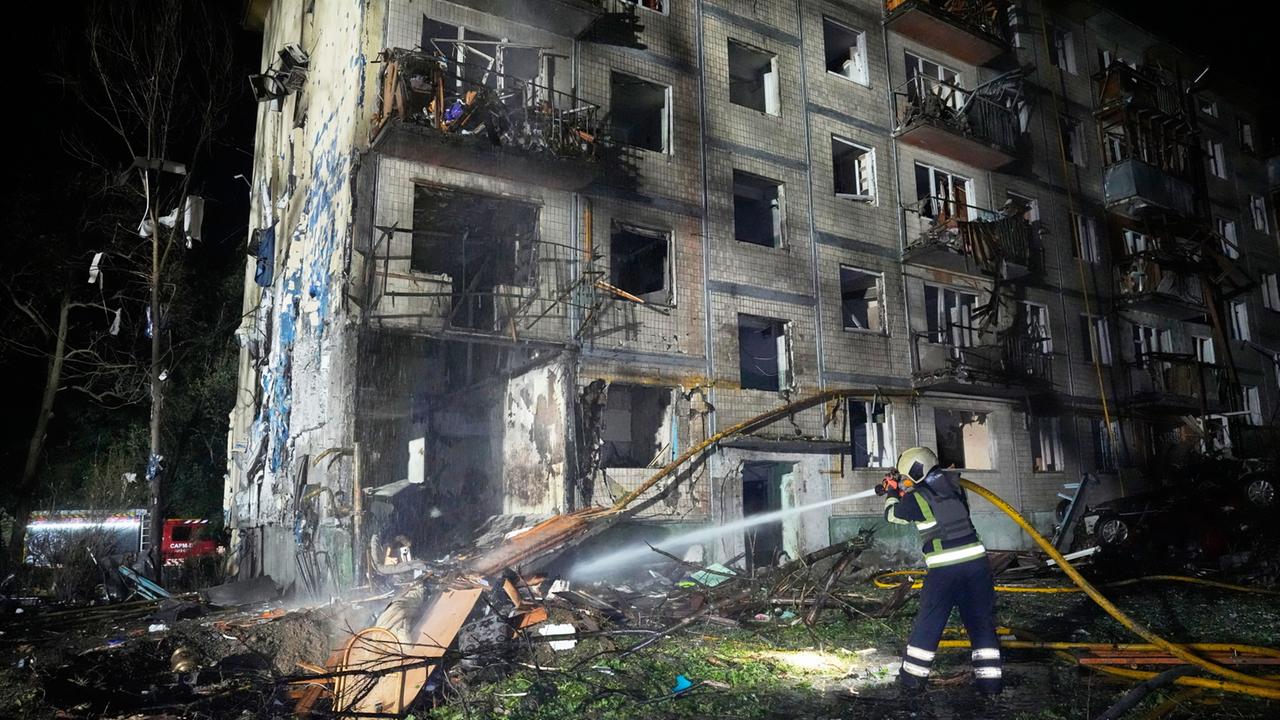
Kyiv faced a devastating aerial assault as waves of ballistic missiles struck residential and commercial districts across the Ukrainian capital. The nighttime strikes triggered massive fires, leaving vehicles burned out and trapping residents inside damaged structures. According to authorities, at least nine people lost their lives and 28 others sustained injuries, including two teenagers. Vitali Klitschko, the mayor of the million-strong city, reported via Telegram that numerous multi-story residential buildings and commercial properties suffered severe structural damage from incoming impacts and falling debris.
Emergency responders rushed to rescue people trapped inside a five-story residential building struck by plunging rocket fragments. Residents spent the hours of darkness seeking shelter in underground subway stations and outdoor refuge areas. The assault followed another heavy barrage on Thursday that killed at least ten people nationwide and caused extensive destruction in western regions near the Polish border.
Air Defense Shortages and President Zelenskyy’s Assessment of the Missile Barrage
President Volodymyr Zelenskyy revealed the stark imbalance of the engagement, stating that the military shot down just one out of 27 incoming ballistic missiles. Moscow launched a total of 35 missiles and 185 combat drones during the operation, with the capital serving as the primary target.

Zelenskyy emphasized that his country lacks sufficient interceptor missiles to supply the U.S.-provided Patriot battery networks needed to stop fast-moving ballistic threats. Ballistic missiles are more difficult to defend against due to their speed, and modern Patriot systems are considered a highly effective means against them.
Meanwhile, international leaders addressed the wider spillover risks of the air campaign. Following an incident earlier in the week where a Russian cruise missile breached the airspace of NATO member Poland, European Commission President Ursula von der Leyen condemned the intrusion as an unacceptable violation of airspace, while French President Emmanuel Macron formally denounced the renewed bombardment.
Naval Engagements and the Sinking of the Containership Yanina
While the capital endured heavy bombardment, Ukrainian forces struck back against Russian logistical assets at sea. President Zelenskyy announced that Ukrainian troops sank the sanctioned Russian containership Yanina
and hit multiple targets across the Black Sea and Sea of Azov.
The vessel, which had a capacity exceeding 100,000 tons, was operating under the Russian flag more than 200 kilometers from Novorossiysk when it was struck by two drones. The ship belonged to FESCO, a logistics firm subject to European Union sanctions that operates under the umbrella of the Russian state atomic energy corporation Rosatom.
That was a quite ordinary, civilian containership that was transporting civilian goods in international waters. Alexey Likhachev, Head of Rosatom
Rosatom chief Alexey Likhachev strongly condemned the operation, characterizing the drone attack as piracy and robbery at sea. The company confirmed that the 17 crew members aboard the vessel—which was carrying commercial cargo including frozen foods and building materials—were unhurt and were rescued by a separate vessel alongside naval aviation units from the Russian Black Sea Fleet.
Cross-Border Strikes, Ground Advances, and Industrial Impacts
In addition to the naval engagements, Ukrainian forces targeted economic infrastructure deep inside Russian territory. Zelenskyy reported that strikes hit the infrastructure of three oil refineries in the Bashkortostan region, located roughly 1,600 kilometers from the border. On the defensive side, the Russian Ministry of Defense stated that its air defense network intercepted and destroyed 274 Ukrainian drones overnight.
On the ground, ground forces from Moscow secured two additional villages, capturing Olhivka in the northern Kharkiv region and Ljubytske in the southeastern Zaporizhzhia region, according to reports from the Interfax news agency citing the defense ministry in Moscow.
The sustained campaign against energy infrastructure has created severe supply strains. Persistent drone attacks on fuel facilities sparked gasoline shortages on the occupied Crimean peninsula, prompting many civilian residents to depart. While occupation authorities have published maps directing motorists to available filling stations, rationing remains active in Sevastopol, where pumps limit drivers to 20 or 40 liters and prices climb to roughly three times the rates recorded in Moscow.
- Contaminated Lettuce Linked to Multiple Health Cases: State Health Alert
- US-Iran Conflict: Trump Announces Talks While Tehran Denies Deal and Stays on High Alert
- Odesa Attack: 13 Injured as Russian Strike Hits Transport Infrastructure (time.news)
- Russian Military Bloggers Report Heavy Casualties And Low Life Expectancy For New Recruits (newsdirectory3.com)