
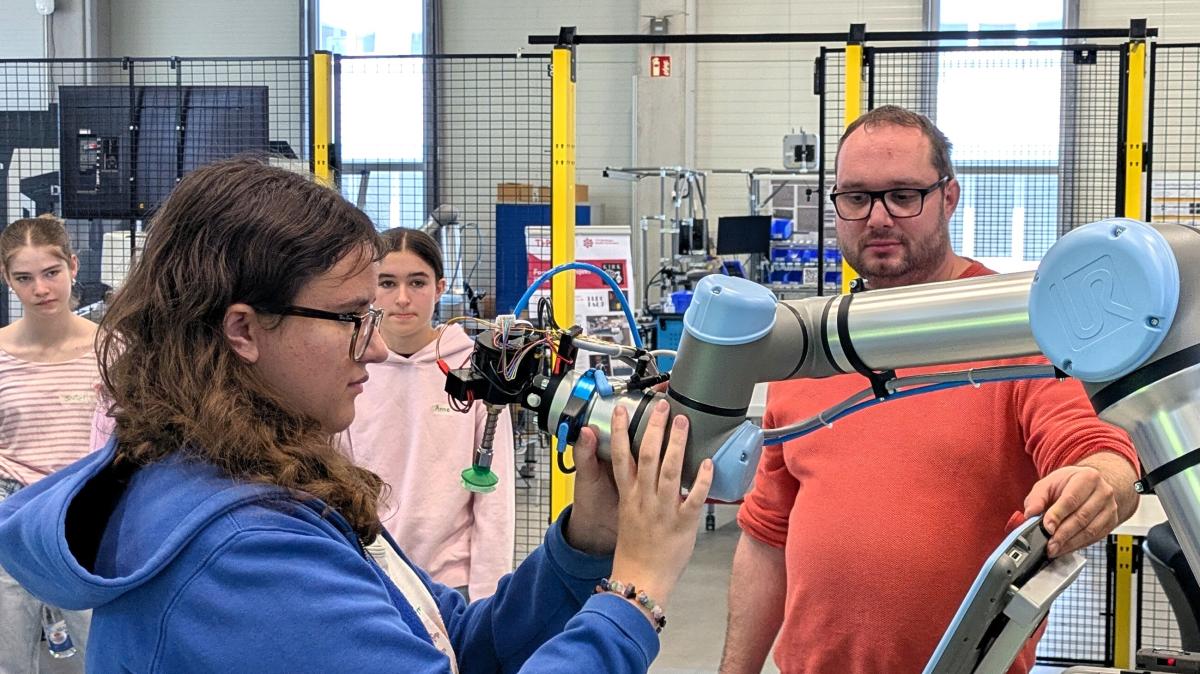
The push to bridge the gender gap in STEM (Science, Technology, Engineering, and Mathematics) reached a practical milestone in Bavaria this spring. On April 23, 2026, the Technologie Centrum Westbayern (TCW) and the Campus Nördlingen of the Technical University of Applied Sciences Augsburg (TH Augsburg) hosted a specialized event for Girls’ Day, designed to introduce young women to the world of high-tech engineering and robotics.
The initiative sought to dismantle traditional stereotypes by providing students with direct, hands-on access to professional equipment and academic expertise. According to reports from the TCW, the event welcomed 24 female students, offering them a glimpse into careers where women are currently underrepresented—specifically those with a female workforce of less than 40 percent.
By combining the resources of a regional innovation center and a university campus, the program provided a comprehensive look at the trajectory from vocational training to advanced academic study. The collaboration emphasized a “learning by doing” philosophy, moving away from passive observation toward active technical experimentation.
Hands-On Innovation: Robotics and Technical Workshops
The core of the experience centered on making complex technology tangible. A primary focus of the day was robotics, where students were not merely observers but active operators. In dedicated workshops, the participants independently controlled robots and tested various functional parameters, gaining a practical understanding of how software commands translate into physical movement.
This focus on robotics is part of a broader regional effort to foster MINT (the German acronym for STEM) competencies. The TCW has recently established itself as a hub for such activities, having also hosted a series of LEGO Education SPIKE™ Prime® events in March 2026 for students from the Nördlingen vocational school and gymnasiums from Wallerstein, Wemding, and Oettingen.
The integration of the Campus Nördlingen ensured that the students saw a clear pathway toward higher education. As a production mechatronics institute and study center for the Technical University of Applied Sciences Augsburg, the campus provided a bridge between the industrial application of technology and the theoretical frameworks taught in a Bachelor of Engineering program.
Breaking the Gender Barrier in Tech
The 2026 Girls’ Day operated under the national motto Dein Tag, dein Weg!
(Your Day, Your Way!), a campaign aimed at encouraging youth to explore professional paths regardless of traditional gender roles. The event in Nördlingen specifically targeted the “invisible” barriers that often discourage girls from pursuing careers in IT, handicrafts, and natural sciences.
Industry experts note that the lack of female representation in these fields is often not a lack of interest, but a lack of early exposure to role models and the physical tools of the trade. By placing robots in the hands of 24 students, the TCW and TH Augsburg aimed to replace hesitation with confidence.
The Strategic Role of TCW in Regional Development
Founded in 2001, the Technologie Centrum Westbayern serves as more than just a venue for workshops; it is a regional innovation and founder center. Its role in the “Donau-Ries” region is to facilitate technology transfer and provide a support system for startups and established companies alike.
The center’s commitment to youth outreach is reflected in its diverse calendar of events. Beyond Girls’ Day, the TCW has recently hosted seminars on artificial intelligence (AI) in the workplace and social media workshops, signaling a shift toward digital literacy for all age groups in the West Bavaria region.
For the students involved in the April 23 event, the experience provided a tangible link between their current school curriculum and the actual demands of the modern labor market. The exposure to mechatronics—the synergy of mechanical engineering, electronics, and computing—highlights the interdisciplinary nature of today’s high-tech jobs.
Key Takeaways from the Event
- Participation: 24 female students engaged in hands-on technical workshops.
- Core Activity: Independent control and testing of robotic systems to understand software-hardware interaction.
- Institutional Synergy: Collaboration between TCW’s industrial focus and TH Augsburg’s academic framework.
- Objective: To increase female representation in MINT fields where women build up less than 40% of the workforce.
What Which means for the Future of STEM in Bavaria
The success of the Girls’ Day event in Nördlingen reflects a broader trend in Germany to secure “the skilled workers of tomorrow.” As the industrial sector moves toward further automation and digitalization, the demand for engineers and IT specialists continues to outpace the supply of qualified candidates.

By engaging students in grades 7 through 9—the critical window for career orientation—these institutions are attempting to widen the talent pool. The transition from a “student for a day” to a future engineer begins with the realization that technical proficiency is an attainable skill, not a gender-coded trait.
The impact of such programs extends beyond the individual students. When young women return to their schools in Wallerstein, Wemding, or Oettingen with stories of controlling robots and navigating a university campus, they act as peer role models, potentially inspiring other girls to consider technical paths.
Looking ahead, the focus for regional centers like TCW will likely remain on “tangible technology”—ensuring that the digital transformation is not just something read about in textbooks, but something that can be touched, programmed, and mastered.
The next phase of regional outreach at the Technologie Centrum Westbayern includes continued professional development seminars and youth-focused technology workshops throughout the 2026 calendar year. Interested students and educators are encouraged to monitor official campus announcements for upcoming open-house events and internship opportunities.
Do you believe hands-on workshops are the most effective way to bridge the gender gap in tech? Share your thoughts in the comments below or share this article with an educator in your community.