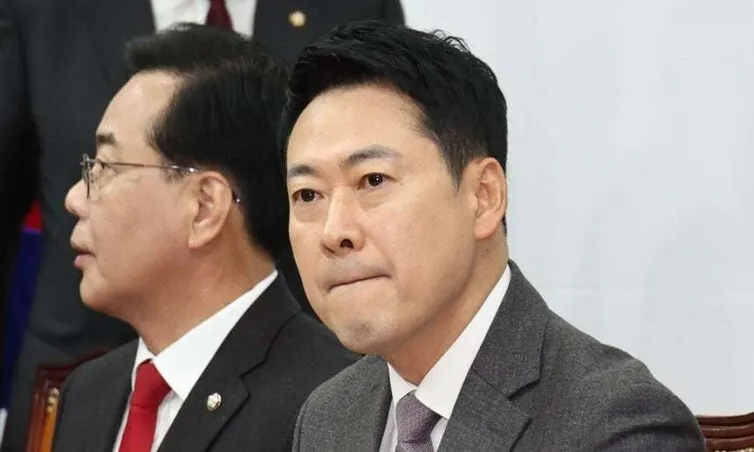
Seoul, South Korea – South Korean political tensions are rising as questions swirl around the housing portfolios of leading figures within the ruling People Power Party (PPP). Amidst scrutiny over multiple properties, PPP leader Jang Dong-hyuk has announced he is attempting to sell an office building (officially an ‘opisttel’) valued at approximately 200 million won (roughly $150,000 USD as of February 28, 2026), but claims a lack of interest from potential buyers. This comes after President Yoon Suk Yeol announced plans to sell his own apartment in Bundang, valued at 2.9 billion won (approximately $2.2 million USD), a move intended to address public concerns about wealth and property ownership among the political elite. The situation is unfolding less than three months before crucial local elections on June 3rd, adding further pressure on the PPP to demonstrate responsiveness to public sentiment.
Jang’s announcement, made via a post on his Facebook account on February 28th, highlights a perceived disparity in the value and marketability of his property compared to the President’s. He stated, “The President is offering his apartment in Bundang for 2.9 billion won, but no one seems interested in my office building in Yeouido, which is worth less than 200 million won.” He added that he is willing to accept his original purchase price, and is open to negotiation. The comments have been interpreted by some as a subtle critique of the President’s property, and a suggestion that his own holdings are less desirable. The timing of the announcement is particularly sensitive, as it follows a period of internal strife within the PPP, including the resignation threat from party floor leader Song Un-seok over disagreements regarding administrative integration plans for the Daegu and North Gyeongsang provinces. As reported by the Korea Daily, the party is facing a crisis of leadership as the local elections approach.
Internal Party Divisions and Public Scrutiny
The situation is further complicated by ongoing criticism of Jang Dong-hyuk’s extensive property holdings. He has previously been reported to own six properties, a fact that has drawn criticism from opposition parties and segments of the public. In his Facebook post, Jang attempted to explain the complexities of his situation, stating that he is unable to sell his apartment in Guro-gu, Seoul, or a property in his electoral district of Boryeong, Chungcheongnam-do, due to family circumstances. He also noted that he cannot ask his mother and mother-in-law to leave their respective homes. This explanation, however, has failed to quell the criticism, with opponents arguing that it demonstrates a reluctance to fully divest from his real estate portfolio.
The Democratic Party of Korea (DPK) has seized on the situation, accusing Jang of hypocrisy. Kim Hyun-jeong, a DPK spokesperson, criticized the PPP leader, stating, as reported by multiple sources, that while President Yoon is offering a home he acquired during difficult economic times in 1998, Jang is seemingly clinging to multiple properties. This echoes a broader narrative pushed by the DPK, which portrays the PPP as out of touch with the economic realities faced by ordinary South Koreans. The DPK’s criticism underscores the political stakes involved in the debate over property ownership and wealth inequality in South Korea.
President Yoon’s Property Sale and Political Context
President Yoon Suk Yeol’s decision to sell his apartment in Bundang, Gyeonggi Province, was announced earlier in February and is widely seen as an attempt to address public concerns about his personal wealth and demonstrate solidarity with voters struggling with rising housing costs. The President’s move comes amid a broader push by his administration to address housing affordability and curb speculation in the real estate market. However, the timing of the announcement has also been interpreted as a strategic maneuver to deflect criticism from the PPP’s leadership and bolster the party’s image ahead of the upcoming elections. As documented by the Yonhap News Agency, the announcement coincided with growing internal divisions within the PPP.
The Daegu-North Gyeongsang Integration Dispute
The current turmoil within the PPP is not solely focused on property ownership. A significant point of contention revolves around the proposed administrative integration of the Daegu and North Gyeongsang provinces. The dispute led to a public resignation threat from PPP floor leader Song Un-seok during a closed-door meeting of lawmakers on February 24th. The disagreement stemmed from accusations that members of the party leadership had opposed the integration plan, a claim Song Un-seok refuted. The incident highlights deep divisions within the PPP regarding regional policy and the balance of power between different factions within the party. The situation has prompted calls from senior PPP lawmakers for a meeting with Jang Dong-hyuk to address the internal strife and restore party unity.
Impact on the Upcoming Local Elections
The ongoing controversies surrounding property ownership and internal party divisions pose a significant challenge to the PPP’s prospects in the June 3rd local elections. The elections are widely seen as a crucial test of President Yoon’s popularity and a bellwether for the 2027 presidential election. The DPK is expected to capitalize on the PPP’s vulnerabilities by highlighting the perceived hypocrisy of its leaders and emphasizing its commitment to addressing economic inequality. The outcome of the elections could have a significant impact on the political landscape of South Korea and the direction of the country’s economic policies.
The lack of immediate buyers for Jang Dong-hyuk’s office building, coupled with the broader scrutiny of his property holdings, presents a public relations headache for the PPP. The party will need to effectively address these concerns and demonstrate a commitment to transparency and accountability in order to regain public trust and maintain its political momentum. The upcoming March 1st Independence Movement Day event, where Jang is scheduled to meet with President Yoon, will likely be closely watched for any signs of further tension or attempts to resolve the internal divisions within the party.
As the political climate in South Korea intensifies, the focus remains on the actions of key figures like Jang Dong-hyuk and President Yoon. The coming weeks will be critical in determining whether the PPP can overcome its internal challenges and effectively address public concerns ahead of the crucial local elections. Further developments are expected following the March 1st meeting between Jang and Yoon, and observers will be closely monitoring any announcements regarding the sale of Jang’s properties and the resolution of the Daegu-North Gyeongsang integration dispute.
Stay informed: For the latest updates on South Korean politics and the upcoming local elections, please refer to official government sources and reputable news organizations such as Yonhap News Agency and The Korea Daily.
Worth a look