
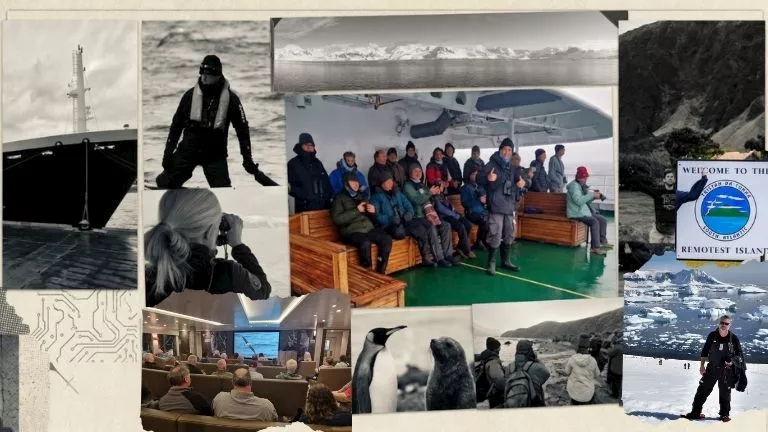
For the passengers boarding the MV Hondius in Ushuaia, Argentina, on April 1, 2026, the voyage was promised as an expedition of discovery. However, what began as a luxury journey through some of the world’s most remote waters transformed into a harrowing medical crisis, as a rare and deadly pathogen turned the vessel into a floating center for infectious disease management.
The MV Hondius hantavirus outbreak has captured the attention of global health authorities not only because of the fatalities on board but because of the specific strain involved: the Andes virus. As a physician and journalist, I have followed many outbreaks, but the dynamics of this event are particularly concerning to the medical community due to the virus’s rare ability to move from person to person.
With 147 passengers and crew members confined to the Dutch-flagged vessel, the situation evolved from isolated respiratory illness into a coordinated international rescue operation. By the time the ship reached the Canary Islands on May 10, the voyage had left a trail of grief and a significant wake of public health questions regarding the containment of rare zoonotic diseases in closed environments.
The crisis reached a critical juncture on May 2, 2026, when the World Health Organization (WHO) was notified by the United Kingdom’s National International Health Regulations Focal Point regarding a cluster of severe acute respiratory illnesses aboard the ship. Laboratory testing conducted in South Africa shortly thereafter confirmed the presence of hantavirus in a critically ill patient, triggering an immediate international response.
The Andes Virus: A Rare Pathogen with Unique Risks
To understand the gravity of the situation on the MV Hondius, one must understand the nature of the Andes virus. Most hantaviruses are zoonotic, meaning they are transmitted to humans through contact with the urine, feces, or saliva of infected rodents. For the vast majority of these strains, the chain of transmission ends with the human host.
The Andes virus is a dangerous exception. It is the only known hantavirus capable of human-to-human transmission, typically occurring through close, sustained contact, though some evidence suggests it may potentially be airborne in specific conditions. In this case, the virus manifested as Hantavirus Pulmonary Syndrome (HPS), a severe respiratory condition that attacks the lungs.
The clinical progression observed on the ship was rapid, and devastating. Patients initially presented with fever and gastrointestinal symptoms, which quickly escalated into pneumonia, acute respiratory distress syndrome (ARDS), and shock. According to the World Health Organization, the outbreak resulted in seven identified cases—two laboratory-confirmed and five suspected—with three deaths reported as of early May.
From my experience in internal medicine, HPS is one of the most challenging respiratory failures to treat because of how quickly the lungs fill with fluid, leaving the patient unable to oxygenate their blood. The mortality rate for HPS is historically high, making the isolation and intensive care of the infected passengers a race against time.
Timeline of a Voyage in Crisis
The trajectory of the MV Hondius outbreak highlights the logistical nightmares that occur when a medical emergency strikes in international waters. The ship departed Ushuaia on April 1, but the first sign of tragedy appeared on April 11, when a passenger died from the virus.

The subsequent weeks were marked by a series of desperate stops and medical evacuations. On April 24, the body of the first deceased passenger was taken ashore in Saint Helena. The passenger’s wife disembarked at the same time but died two days later in a hospital in Johannesburg. A third passenger also perished on board, while another British national was evacuated to Johannesburg in critical but stable condition.
The vessel’s movement was further complicated by the inability of various ports to handle a safe evacuation. While the ship docked at Praia for three days, no passengers were allowed to disembark because local medical facilities were unable to provide the necessary containment and care for a hantavirus patient. This created a high-pressure environment for the remaining 147 individuals on board, who were effectively trapped with a deadly pathogen.
The deadlock broke only after the Spanish Ministry of Health approved the vessel’s arrival in the Canary Islands. On May 6, the MV Hondius departed for Tenerife, equipped with additional medical resources to stabilize the passengers. Upon arrival on May 10, the evacuation process finally began, with passengers being flown to six different European countries and Canada.
Global Health Response and Risk Assessment
As news of the outbreak spread, the U.S. Centers for Disease Control and Prevention (CDC) and the WHO moved quickly to calibrate the risk to the general public. The primary concern for health officials was whether the human-to-human transmission seen on the ship could lead to a wider community outbreak, particularly among passengers who had disembarked before the virus was officially identified.
The CDC reported that several U.S. Passengers had already returned home before the outbreak was confirmed. In response, the agency notified state health departments to monitor these individuals and provide guidance to their families and communities. Despite these precautions, the CDC has maintained that the overall risk to the American public remains extremely low, and no cases of Andes virus have been reported within the United States as a result of this event.
The WHO has mirrored this sentiment, assessing the global risk as low. The rarity of the Andes virus and the specific conditions required for human-to-human transmission mean that a widespread epidemic is unlikely. However, the event serves as a stark reminder of the vulnerabilities inherent in cruise ship travel, where high-density living quarters can accelerate the spread of respiratory pathogens.
What This Means for Future Travel and Public Health
The MV Hondius incident underscores a critical gap in maritime health protocols: the lack of standardized, high-level isolation facilities on expedition vessels. When a passenger develops a severe respiratory illness in the middle of the Atlantic, the ship becomes a closed system where the health of the many depends entirely on the speed of diagnosis and the effectiveness of isolation.

For travelers, this event emphasizes the importance of comprehensive travel insurance and awareness of regional zoonotic risks. For public health officials, the focus now shifts to the “long tail” of the outbreak—monitoring the recovered passengers for any long-term pulmonary effects and ensuring that the virus has been completely eradicated from the vessel through rigorous decontamination.
As we analyze the data from this outbreak, the medical community will likely look closer at the specific contact patterns on the MV Hondius to better understand how the Andes virus spreads between humans. This knowledge is vital for developing future diagnostics and potential vaccines for hantaviruses, which currently lack a dedicated preventative vaccine.
The next confirmed checkpoint for this situation will be the final health clearance reports for the evacuated passengers and the official decontamination certification of the MV Hondius. We will continue to monitor updates from the WHO and CDC as the final cases are resolved.
Do you think cruise lines should be required to have advanced isolation wards for infectious diseases? Share your thoughts in the comments below or share this article to start a conversation on travel safety.