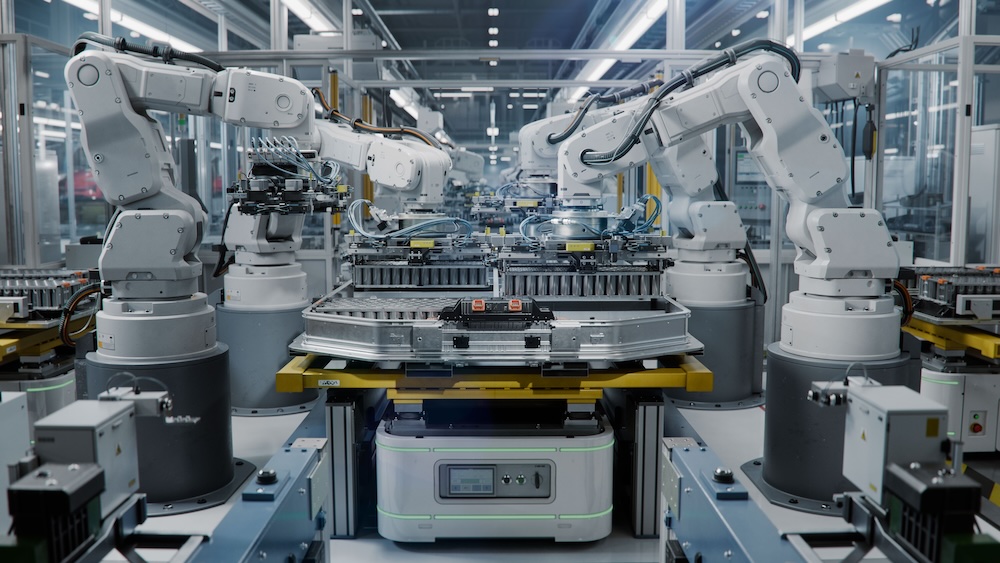
In the high-stakes environment of modern manufacturing, a recurring bottleneck has long plagued the integration of robotics: the lack of flexibility. Currently, when a factory upgrades its robot fleet, the process is often a grueling “start from scratch” operation. It is not merely a matter of swapping out hardware; it requires the complete reprogramming of every task the new machines must perform.
This inefficiency stems from a fundamental mechanical reality. Even when two robots are designed for similar roles, differences in joint arrangements or specific movement limits mean that a program written for one machine is often incompatible with another. This rigidity increases costs, wastes engineering hours, and slows the adoption of more sustainable automation practices.
However, a new breakthrough in transferable robot learning is poised to change this dynamic. Researchers at the Learning Algorithms and Systems Laboratory (LASA) within EPFL’s School of Engineering have developed a robotic control framework known as Kinematic Intelligence. This system allows a single learned skill to be adapted across multiple robots, regardless of their specific physical design.
The research, which has been published in the journal Science Robotics, provides a mathematical bridge between human movement and robotic execution. By decoupling the “strategy” of a task from the specific “mechanics” of the robot, the framework ensures that skills can be shared across a fleet without the need for exhaustive manual reprogramming.
Solving the Hardware Compatibility Gap
The core challenge in robotics has historically been the tight coupling between software and hardware. Because every robot has a unique kinematic structure—the way its joints move and the limits of its reach—a set of coordinates that works for one arm might be physically impossible for another.

Kinematic Intelligence addresses this by treating a task not as a series of rigid coordinates, but as a general movement strategy. According to Aude Billard, head of LASA, the framework solves a long-standing industry hurdle by transferring learned skills across robots with different mechanical structures while guaranteeing that the resulting behavior remains safe and predictable.
This shift from “coordinate-based” programming to “strategy-based” learning means that the physical design of the robot becomes a variable to be adapted to, rather than a barrier to the task itself. This capability is particularly critical for the manufacturing industry, where fleets often consist of a mix of robot models from different generations or manufacturers.
From Human Demonstration to Robotic Execution
The process of teaching a skill through the Kinematic Intelligence framework follows a specific, three-step pipeline designed to capture the essence of a movement without tying it to a specific body.
First, the researchers utilize human-demonstrated object-manipulation tasks. These tasks include common industrial and domestic movements such as placing, pushing, and throwing. To capture these movements with high precision, the team employs motion-capture technology, which records the trajectory and intent of the human actor.
Once the data is captured, the framework mathematically converts these recordings into general movement strategies. This step effectively strips away the “human” elements of the movement and leaves behind a mathematical blueprint of the task’s requirements.
Finally, the framework adapts this general strategy to the specific robot intended to perform the task. By analyzing the robot’s unique joint arrangements and movement limits, the system translates the general strategy into a set of instructions that the specific hardware can execute safely.
Impact on Manufacturing and Sustainability
The implications for the manufacturing sector are significant, particularly regarding cost-efficiency and operational sustainability. The ability to implement transferable robot learning reduces the reliance on highly specialized programming for every single unit in a factory.
By reducing the time and expertise required to deploy robots in real-world settings, companies can iterate on their production lines more quickly. This flexibility allows for a more modular approach to automation, where robots can be swapped or upgraded without the prohibitive cost of total system reprogramming.
Beyond the financial benefits, there is a sustainability angle. When software can be transferred across hardware generations, the lifecycle of robotic systems can be extended, and the waste associated with obsolete, hard-coded systems is minimized.
Key Advantages of Kinematic Intelligence
- Hardware Agnostic: Skills can be transferred between robots with different mechanical structures.
- Reduced Deployment Time: Decreases the need for manual reprogramming when updating robot fleets.
- Safety Guaranteed: The framework ensures predictable behavior regardless of the robot’s physical configuration.
- Human-Centric Learning: Leverages motion-capture technology to translate human intuition into robotic action.
The Path Toward Scalable Automation
The work conducted by the LASA team represents a move toward a future where robots possess a form of “generalized intelligence” regarding physical movement. Rather than being tools that must be told exactly how to move every joint, robots are becoming systems that can understand the goal of a task and determine the best way to achieve it based on their own physical capabilities.

As this framework moves from the laboratory into broader industrial applications, the barrier to entry for advanced automation will likely drop. Small-to-medium enterprises that cannot afford a team of dedicated robotics engineers may soon be able to deploy complex manipulation tasks by simply “showing” the system what needs to be done.
The next phase for this technology involves further refining the adaptation process to handle even more complex environments and a wider array of robotic morphologies. As the framework is tested against more diverse hardware, the goal remains the same: to make the deployment of robotic skills as seamless as updating software on a computer.
Industry stakeholders can look for further updates on the implementation of these strategies in upcoming publications from EPFL and the ongoing developments within the Science Robotics community.
Do you think the ability to share skills between robots will accelerate the automation of small-scale manufacturing? Share your thoughts in the comments below.