
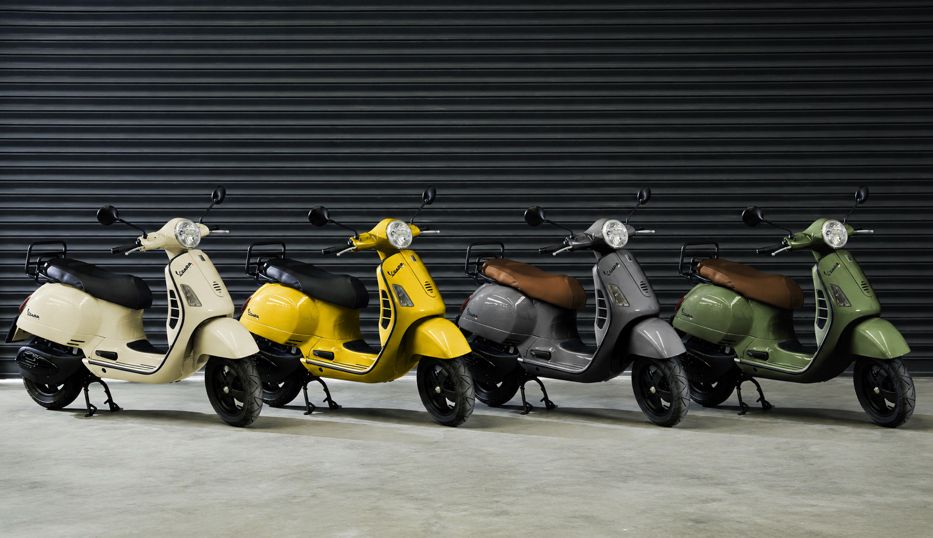
For nearly eight decades, the silhouette of a Vespa has been more than just a means of urban transport; We see a global symbol of Italian dolce vita and industrial design. Since its inception in 1946, the scooter has navigated the shifting tides of global mobility, from the post-war reconstruction of Europe to the modern congestion of megacities. Today, the brand faces its most significant evolution yet: the transition from internal combustion to a fully sustainable, electric future.
The announcement of the Vespa Newtron electric retrofit kit concept and the broader shift toward electrification mark a pivotal moment for Piaggio. As urban centers worldwide implement stricter emissions zones and the demand for sustainable luxury grows, the challenge for Vespa is to preserve the “soul” of the machine—its timeless aesthetic and effortless ride—while replacing the noise and fumes of the two-stroke engine with the silence of electrons.
This transition is unfolding along two distinct paths. On one hand, Piaggio is introducing the Vespa Newtron, a visionary approach to a fully electric vehicle that reimagines the scooter’s architecture. On the other, a growing market for road-legal retrofit kits is emerging, allowing owners of vintage models to breathe new, zero-emission life into their heritage machines without sacrificing their original chassis.
From an economic perspective, this represents a sophisticated application of the circular economy. By offering paths to either upgrade to a new electric platform or electrify an existing vintage frame, the industry is extending the lifecycle of high-value industrial assets. This strategy not only appeals to the environmentally conscious Gen Z consumer but also secures the loyalty of long-term collectors who view their Vespas as heirloom investments.
The Vespa Newtron: Rethinking the Electric Experience
The Vespa Newtron is not merely a battery-powered version of an existing model; it is described by Piaggio as a “new way of thinking” about the brand’s identity. Unlike previous attempts at electrification, which often felt like adaptations of petrol frames, the Newtron focuses on modularity and a streamlined user experience. The goal is to move beyond the limitations of traditional electric scooters, focusing on how a vehicle can integrate into a modern, connected urban lifestyle.
Central to the Newtron philosophy is the concept of “sustainable luxury.” By utilizing advanced materials and a redesigned power delivery system, Piaggio aims to maintain the rapid acceleration and agility that Vespa owners expect, while eliminating the vibrations and maintenance requirements associated with combustion engines. This strategic pivot aligns with the broader European Union goals to phase out internal combustion engines in favor of zero-emission alternatives to combat urban air pollution.
For the business analyst, the Newtron represents a hedge against the volatility of the fossil fuel market and a proactive response to the “Green Deal” mandates sweeping across Europe. By establishing a new electric benchmark, Piaggio is positioning itself not just as a manufacturer of scooters, but as a provider of sustainable mobility solutions.
The Retrofit Revolution: Saving the Classics
While the Newtron looks forward, a parallel movement is looking backward to save the classics. For many enthusiasts, the appeal of a vintage Vespa lies in its original steel body and mid-century charm—elements that would be lost if they were forced to buy a completely new electric model. This has given rise to the “retrofit” market, where specialized kits are used to swap out the original engine for an electric motor and battery pack.

The critical hurdle for these conversions has historically been “omologazione,” or official road-legal approval. In many jurisdictions, modifying a vehicle’s powertrain can void its registration or make it illegal to operate on public roads. However, the emergence of approved retrofit kits in Italy has changed the landscape. These kits are designed to fit perfectly into the original frame, ensuring that the structural integrity of the vehicle remains intact while the powertrain is modernized.
These conversions typically involve the installation of a high-efficiency electric motor and a lithium-ion battery system. The result is a “sleeper” scooter: a machine that looks like a 1960s icon but performs with the quiet efficiency of a 21st-century EV. This allows owners to ride their vintage scooters into “Low Emission Zones” (LEZ) in cities like Milan, Paris, or London, where petrol-powered classics are increasingly restricted.
Economic Impact and the Circular Economy
The shift toward electric retrofitting is a prime example of “upcycling” on an industrial scale. From an economic standpoint, the value proposition is twofold. First, it preserves the residual value of vintage Vespas. A classic Vespa that cannot be ridden due to emissions laws loses a significant portion of its utility value; once electrified and road-legal, its appeal to a wider, younger audience increases.
Second, the retrofit industry creates a new ecosystem of high-skilled labor. The process of converting a vintage scooter requires a blend of traditional mechanical restoration and modern electrical engineering. This supports a niche market of specialized workshops—often located in Italy’s “Motor Valley”—that combine artisanal craftsmanship with cutting-edge technology.
This model of “heritage electrification” suggests a sustainable path forward for other iconic brands. Whether it is vintage cars or classic motorcycles, the ability to update the “heart” of a machine while preserving its “skin” reduces the need for new raw materials and prevents thousands of tons of steel and aluminum from ending up in landfills.
Technical Challenges and the Road Ahead
Despite the excitement, the transition to electric is not without its hurdles. The primary challenge remains energy density. While a petrol tank can be refilled in minutes, battery charging takes significantly longer. Piaggio’s focus on modularity with the Newtron suggests a move toward swappable batteries, which would allow users to exchange a depleted battery for a full one at designated hubs, mirroring the success of electric scooter sharing programs in major cities.

the weight distribution of electric components can alter the handling of a vintage frame. Engineers must carefully balance the placement of the battery and motor to ensure the scooter doesn’t become top-heavy or lose its characteristic agility. This is why “approved” kits are superior to DIY conversions; they have undergone rigorous testing to ensure that safety and performance standards are met.
As we look toward the end of the decade, the integration of smart technology will likely be the next frontier. One can expect to see “connected” Vespas that provide real-time battery telemetry, GPS-integrated charging station locators and over-the-air (OTA) updates to optimize motor efficiency.
Key Takeaways for Consumers and Collectors
- For the Modernist: The Vespa Newtron represents the future of the brand, offering a ground-up electric experience focused on sustainability and modularity.
- For the Purist: Road-legal retrofit kits provide a way to maintain the aesthetic of a vintage Vespa while gaining access to restricted urban zones.
- For the Investor: Electrification is likely to stabilize or increase the value of vintage models by ensuring their continued utility in a zero-emission world.
- Regulatory Note: Always ensure that any conversion kit is officially approved (homologated) in your specific region to avoid legal issues with vehicle registration.
The evolution of the Vespa is a microcosm of the global energy transition. It proves that progress does not have to mean the destruction of the past. By embracing both the innovation of the Newtron and the preservation of the retrofit movement, Piaggio is ensuring that the “wasp” will continue to buzz through city streets for another eighty years—only this time, in silence.
The next major milestone for the brand will be the official production rollout and pricing specifications for the Newtron line, as well as the expansion of certified retrofit partnerships across Europe. We will continue to monitor these developments as they redefine the intersection of heritage and technology.
What are your thoughts on the electrification of classic icons? Would you prefer a brand-new electric model or a retrofitted vintage classic? Share your views in the comments below.