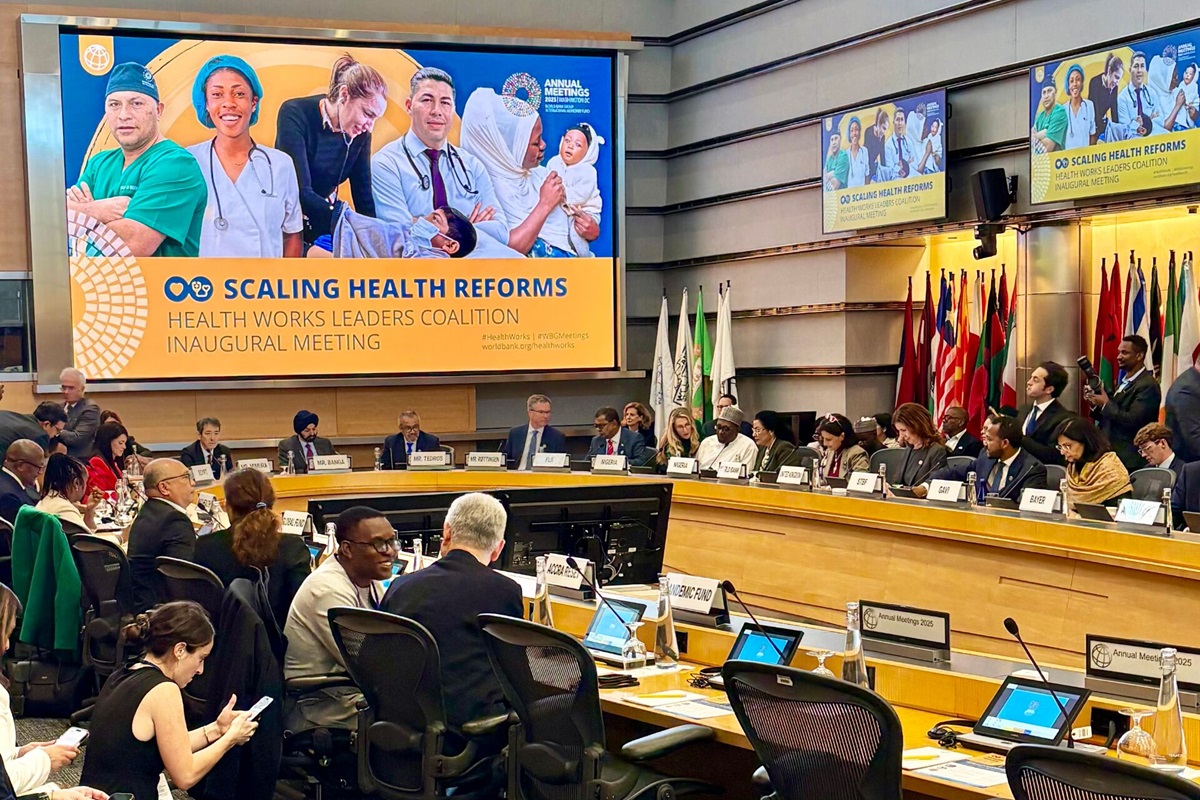
A Global Push for Universal Health Coverage: The Health Work Leaders Coalition and National Health Compacts
The global landscape of healthcare is undergoing a significant shift,driven by a new coalition and a bold initiative to accelerate progress towards Universal Health Coverage (UHC). Recognizing the critical need for strengthened health systems, notably in developing nations, the Health Work Leaders Coalition, spearheaded by the World Bank Group and the World Health Association (WHO), is galvanizing action and fostering country ownership of health reform. This initiative isn’t simply about aid; it’s about empowering nations to build lasting, resilient, and equitable healthcare systems for thier citizens.
addressing a Critical Gap: The Rise of National Health Compacts
A core component of this effort is the development of National Health Compacts. Launched during the World Bank Group Annual Meetings, these aren’t just policy documents; they are government-led agreements designed to drive bold and impactful health reforms. Currently, 21 countries are actively developing these compacts, outlining clear investment priorities, establishing shared accountability, and unlocking crucial resources to expand access to quality, affordable healthcare.
This represents a basic shift in approach. Historically, many developing nations have relied heavily on overseas aid. Though, with global aid budgets facing pressures, the focus is now on mobilizing domestic resources and fostering greater national ownership. As Dr.Tedros Adhanom Ghebreyesus, WHO Director-General, powerfully stated, “affected countries are rising to the challenge… shifting from heavy reliance on overseas assistance to greater ownership over their health systems and futures.”
Concrete Reforms Taking Shape
The reforms envisioned within these compacts are diverse and tailored to the specific needs of each nation. Examples already emerging demonstrate the breadth of ambition:
* Indonesia: Plans to implement free health checkups and expand health insurance coverage, increasing access for millions.
* Mexico: Developing a strategic pharmaceutical plan with the potential to create 60,000 jobs through strategic public-private partnerships,boosting both health outcomes and economic growth.
* Across the Board: Many nations are prioritizing strengthening primary care services – the foundation of a robust healthcare system – and reducing out-of-pocket expenses that disproportionately impact the poorest populations.
These initial compacts,representing a diverse range of income levels and geographic regions (see full list below),are slated for formal launch at the UHC High-Level Forum in Tokyo in December 2025. This forum will serve as a crucial platform for sharing best practices,fostering collaboration,and tracking progress.
Building Capacity Through the UHC Knowledge Hub
Recognizing that effective implementation requires expertise, the Government of Japan has established the UHC Knowledge Hub in Tokyo. This innovative platform will provide targeted capacity-building and knowledge-sharing opportunities for policymakers from developing countries.
“Strengthening health systems in developing countries depends on cultivating health financing expertise within both health and finance ministries,” explains Atsushi mimura, Vice minister of Finance for International Affairs at Japan’s Ministry of Finance.The Hub will leverage Japan’s own experience in health financing to build institutional capacity and support tangible reforms. the initial cohort of participating countries includes Cambodia, Egypt, Ethiopia, Ghana, Indonesia, Kenya, nigeria, and the Philippines.
A Collaborative Effort for a Transformative Goal
The scale of the challenge is immense. The World bank group, under the leadership of President Ajay Banga, has set an aspiring goal: to help countries deliver quality, affordable health services to 1.5 billion people by 2030.
“No single institution, government, or philanthropist can achieve that alone,” Banga emphasizes. “But with aligned purpose and shared effort, it is possible.” He highlights the interconnectedness of health and economic development, stating that this initiative is “as much an ingredient of our jobs agenda as it is a health initiative.” Improved health leads to a more productive workforce,stronger economies,and ultimately,a better quality of life for all.
The Health Work Leaders Coalition – A United Front
The success of this initiative hinges on strong partnerships. The Health Work Leaders Coalition brings together a diverse group of stakeholders committed to driving progress towards UHC:
* Governments: Egypt, Ethiopia, Indonesia, Kenya, Nigeria, Philippines, Saint Lucia, Sierra Leone
* International Organizations: GAVI, The Vaccine Alliance, The Global Fund to Fight AIDS, Tuberculosis and Malaria, World Health Organization
* Foundations: The Susan Thompson Buffett Foundation, Wellcome Trust
* Non-Profit Organizations: Seed Global Health, WACI Health
* Developed Nation Support: United Kingdom
National Health Compact Countries (Full List):
* Bangladesh
* Cambodia
*