
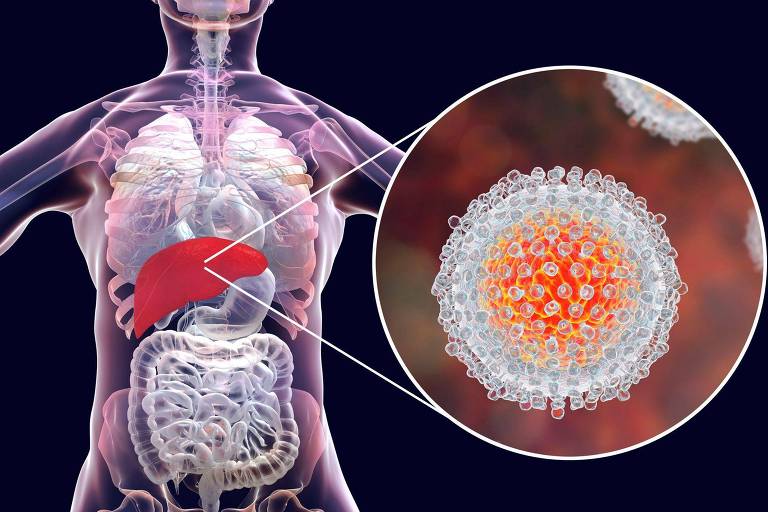
Brazil is facing a silent but growing public health challenge as viral hepatitis continues to advance while diagnosis remains delayed for millions, according to recent data from national health authorities. Despite global progress in combating hepatitis B and C, Brazil struggles with late detection, limited access to testing in rural areas, and persistent stigma that keeps many from seeking care until liver damage is advanced. Experts warn that without urgent improvements in screening programs and public awareness, the country risks falling short of World Health Organization targets to eliminate hepatitis as a public health threat by 2030.
The issue gained renewed attention following a report by Agência Aids, which highlighted how systemic delays in diagnosis allow hepatitis viruses to progress unnoticed, often leading to cirrhosis, liver cancer, or the need for transplantation. While Brazil has made strides in treatment access—particularly through the Unified Health System (SUS), which provides free antiviral therapies—the bottleneck remains in identifying infections early enough to prevent irreversible harm. This gap is especially pronounced among vulnerable populations, including people who inject drugs, incarcerated individuals, and those living in remote regions with limited healthcare infrastructure.
Viral hepatitis refers to inflammation of the liver caused by infectious agents, primarily hepatitis A, B, C, D, and E viruses. Hepatitis B and C are of greatest concern due to their potential to cause chronic infection, which can silently damage the liver over decades. Unlike hepatitis A and E, which are typically acute and resolve on their own, chronic hepatitis B and C often present no symptoms until significant liver damage has occurred, making routine screening critical for early intervention.
According to the Brazilian Ministry of Health, an estimated 1.4 million people live with hepatitis C and over 900,000 with hepatitis B in the country, yet a large proportion remain undiagnosed. A 2023 survey conducted by the Oswaldo Cruz Foundation (Fiocruz) found that only about 30% of people with hepatitis C and less than 20% with hepatitis B were aware of their status. These figures underscore the scale of the diagnostic gap, particularly when compared to treatment coverage, which has improved significantly since the introduction of direct-acting antivirals (DAAs) for hepatitis C in 2015.
“The medicines are available and highly effective, but we cannot treat what we do not detect,” said Dr. Julio Croda, an infectious disease specialist and researcher at Fiocruz in Mato Grosso do Sul. “We have the tools to eliminate hepatitis, but without expanding access to rapid testing—especially in primary care and community settings—we will continue to witness people presenting with advanced liver disease that could have been prevented.”
One of the key barriers to timely diagnosis is the concentration of testing capacity in urban centers, leaving rural and underserved communities reliant on infrequent outreach programs or long travel distances to access screening. Hepatitis testing is not routinely integrated into standard medical checkups, meaning many opportunities for early detection are missed during visits for other conditions.
Stigma also plays a significant role, particularly around hepatitis C, which is often associated with injection drug use despite growing evidence of transmission through other routes, including inadequate infection control in medical settings. A 2022 study published in Revista da Associação Médica Brasileira found that fear of discrimination led nearly 40% of respondents to delay seeking testing even after experiencing symptoms such as fatigue or jaundice.
In response, civil society organizations and public health advocates have called for the expansion of point-of-care testing, community-based outreach, and the inclusion of hepatitis screening in prenatal care and occupational health programs. Some municipalities, such as Vitória in Espírito Santo and Belo Horizonte in Minas Gerais, have launched pilot programs using mobile clinics and rapid antibody tests to reach high-risk populations, with early results showing improved linkage to care.
Internationally, Brazil has committed to the WHO’s global hepatitis strategy, which aims to reduce new hepatitis B and C infections by 90% and mortality by 65% by 2030. Achieving these targets would require diagnosing 90% of people with hepatitis B and C and treating 80% of those diagnosed. Current estimates suggest Brazil is far from meeting these benchmarks, particularly in diagnosis rates.
Efforts to strengthen the national response include ongoing discussions about updating the National Viral Hepatitis Program, last revised in 2018, to incorporate newer testing technologies and decentralize service delivery. Advocates are also pushing for the adoption of reflex testing algorithms in laboratories, where a positive hepatitis C antibody test automatically triggers a confirmatory RNA test—reducing the need for multiple patient visits and improving diagnostic efficiency.
As Brazil observes World Hepatitis Day each July 28, health officials emphasize that eliminating hepatitis is not only a medical challenge but a matter of equity. Ensuring that testing and treatment reach those most affected—often marginalized by poverty, race, or geography—will be essential to turning the tide against a disease that, while silent, continues to exact a heavy toll.
The next major checkpoint in Brazil’s hepatitis response is expected in late 2024, when the Ministry of Health is scheduled to release updated epidemiological estimates based on new modeling data and regional surveys. These figures will help guide resource allocation and policy adjustments for the coming years.
Stay informed, share this article to raise awareness, and join the conversation in the comments below about how Brazil can close the diagnosis gap and move closer to eliminating viral hepatitis.